Why Your Indianapolis Kitchen Cabinet Paint Quote Includes a Mandatory De-Greasing Step
Why Your Indianapolis Kitchen Cabinet Paint Quote Includes a Mandatory De-Greasing Step
I’m Chris Elliott, Founder and President of ONiT Painting. Over the years, I’ve sat at hundreds of kitchen tables across Central Indiana, from Meridian-Kessler to Fishers, discussing home transformations. When homeowners receive a paint quote for their kitchen, their eyes often skip straight to the bottom line. However, the most critical details are often found in the “Preparation” section. If you are looking for a house painter indianapolis homeowners trust, you’ll notice that a professional quote always includes a mandatory de-greasing step. Understanding the cost to paint kitchen cabinets requires an understanding of why this labor-intensive process is non-negotiable for a lasting finish.
In Indianapolis, the kitchen is truly the heart of the home. It is where we host game days, cook Sunday dinners, and gather for morning coffee. This constant activity makes the kitchen a high-traffic zone, but it also makes it a high-grease zone. Professional kitchen cabinet painting companies know that grease is the single greatest enemy of paint. Without a dedicated de-greasing phase, even the most expensive coatings will fail. At Artisan Cabinetworkz and ONiT Painting, we prioritize the science of prep over the speed of application, ensuring that your investment stands the test of time.
The Chemistry of Kitchen Grease vs. Cabinet Paint
To understand why a professional house painter indianapolis insists on de-greasing, we have to look at the chemistry of adhesion. Paint is essentially a liquid that must turn into a solid film while bonding to a substrate. For this bond to occur, the surface must be “clean, dry, and dull.” Kitchen cabinets are rarely any of those things. Over years of cooking, microscopic particles of aerosolized oils, steam, and animal fats settle on the doors, frames, and drawer fronts.
Think of it this way: have you ever tried to apply a piece of Scotch tape to a surface that had just a hint of butter or cooking spray on it? The tape might stick for a second, but it will slide right off with the slightest touch. This is exactly what happens when a painting company indianapolis skips the de-greasing step. The grease creates a “bond breaker.” Even if the paint feels dry to the touch, it is essentially floating on a microscopic film of oil rather than anchoring into the wood fibers or the existing finish.
Furthermore, it isn’t just cooking grease. Human skin produces oils (sebum) that are transferred to the cabinets every time you open a drawer or cabinet door. These oils are particularly concentrated around handles and knobs. If a columbus interior painter or a local Indianapolis crew fails to remove these specific deposits, you will notice the paint beginning to soften and peel around the hardware within just a few months. This “adhesion failure” is the hallmark of a DIY job or a cut-rate contractor who didn’t respect the chemistry of the kitchen environment.
Why “Just Sanding” Isn’t Enough
A common misconception among homeowners – and unfortunately, among some less experienced painters Indianapolis – is that sanding alone is sufficient preparation. The logic seems sound: sanding creates a “profile” or “tooth” for the new paint to grab onto. However, if you sand a greasy cabinet before cleaning it, you are actually making the problem worse.
When you run a sander over a greasy surface, the heat generated by the friction liquefies the grease and drives it deeper into the grain of the wood. Essentially, you are “impregnating” the wood with oil. Once those oils are driven into the grain, they are nearly impossible to remove. This leads to a catastrophic failure where the primer cannot bite into the wood. Professional kitchen cabinet painting companies follow a strict order of operations: de-grease first, sand second. This ensures that you are sanding a clean substrate and creating a mechanical bond rather than a muddy mess of sawdust and lard.
If you are comparing quotes and see one that mentions “light sanding” but omits “chemical de-greasing,” you are looking at a recipe for disaster. We discuss this further in our guide on The Proper Way to Prep Indianapolis Kitchen Cabinets Before the First Coat of Paint. Skipping the de-greasing step is one of the primary reasons why “budget” painters can offer lower prices – they are skipping the most labor-intensive and physically demanding part of the job.
The Indianapolis Factor: Why Local Homes Need Special Care
The geography and climate of Central Indiana play a surprising role in cabinet longevity. Whether you are hiring a columbus interior painting specialist or a house painter indianapolis, you have to account for our dramatic seasonal humidity shifts. In the Midwest, wood expands and contracts significantly between our humid summers and dry winters. This mechanical movement puts immense stress on the paint film.
If there is even a trace of grease under the paint, the film will not have the flexibility or the “grab” required to move with the wood. It will crack, and because the bond is weak, those cracks will quickly turn into large flakes. We often see homeowners who hired the painter guy or the painter guys – terms often used for low-cost, high-volume “chuck-in-a-truck” operations – only to find their cabinets peeling by the following winter. While the interior house painting cost might have been lower initially, the cost of stripping and refinishing a failed cabinet job is often double the original price.
Furthermore, Indianapolis homes often feature beautiful, open-concept kitchens that vent into the main living area. This means that grease isn’t just on the cabinets directly above the stove; it migrates to the island, the pantry doors, and even the crown molding. A comprehensive paint quote from a professional firm will account for cleaning every square inch of the cabinetry, not just the “obvious” spots near the range.
The Process: How a Professional Painting Company Indianapolis De-Greases
When you hire a professional painting company indianapolis, the de-greasing process is a multi-step, rigorous operation. It isn’t just a quick wipe with a damp rag. Here is how the experts do it:
- Chemical Selection: We use professional-grade emulsifiers. While some use TSP (Trisodium Phosphate), many modern crews prefer high-strength de-glossers like Krud Kutter or specialized industrial detergents that break down lipids without leaving a heavy residue.
- Mechanical Agitation: The cleaner is applied and then scrubbed using maroon or grey Scotch-Brite pads. This provides a dual benefit: the chemical dissolves the grease, while the pad provides a light mechanical “scuff” to the existing finish.
- Detailing: Professionals pay special attention to the “gunk” that builds up in the corners of raised panel doors. This is where grease hides and where most paint failures begin.
- The Neutralization Rinse: This is a step many skip. After cleaning with a chemical, the surface must be wiped down with clean water to remove the detergent. If the cleaner dries on the surface, the chemicals in the cleaner itself can react with the new paint, causing it to “fish-eye” or fail to dry properly.
- Drying Time: Wood is porous. After a deep cleaning, the cabinets must be allowed to dry completely. Applying primer to damp wood is a guaranteed way to trap moisture, leading to future rot or peeling.
This process is why the cost to paint kitchen cabinets is significantly higher than painting a standard bedroom. You aren’t just paying for the paint; you are paying for the hours of manual labor required to ensure the surface is chemically ready to receive a furniture-grade finish. For more on what to look for, check out The Hidden Red Flags in a Cheap Kitchen Cabinet Paint Quote.
Understanding the Cost to Paint Kitchen Cabinets
Homeowners often compare the cost of cabinet painting to other services, like hiring an aluminum siding painter or local exterior house painters. However, the two services are entirely different animals. Exterior painting is about weather-proofing and bulk application. Cabinet painting is “fine finish” work, more akin to automotive painting or high-end furniture restoration.
In a standard Indianapolis kitchen with 30-40 openings (doors and drawers), the de-greasing and cleaning phase can take a two-person crew a full day or more. When you calculate the labor hours, specialized chemicals, and materials, it becomes clear why this step adds several hundred dollars to your paint quote. However, this is an investment in longevity. If you are also considering other upgrades, you might look into Expert Tips on Selecting Storage Solutions for a Perfect Kitchen Upgrade to maximize your renovation budget.
When you see a significant price difference between painters Indianapolis, the first question you should ask is: “What is your cleaning and de-greasing protocol?” If the answer is “We just sand them,” you are not getting a professional-grade service. You can learn more about price discrepancies in our article: Why Your Indianapolis Kitchen Cabinet Paint Quote Varies by Thousands of Dollars.
The Long-Term Risks of Skipping This Step
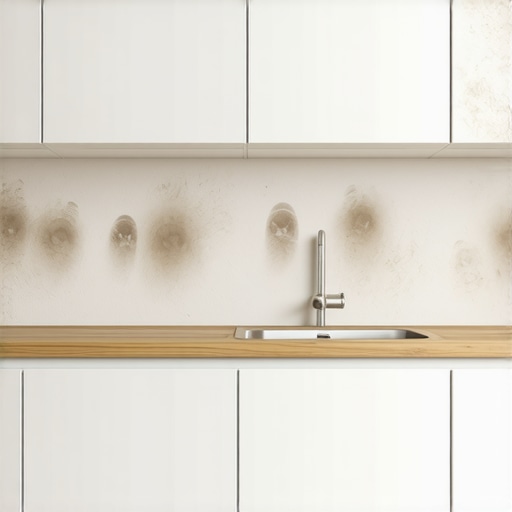
What happens if you ignore the grease? The most immediate result is peeling, but there are more insidious problems. One of the most common issues we see in the Indianapolis market is “tannin bleed” and yellowing. When paint is applied over a greasy or improperly sealed surface, the oils can actually leach through the paint film over time.
If you’ve chosen a beautiful white or “Alabaster” finish, these oils will manifest as ugly yellow or brown splotches, particularly around the stove and the handles. This isn’t just a surface stain; it is a chemical reaction occurring from the bottom up. We detail this phenomenon in The Real Reason Your White Painted Cabinets are Turning Yellow. Additionally, using the wrong products can exacerbate this. For instance, Why Using Standard Interior Paint on Your Kitchen Cabinets is a Five-Year Mistake explains how wall paint lacks the chemical resistance to withstand the oils that de-greasing is meant to remove.
To achieve a true factory-level finish, many high-end kitchen cabinet painting companies also utilize specialized coatings. Understanding The Difference Between Pre-Catalyzed and Post-Catalyzed Cabinet Lacquer is helpful, as these industrial coatings are designed to be applied over perfectly pristine, de-greased surfaces for maximum durability.
Conclusion: The Mark of a Professional
In the Indianapolis painting market, there is a wide range of quality. Leaders in our industry, such as Jonathan Walla of Walla Painting and Ron Jones of Guy Painting, all agree that the foundation of a great cabinet job is the preparation. A mandatory de-greasing step is not an “upsell” – it is the standard of care required to deliver a product that looks as good in five years as it does on the day it was finished.
When you receive your paint quote, look for that de-greasing line item. It is your insurance policy against peeling, yellowing, and premature failure. If you are ready to transform your kitchen with a team that respects the science of the craft, we are here to help. Contact Us today for a professional consultation and a detailed, transparent quote for your home.