Why Narrow Spice Pull-Outs Are Often Harder to Use Than You Think
I stood there, sweat on my brow and a flashlight between my teeth, squinting into a three-inch gap between my brand-new oven and a very expensive piece of custom cabinetry. I had just finished my “perfect” kitchen remodel, and yet, there I was, trying to rescue a jar of cumin that had performed a perfect swan dive into the mechanical guts of my spice pull-out. It was a “lightbulb moment” of the worst kind. I realized that in my quest for a sleek, magazine-ready look, I had created a functional black hole. We often think that every inch of filler space needs to be “put to work,” but sometimes, those narrow 3-inch or 4-inch pull-outs are more of a headache than a help.
The Hidden Friction of the Ultra-Narrow Pull-Out
When you are looking at custom cabinets or planning a modern kitchen remodel, the spice pull-out feels like a no-brainer. It uses that awkward gap next to the range. It looks organized. But here is the reality I’ve learned from years of designing built-in storage solutions: if the opening is less than five inches wide, you’re basically building a vertical obstacle course. I once made the mistake of specifying an ultra-slim unit for a client who had a massive collection of bulkier specialty jars. Within a week, she couldn’t get half of them in, and the ones that did fit were constantly getting jammed against the side walls because there wasn’t enough clearance for her fingers.
Are these pull-outs actually worth the cabinet space?
It is a fair question to ask. You might be worried about wasting a single inch of your floor plan, but a pull-out that is too thin often forces you to store only the tiniest containers. According to the National Kitchen & Bath Association (NKBA), effective storage should adhere to “first-shelf-reach” principles, yet many narrow solutions actually hinder accessibility by creating awkward reaching angles and limited visibility. If a jar tips over—and it will—you’re stuck taking the whole unit apart just to clean up a mess. I’ve found that smart storage ideas to maximize your kitchen space this year usually favor wider drawers or even a pantry zone method over these temperamental slivers of wood.
Stop Losing Your Spices to the Cabinet Abyss
We are here today to solve the “skinny cabinet” trap. I want to help you decide if that narrow gap is better served as a towel rack, a hidden pantry secret, or if you should skip it entirely for more robust innovative storage solutions. Have you ever found yourself digging through a narrow drawer only to find a spice that expired back in 2018? It’s a frustrating cycle, but there is a better way to handle your layout without sacrificing style. We’re going to look at the mechanical failures, the accessibility traps, and the smarter alternatives that keep your kitchen functional for the long haul.
Stick to the Five-Inch Minimum for Sanity
In the world of custom cabinets, precision is everything, but there is a point where precision becomes a prison. Think of a narrow pull-out like a pair of skinny jeans: they might look great on the mannequin, but if you can’t actually move your legs, they are useless. When you are planning a modern kitchen remodel, you need to apply the five-inch rule. This isn’t just about the exterior cabinet width; it is about the internal clearance. A standard 3-inch cabinet actually only offers about 1.5 to 2 inches of usable tray width once you account for the box walls and the slide mechanisms. I once installed a beautiful walnut 3-inch pull-out for a client who loved artisanal honey jars. The moment she tried to slide it out, the jars didn’t just rattle; they wedged themselves against the frame like a cork in a bottle. We had to disassemble the entire base cabinet just to get her honey back. From that day on, I’ve told every client that if you can’t fit your hand comfortably inside the opening, don’t build it as a pull-out. 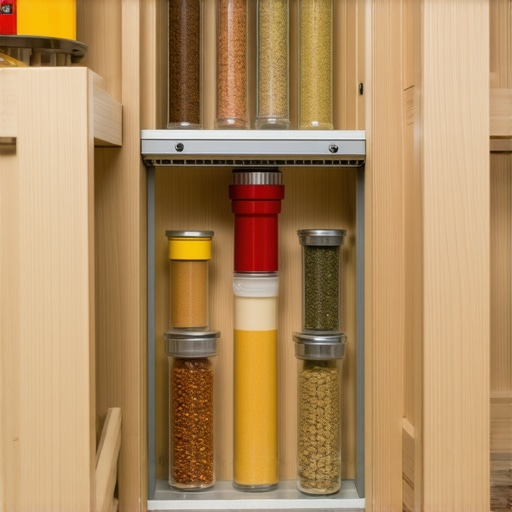
Test Your Grip Before You Commit
Before you sign off on your storage solutions, perform a simple physical test. Grab your three most-used spice containers and try to hold them between two fingers, as if you were reaching into a deep, narrow slot. If your knuckles hit the sides, a pull-out will frustrate you daily. For those tiny gaps, I highly recommend looking into turning a 4-inch gap into a spice wall instead. This approach uses the depth of the cabinet differently, often mounting shelves to the side of a larger cabinet rather than creating a moving drawer. It provides better visibility and prevents the ‘avalanching jar’ syndrome that plagues vertical pull-outs. Using built-ins and storage hacks that prioritize access over ‘filling the gap’ will save you hundreds in future modifications.
Trade the Pull-Out for a Functional Towel Rack
If you find yourself with a three-inch gap and realize a spice rack is a bad idea, don’t just put a filler board there and call it a day. That is wasted real estate. Instead, consider an open-face towel niche. In a high-moisture environment like a kitchen, airflow is your best friend. By installing a simple rod within that narrow gap, you create a dedicated spot for damp tea towels that is hidden from the main view but perfectly ventilated. This is one of those smart storage ideas to maximize your kitchen space that actually solves a problem rather than creating a new one. It avoids the mechanical failure of cheap slides and keeps your countertops clear.
Why Heavy Duty Slides are Non-Negotiable
If you do decide to go with a wider pull-out, say 6 to 9 inches, the hardware becomes the hero of the story. I’ve seen countless custom cabinets fail because the maker used standard drawer slides for a vertical unit. Because all the weight in a pull-out is distributed vertically, it puts immense torque on the bearings. You need bottom-mount, heavy-duty slides that can handle the cantilevered weight of forty glass jars. This is why a pull-out pantry beats deep walk-in shelves for visibility and long-term durability. When the hardware is right, the motion is effortless; when it is wrong, you’ll be fighting a grinding, sticking mess within six months.Most homeowners assume that maximizing efficiency means filling every single cubic inch with a moving part. I’m going to tell you something that might sound like heresy in the world of custom cabinets: empty air is sometimes better than a poorly planned drawer. We get so caught up in creating seamless kitchen remasters with built-in storage solutions that we forget about the ‘clearance tax.’ Every time you add a specialized pull-out, you lose nearly three inches of horizontal space to the slide mechanisms and the drawer box walls. In a small layout, if you install three of these ‘clever’ slivers, you have effectively deleted a whole standard drawer’s worth of actual storage. Sometimes, a simple shelf is more functional than a $500 mechanical unit that limits what you can actually reach.
Stop Chasing the Gadget Myth
The biggest ‘oops’ I encounter in modern kitchen remodels is the Material Mismatch. People fall in love with high-end furniture-grade finishes but forget they are building a workstation for heat and water. This is why plywood box construction still wins over furniture board in wet areas. If you use a particle-board base near a dishwasher, one minor steam leak doesn’t just create a puddle; it compromises the structural integrity of the entire cabinet. I have seen beautiful kitchens ruined by a plumbing failure because the ‘bones’ of the cabinetry couldn’t handle a localized humidity spike. Furthermore, you must ensure your storage solutions account for thermal expansion. If you don’t leave a proper gap near the range, you’ll find that your cabinet paint bubbles near the stove within the first year of heavy cooking.
Why does your drawer’s ‘static load’ differ from its ‘dynamic load’?
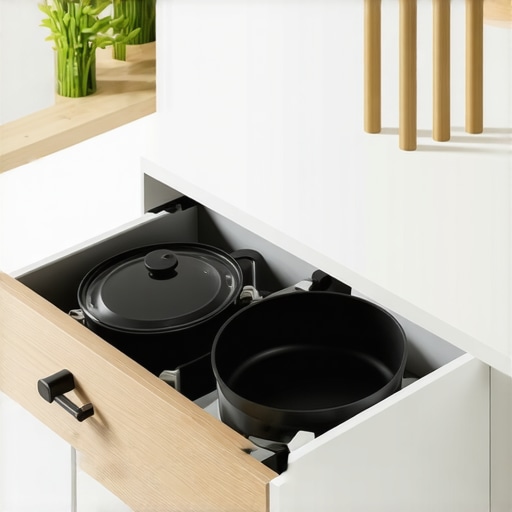
When selecting hardware, you will often see a weight rating like ‘100 lbs.’ But here is the nuance: a drawer that can hold 100 lbs while stationary is very different from one that can be opened and closed 10,000 times with that same weight. If you are fixing a sagging pot and pan drawer, it’s almost always because the dynamic load exceeded the slide’s rating. According to the National Kitchen & Bath Association (NKBA) planning guidelines, the frequency of use in a primary prep zone means your hardware should be rated for at least 25% more than the actual weight of the items stored. Overloading leads to metal fatigue, which is the real reason your cabinet drawer slides are grinding. 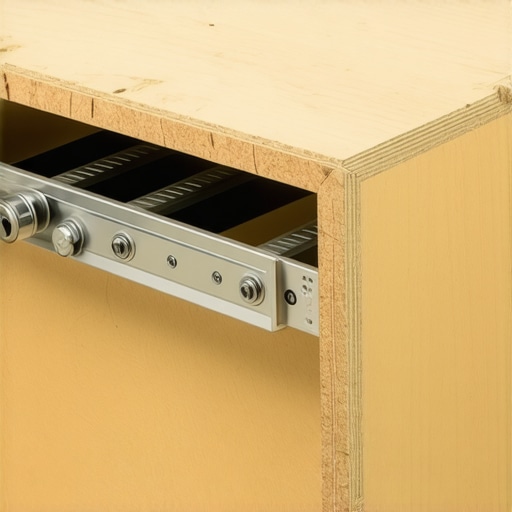
Avoid the Storage Graveyard at the Ceiling
Another common mistake is the ‘floor-to-ceiling’ trap. While smart storage solutions for small kitchens in 2025 often suggest going vertical, cabinets higher than 84 inches often become storage graveyards. If you can’t reach it without a three-step ladder, you won’t use it. This results in ‘clutter creep’ on your countertops because the accessible spaces are overstuffed while the top-tier built-ins and storage hacks remain empty. Designing for the ‘human reach envelope’—the area you can access without straining—is the difference between a magazine-ready kitchen and a truly livable one. Building a kitchen is about anticipating the friction of daily life, not just filling a floor plan. Have you ever fallen into the ‘more gadgets are better’ trap only to regret the lost space later? Let me know in the comments—I’d love to hear your storage horror stories.
Stop ignoring the dust in your drawer slides
Most homeowners treat their custom cabinets like furniture that never moves, but in reality, they are hard-working mechanical systems. If your storage solutions feel stiff, it is likely because airborne grease from cooking has settled into the lubricant of your drawer slides. I always keep a can of dry PTFE spray in my maintenance kit. Unlike WD-40, which attracts dust like a magnet, dry PTFE provides a slick surface without the sticky residue. If you find that your slow-close hinges are suddenly sluggish, a quick blast of compressed air and a wipe-down can restore that ‘like-new’ glide.
The one tool you actually need for hinge adjustments
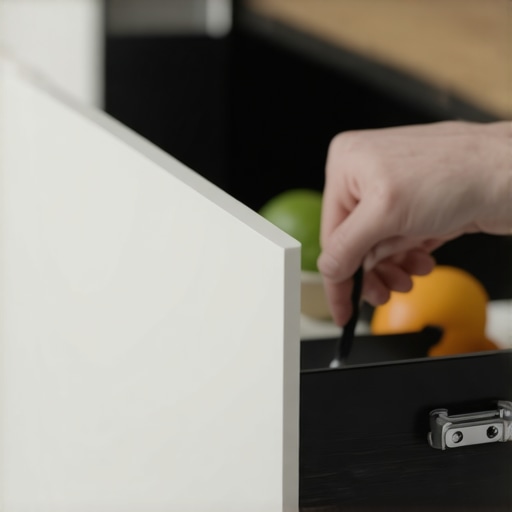
You might think a standard Phillips head screwdriver is all you need, but you are likely stripping your screws. Most high-end European hinges, like those from Blum or Grass, actually use a PoziDriv #2 bit. It looks like a Phillips but has small tick marks between the main cross. Using the right bit prevents the metal from rounding out, which is essential when you need to handle re-aligning doors after seasonal humidity changes. According to technical documentation from Blum, their hinges are tested for 200,000 cycles, but only if they remain properly aligned. A door that is hanging crooked puts uneven pressure on the internal spring, leading to premature failure. I suggest keeping a dedicated PoziDriv driver in your junk drawer specifically for these quarterly ‘tune-ups.’
How do I maintain my storage hardware over time?
Maintenance is less about deep cleaning and more about ‘listening’ to your kitchen. If you hear a click or a grind, stop and investigate immediately. Often, it is just a loose mounting screw that, if left alone, will eventually strip the wood out completely. For modern kitchen remodels, I recommend a simple ‘wipe and tighten’ schedule every six months. Check the tightness of your handles to avoid the hardware mistake that makes expensive cabinets look cheap. A loose pull will eventually wiggle enough to scratch the finish of the wood panel, a repair that is much more expensive than thirty seconds with a screwdriver. 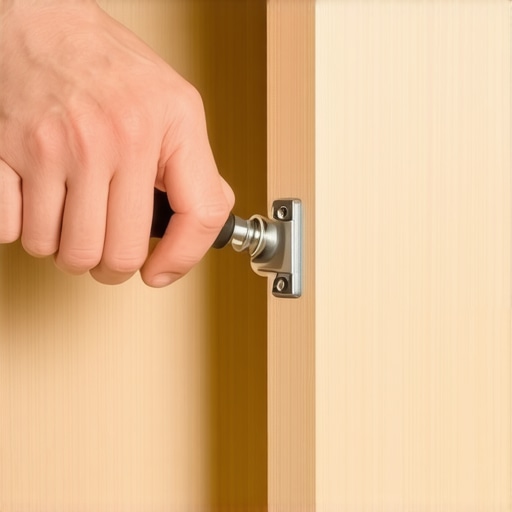
What the next decade looks like for kitchen storage
As we look toward the future of built-in storage solutions, I predict we will see a massive shift toward integrated sensory technology. Imagine a drawer that alerts your phone when the humidity inside hits a level that might warp your delicate spices, or pull-outs with built-in LED strips that automatically dim based on the time of day. We are already seeing smart storage solutions for small kitchens in 2025 incorporating motor-assisted openings for hands-free access. This is no longer sci-fi; it is the next step in accessibility for aging-in-place designs. If you want to keep your kitchen ahead of the curve, focus on the ‘bones’ today so they can support the tech of tomorrow. I challenge you to go to your kitchen right now and adjust just one sagging door; you will be amazed at how much better the whole room feels when the lines are straight. If you have any questions about specific hardware, contact us today.
The Most Expensive Mistake I Ever Made with Custom Cabinetry
If there is one thing I’ve learned from decades in the field, it is that a kitchen layout is a living thing. When you view custom cabinets as a game changer, you start to see that the best designs aren’t about the number of bells and whistles you can cram into a drawer. I’ve seen homeowners spend thousands on motorized pull-outs only to realize they actually miss the simple reliability of a wide, sturdy shelf. My biggest ‘lightbulb moment’ was realizing that we often build for the idea of who we are—the gourmet chef who needs thirty different vinegars—rather than the person who just wants to find a spatula without a fight.
Remember these three core truths as you plan: First, if a storage unit has more than two moving parts, it’s a maintenance liability. Second, vertical space is a gift, but only if you have a plan to reach it. And third, never let a ‘cool’ gadget override your natural workflow. Avoiding the hardware mistake that makes expensive cabinets look cheap isn’t just about the finish; it’s about choosing the right tool for the job.
The Tools I Keep in My Junk Drawer for Cabinet Emergencies
#IMAGE_PLACEHOLDER_E#
Maintaining your kitchen doesn’t require a workshop full of power tools. I always recommend a few specifics for every homeowner. First, a PoziDriv #2 screwdriver is non-negotiable for those high-end hinges; using a Phillips will only lead to frustration and stripped screws. Second, a can of dry PTFE lubricant will keep your drawers gliding like silk without attracting the grease and grime that common oils do. If you notice your slow-close hinges are suddenly sluggish, these two items are your first line of defense.
I also trust the guidelines set by the National Kitchen & Bath Association (NKBA) for clearance and reach. Their research on the ‘human reach envelope’ is the gold standard for creating storage solutions that don’t result in back strain. Having these resources at hand helps you move from being a frustrated cook to a confident kitchen master.
Don’t Settle for a Kitchen That Fights You
Your kitchen should be a place of creativity and connection, not a source of daily friction. By choosing to prioritize accessibility over sheer volume, you are investing in the long-term joy of your home. Take the time to audit your current space—measure those gaps, test your reach, and don’t be afraid to leave a little breathing room in your layout. High-quality storage solutions are the ones that disappear into your routine because they work so perfectly you forget they are there. If you’re ready to stop guessing and start building a kitchen that truly serves you, contact us to discuss your next project. Have you ever installed a kitchen ‘hack’ that ended up being a total headache? Let me know in the comments—I’d love to hear your stories!