Why Your Slow-Close Hinges Are Suddenly Sluggish and How to Clean Them
I’ll never forget the morning I realized my “soft-close” kitchen was becoming a “no-close” disaster. I was reaching for my third cup of coffee, and as I let go of the cabinet door, I expected that satisfying, silent glide. Instead? Nothing. The door just hovered there, sluggish and stubborn, like it was wading through molasses. It felt like a betrayal. When you invest in custom cabinets during a remodel, you expect that smooth performance to last forever. But here I was, staring at a door that refused to seat itself properly against the frame.
Why Your Fancy Hinges Are Quitting on You
The truth is, even the best hardware isn’t immune to the chaos of a working home. We often think of cabinet hardware as “set it and forget it,” but it’s a mechanical system. Over time, the internal hydraulic dampers—the little pistons that give you that “soft” effect—can get bogged down by the invisible enemies of the kitchen: aerosolized grease and fine dust. I learned this the hard way years ago. I thought I could solve a sticking hinge with a massive blast of heavy-duty lubricant. It was a disaster. That oil acted like a magnet for every speck of flour and pet hair in the house, creating a black, gritty paste that eventually seized the mechanism entirely. It is the kind of hardware mistake that makes expensive cabinets feel cheap in an instant. Today, I’m going to show you how to strip away that gunk and restore that factory-fresh glide without ruining your finishes.
Are these expensive hinges actually worth the hype?
You might be wondering if you just bought a lemon or if slow-close technology is just another gimmick destined to fail. According to technical specifications from leading manufacturers like Blum, high-quality hinges are engineered to endure 200,000 opening and closing cycles. That is decades of use! If yours are failing after just a few years, it is almost certainly a maintenance issue rather than a hardware defect. Often, it is just a matter of adjusting the tension or cleaning the piston. Before we get into the degreasing process, I have to ask: Have you noticed one specific cabinet—maybe the one right above the stove or the toaster—acting worse than the others? That is your first clue that heat and grease are the primary culprits. Let’s get these moving again.
Restore the Factory Glide with a Deep Clean
To get your hardware back to its peak performance, you have to stop thinking about oil and start thinking about degreasing. I once spent three hours scrubbing the hinges of a client’s modern kitchen remodel because they had been frying bacon daily for six months without a vent fan. The hinges were literally fuzzy with grease-trapped dust. I didn’t need a mechanic; I needed a bowl of warm water and a toothbrush. If your doors are hanging open by an inch or two, the internal piston is likely snagged on a microscopic layer of tacky residue.
Pull the Hinge Out of the Gunk Zone
You cannot effectively clean a hinge while it is still attached to the door. Most modern European-style hinges have a quick-release clip at the back of the arm. Press it, and the door will pop right off the mounting plate. Lay the door on a soft towel to protect the finish. I learned this the hard way after scratching a pristine Shaker door on a granite countertop. Once the hinges are off, you can see the tiny hydraulic arm inside the metal casing. This is where the quick cleaning fix begins. Use a soft-bristled brush—an old toothbrush is perfect—dipped in a solution of warm water and a high-quality grease-cutting dish soap. Gently scrub the joints and the visible part of the piston. Do not submerge the hinge entirely; you just want to break up the surface tension of the grease. 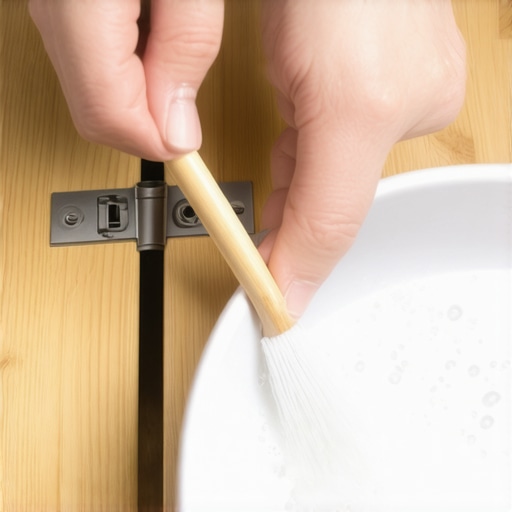
Why Dish Soap Beats Heavy Lubricants Every Time
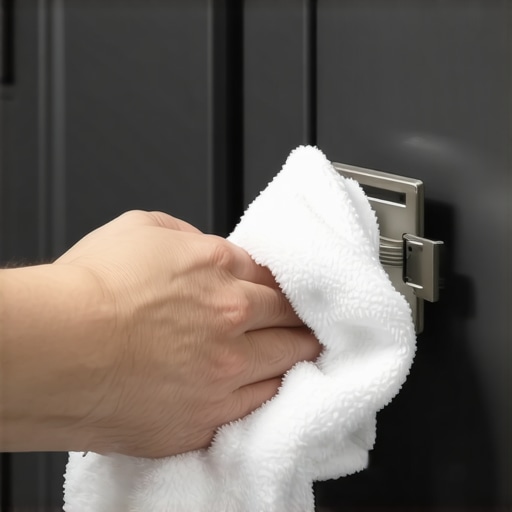
The biggest mistake I see is homeowners reaching for a can of WD-40. While it might provide a temporary fix, that stuff is a solvent, not a long-term lubricant, and it will eventually dry out and leave behind even more residue. If you absolutely must lubricate after cleaning, use a tiny drop of dry silicone spray or graphite. This prevents the ‘magnet effect’ where dust sticks to the hinge. If you are dealing with custom cabinets in your remodel, you want to maintain that high-end feel without the chemical smell or the mess. Wipe everything bone-dry with a microfiber cloth before re-installing. If the door still refuses to seat, the issue isn’t dirt—it is the tension settings.
Give that Tension Screw a Tiny Turn
Most people don’t realize that soft-close hinges often have a built-in ‘speed’ or ‘tension’ adjustment. This is usually a small screw or a plastic slider located on the hinge cup or the arm. If the door is too slow, you are likely dealing with a simple tension adjustment that has been bumped or was never set correctly. Turn the screw toward the minus sign (usually counter-clockwise) to reduce the resistance. In that same grease-clogged kitchen I mentioned earlier, half the ‘broken’ hinges just needed a quarter-turn to compensate for the weight of the heavy solid-wood doors. Test the door after every quarter-turn. Over-adjusting can actually cause the internal spring to pop out of its track, which is a one-way ticket to the hardware store for a replacement.But hinges aren’t the only thing that can fail in a custom kitchen. Sometimes, it is the very layout of the storage that breaks down over time. We have all been taught that ‘more’ is always better. More cabinets, deeper shelves, and floor-to-ceiling storage seem like the dream. But in my experience, chasing volume over accessibility is the fastest way to ruin a high-end remodel. I have seen clients insist on 24-inch deep base cabinets without any internal hardware, only to find themselves crawling on the floor with a flashlight six months later to find a roasting pan. It is a classic mistake: creating a black hole in your kitchen while trying to save on pull-out costs.
Is your deep pantry actually a black hole in disguise?
Most people assume that a walk-in pantry is the gold standard for organization. I’m here to tell you it’s often a waste of square footage. Unless you have the space for a true butler’s pantry, a pull-out pantry beats deep walk-in shelves every single time because it brings the contents to you. The National Kitchen & Bath Association (NKBA) highlights ‘reach ranges’ as a critical ergonomic factor; essentially, if you have to move three items to get to the one you want, your storage has failed. This is why I always push for expert tips on selecting storage solutions that prioritize the ‘first-layer’ visibility of your goods. 
The 29-inch rule you can’t afford to ignore
One of the most common traps I see in modern homes is the poorly planned built-in workstation. Homeowners often try to match the height of their desk to their kitchen counters for a seamless look. This is a massive ergonomic blunder. In the world of modern kitchen remodels featuring custom cabinets, the transition to a desk area requires a drop in height. I’ve had to go back and fix several ‘beautiful’ offices because the owners realized 29 inches is the only correct height for a built-in desk. Anything higher and you are begging for carpal tunnel and a stiff neck. It is these technical nuances—the things that don’t show up on a Pinterest board—that separate a functional home from a frustrating one.
Why clearances matter more than cabinet count
Another ‘oops’ factor involves the flow of the room. You might think you can squeeze in a massive island to get that extra storage, but if you don’t have a 36-inch clearance between your island and countertop, your kitchen will feel like a cage. When you are planning custom cabinets as a game-changer in your kitchen remodel, you must respect the physics of the space. Have you ever fallen into the trap of choosing ‘looks’ over ‘logic’ in your storage? Let me know in the comments. Let’s make sure your next upgrade actually works for your lifestyle, not against it.Even the most perfectly executed layout eventually requires a tune-up. I always tell my clients that a high-end kitchen is like a precision-engineered car; you wouldn’t drive a Porsche for five years without an oil change, so don’t expect your cabinetry to stay silent and straight without a little attention. The most important tool in my kit isn’t a power drill—it is a PoziDriv #2 screwdriver. If you look closely at your European-style hinges, you will notice a tiny ‘star’ shape between the main cross of the screw. That is not a standard Phillips head. According to the Blum Technical Manual, using a standard Phillips screwdriver on these adjustment screws leads to ‘cam-out’ and stripped heads. When you are learning how to adjust European hinges when your doors are crooked, using the correct bit is the difference between a five-minute fix and a ruined piece of hardware.
Don’t Ignore the Moisture Creeping Under Your Sink
The quickest way to destroy a $50,000 remodel is a slow, silent drip under the sink. I’ve seen beautiful plywood boxes turn into mush because a $2 plastic connection on the garbage disposal failed. This is why I consider it non-negotiable that you need a waterproof liner in your sink base cabinet. It’s a small detail, but in the world of modern kitchen remodels featuring custom cabinets and built-ins, it is the one thing that guarantees your investment survives an appliance failure. 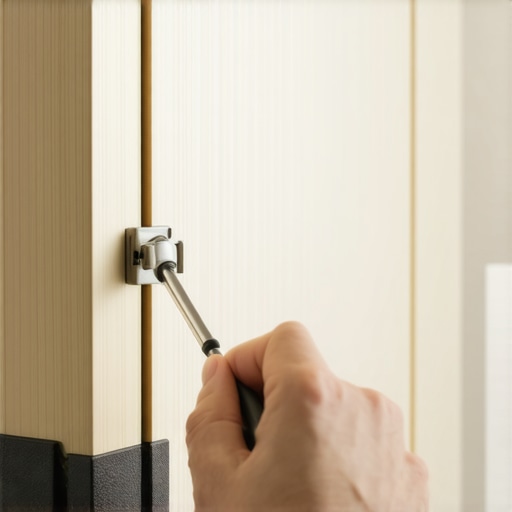
How do I keep my custom built-ins looking new for decades?
The secret to longevity isn’t just cleaning; it’s environmental control. Wood is a living material that breathes. If your home’s humidity swings wildly between summer and winter, those tight tolerances we worked so hard to achieve will shift. You might notice inset cabinet gaps changing after seasonal humidity shifts. Keep your home at a consistent 35-50% humidity level to prevent warping. For the future, I predict we will see more ‘smart’ cabinetry that includes built-in sensors to alert you to high moisture levels or hinge fatigue before the door actually sags. We are moving toward a world where your smart storage ideas to maximize your kitchen space will include automated lighting and integrated health-monitoring for the wood itself.
Scale Your Storage Without Adding Clutter
If you find yourself running out of room, don’t just add more boxes to the walls. Look for the dead spaces. I’ve had massive success maximizing space with innovative storage solutions for every room by looking at toe-kicks and the gaps between studs. These are the areas where expert tips on selecting storage solutions really pay off. Instead of a standard base, why not a toe-kick drawer for cookie sheets? If you are ready to take the next step in your home’s evolution, I encourage you to grab a PoziDriv screwdriver and perform the ‘Quarter-Turn Test’ on your most-used cabinet today—you’ll be amazed at how much better it feels. If you need help identifying your hardware or planning a more significant upgrade, feel free to contact us for a deeper dive into your specific layout.
The Hardest Lesson I Learned About Custom Cabinet Longevity
Over years of working with custom cabinets as a game-changer in your kitchen remodel journey, the most humbling realization I have had is that beauty is fragile without routine. I have seen stunning, expensive installs fall apart not because of poor craftsmanship, but because the owner did not know wood effectively breathes. One of the biggest hardware mistakes that makes expensive cabinets look cheap is ignoring the slight sag of a door or the grit in a hinge. If you catch it early, it is a five-minute fix; if you wait, you are looking at structural damage. Also, never underestimate the power of airflow; kitchens are moisture factories, and without proper venting, even the best finishes will suffer over time.
The Toolkit I Use to Keep Kitchens Running Like New
If you want to maintain your investment, you do not need a garage full of power tools. You need a few specific, high-quality items. First, ditch the Phillips screwdriver for a PoziDriv #2; it is the only way to adjust European hinges when your doors are crooked without stripping the heads. Second, I always recommend a simple digital hygrometer to monitor humidity levels to prevent seasonal warping. Finally, ensure you have a waterproof liner in your sink base cabinet. It is the cheapest insurance policy you will ever buy for your modern kitchen remodel. #IMAGE_PLACEHOLDER_E#
Take the First Step Toward a Kitchen That Works for You
A kitchen should not just be a place where you cook; it should be a system that supports your lifestyle. Whether you are looking for smart storage ideas to maximize your kitchen space this year or you are finally tackling a full kitchen upgrade with expert storage solutions, the key is to prioritize function and ease of use. Do not let a sluggish cabinet door or a cluttered pantry steal the joy of your home. Start small, adjust one hinge today, and feel the difference that precision makes in your daily routine.
Have you ever had a cabinet door that just would not stay shut no matter how much you fiddled with it? Let me know in the comments below!