The Cabinet Depth Secret for Storing Large Pizza Stones and Trays
I still remember the night my 16-inch Cordierite pizza stone won the war against my kitchen cabinets. I was reaching for a muffin tin, and like a slow-motion disaster, the stone slid forward, caught the lip of the shelf, and crashed. It didn’t break, but my floor—and my pride—took a serious hit. We spend thousands on a stylish kitchen overhaul, yet we’re still shoving our most used baking gear into dark corners like we’re hiding a secret. Today, I’m letting you in on the real secret: your cabinet depth is lying to you, and it’s time to fix the “avalanche” once and for all.
Give Your Heavy Trays a Proper Home Instead of a Hiding Spot
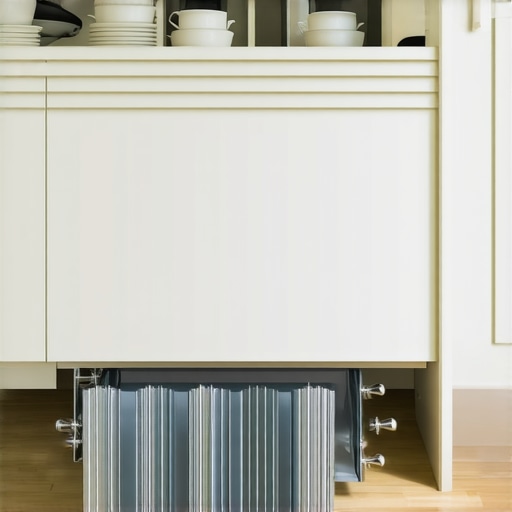
The “cabinet depth secret” isn’t just about adding inches; it’s about reclaiming the dead space that most builders ignore. In my early days as a DIY enthusiast, I made the classic baking sheet storage mistake: I thought standard 12-inch uppers were “good enough.” I ended up with trays sticking out half an inch, preventing the doors from closing. It looked terrible and felt even worse. According to the National Kitchen & Bath Association, one of the most common complaints in kitchen design is “insufficient storage for oversized items,” often because we stick to “standard” sizes designed decades ago. If you’re planning a kitchen remodel journey, you have to look at the math. A standard 15-inch pizza stone simply won’t fit in a standard upper cabinet once you account for the back panel and the door clearance. That’s why I’ve become such a loud advocate for the baking center move. By shifting these heavy, awkward items to deeper base cabinets or opting for 15-inch deep upper cabinets, you stop the struggle before it starts.
Is Custom Depth Actually Worth the Extra Cost?
I get it. When you’re looking at a quote, “custom” sounds like a synonym for “expensive.” You might wonder if you can just keep leaning your trays against the side of the oven. But let’s be realistic: how many times a week do you fight that “clatter” of falling metal? Investing in smart storage hacks isn’t just about aesthetics; it’s about the sanity of your Tuesday night dinner prep. I’ve seen so many people settle for basic boxes, only to realize later that their professional-grade 26-inch baking sheets literally won’t fit anywhere. Have you ever had a heavy pizza stone or a stack of cookie sheets come flying out at you when you were just looking for a spatula? It’s a rite of passage for most of us, but it doesn’t have to be your reality.
Plan Your Storage Around Your Largest Item Instead of Your Smallest
To get this right, you have to stop looking at your cabinets as generic boxes and start seeing them as custom-fit suits for your cookware. Most people make the mistake of measuring the width of their trays but completely ignore the clearance needed for the cabinet door to actually latch. If you are starting a kitchen remodel journey, you need to inventory your ‘problem children’—those oversized items that currently live on top of the fridge or in the oven. I once spent an entire Saturday helping a neighbor retro-fit dividers into her pantry. We were so proud of the tight spacing until we realized the European hinges on the inside of the frame effectively stole an inch of usable width. We had to rip out the end divider and start over just to fit her favorite rimmed cookie sheet. It was a messy, sawdust-filled lesson in ‘measuring twice and accounting for hardware.’
The Three-Inch Rule for Door Clearance
Trying to fit a 15-inch stone in a 12-inch cabinet is like trying to park a full-sized SUV in a compact spot; you can get the nose in, but you’re never closing the garage door. When you look at 15-inch deep upper cabinets, you aren’t just getting extra room for plates. You are gaining the necessary buffer so that the cabinet back-panel and the thickness of the door don’t pinch your gear. For heavy pizza stones, always subtract 1.5 inches from the ‘advertised’ depth of a cabinet to find your true ‘safe zone.’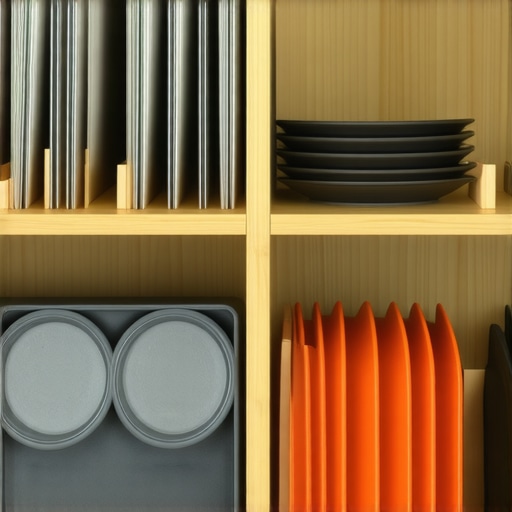
Ditch the Stack and Go Vertical
The absolute best way to store baking sheets so they dont avalanche is to stop stacking them horizontally. Stacking creates a ‘Jenga’ effect where you have to lift four heavy items to get to the one at the bottom. By installing vertical dividers—either permanent wood slats or adjustable metal inserts—you distribute the weight across the shelf rather than piling it on one point. This is why innovative storage solutions for modern kitchen remodels almost always feature ‘tray dividers’ in the base cabinets next to the range.
Why Base Cabinets Win the Weight Battle
While deep uppers are great for lightweight trays, your heavy Cordierite or cast iron stones belong in the ‘power zone.’ I advocate for the baking center move, which places these 10-to-15-pound items below the counter. Not only is it safer for your toes, but base cabinets are structurally better suited for the load. If you are worried about losing space, remember that smart storage ideas to maximize your kitchen space this year focus on high-density organization. A single 12-inch wide base cabinet with vertical slots can hold twelve baking sheets and two pizza stones comfortably, which is far more efficient than a messy pile in a wide, shallow drawer.Everyone tells you that a successful kitchen remodel journey is all about maximizing square footage, but I’m here to tell you that more cabinets often lead to more clutter. In my experience, ‘volume’ is the enemy of ‘utility.’ We think that by adding more boxes, we’re solving our storage woes, but without a strategy for functional density, you’re just building a bigger graveyard for your gadgets. The real nuance lies in how you handle the specific weight and dimensions of your ‘problem’ items.
Stop Adding Cabinets and Start Adding Organization
The biggest trap I see homeowners fall into during innovative storage solutions for modern kitchen remodels is ignoring the structural physics of their shelving. We assume that because a cabinet is ‘custom,’ it is indestructible. However, placing a 12-pound pizza stone in the center of a wide, unsupported shelf is a recipe for a permanent sag. According to the Kitchen Cabinet Manufacturers Association (KCMA), standard shelves are typically rated for 15 pounds per square foot, but that rating assumes an even distribution of weight. A heavy Cordierite stone creates a concentrated point load that can warp even high-end materials over time. This is why we recommend plywood shelves over solid wood for long spans; the cross-grain layers provide the sheer strength necessary to resist that middle-shelf dip.
Can Your Shelves Actually Handle a 15-Pound Load?
If you’re serious about your baking gear, you need to look at your hardware as much as your wood. The ‘oops’ factor that kills most DIY or semi-custom projects is the failure to account for dynamic weight—the force of you sliding a heavy stone out of a vertical slot. This movement puts lateral stress on the dividers. If you’ve used flimsy plastic pegs, they will eventually shear off. Instead, look for expert tips on selecting storage solutions for a perfect kitchen upgrade that prioritize metal-to-metal connections for vertical dividers. 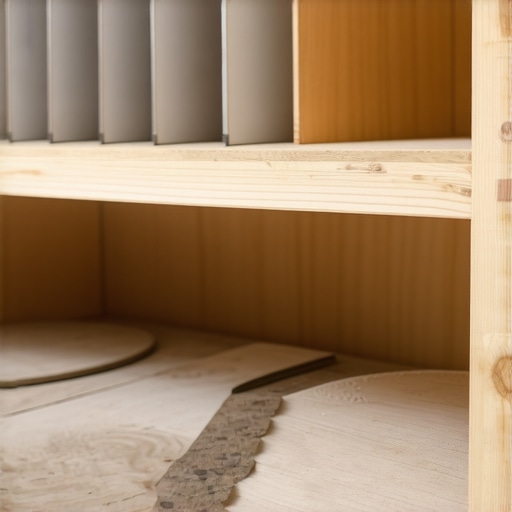
Why Heavy Stones Kill Standard Drawer Slides
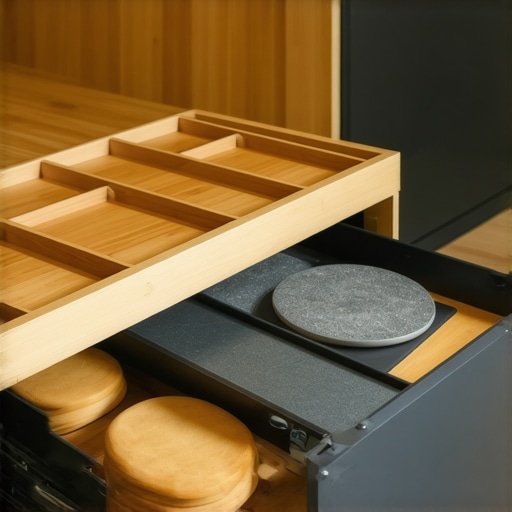
I’ve seen countless high-end kitchens where the homeowner insisted on putting their entire stone collection into a deep ‘pot and pan’ drawer. Six months later, they’re calling me because the drawer feels ‘crunchy’ or won’t close all the way. This is usually why your soft-close slides are failing and the quick cleaning fix won’t always work—you’ve likely exceeded the ball-bearing weight limit. Most standard slides are rated for 75 to 100 pounds, which sounds like a lot until you realize the drawer box itself weighs 20 pounds, and your cast iron and pizza stones add another 60. You are operating at the absolute limit of the hardware’s capacity every time you bake. Don’t make the hardware mistake that makes expensive cabinets look cheap; upgrade to heavy-duty 150-pound rated slides if you’re planning a dedicated baking drawer. It’s a small upcharge that prevents a massive headache three years down the road. Have you ever fallen into the ‘overstuffed drawer’ trap? Let me know in the comments.I’ve learned the hard way that even the most innovative storage solutions for modern kitchen remodels can fail if you treat them as ‘set it and forget it’ projects. When you are dealing with the sheer weight of Cordierite and cast iron, the mechanical components of your cabinetry are under constant stress. This is where I stop being a ‘DIY-er’ and start being a ‘hardware snob.’ For my heavy-duty baking centers, I strictly use 150-pound rated, full-extension ball-bearing slides from brands like Blum or Grass. Why? Because the ‘standard’ slides you find in a big-box store are often rated for static weight, not the dynamic force of a heavy drawer being yanked open by a hungry home chef. According to the ANSI/KCMA A161.1-2022 performance standard, certified cabinets must pass a series of rigorous weight and cycle tests, including a 200-pound point load on the bottom of the unit. If your hardware isn’t up to that specific engineering standard, it’s not a matter of ‘if’ it will fail, but ‘when.’
The Hardware That Actually Survives a Heavy Pizza Stone
In my own kitchen, I’ve moved away from traditional wooden dividers for my heaviest items. While they look great, they can be difficult to clean and even harder to adjust as your collection grows. I now recommend using chrome-plated steel vertical dividers that lock into pre-drilled holes in the cabinet floor. They provide the necessary lateral support to keep a heavy stone from tipping without adding the bulk of a 3/4-inch plywood divider. This is a key part of expert tips on selecting storage solutions for a perfect kitchen upgrade because it allows your cabinet to evolve. If you switch from a round stone to a rectangular baking steel, you can move the dividers in seconds rather than reaching for a saw. 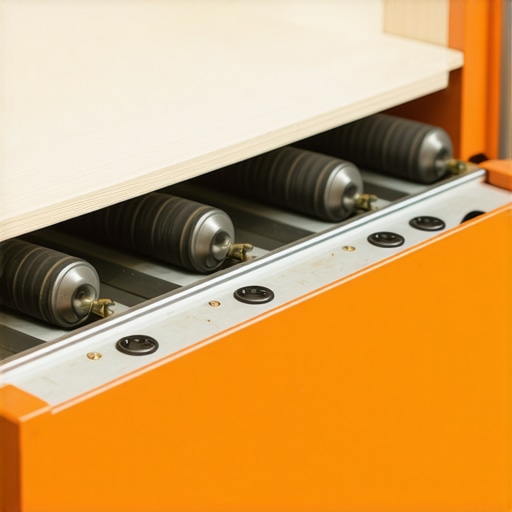
How do I maintain my cabinet hardware over time?
Maintenance for heavy-duty storage is less about ‘cleaning’ and more about ‘tension and lubrication.’ Every six months, I do a ‘hardware sweep.’ First, I check the mounting screws on my drawer slides. The vibrations from daily use—and the impact of heavy items hitting the back of the drawer—can slowly back those screws out. If you find a loose one, don’t just tighten it; add a drop of thread-locking fluid to ensure it stays put. Second, I use a small amount of white lithium grease on the ball bearings of my slides. This prevents the ‘crunchy’ sound that often leads to why soft-close hinges fail and the simple tension adjustment issues later on. If your doors are hanging slightly lower than they used to, you need to know how to adjust European hinges when your doors are crooked before the wood starts to rub and strip the finish.
What the Future Holds for Heavy Kitchen Storage
Looking ahead to 2025 and beyond, I predict we will see more ‘modular metal inserts’ becoming the standard for any custom cabinets as a game changer in your kitchen remodel journey. The trend is moving toward hybrid construction—plywood boxes for strength with high-tech, adjustable metal internals for flexibility. We are even seeing smart sensors integrated into pantry shelves that can alert you if a shelf is beginning to sag or exceed its weight limit. For now, my best advice is to over-engineer everything. If your stone weighs 12 pounds, build your storage for 50. Take ten minutes this weekend to check the ‘sag’ on your widest shelf; if you see even a 1/8th-inch dip, it’s time to add a center support before it becomes a permanent warp.
Hard Lessons from a Pizza Stone Avalanche
After years of designing and breaking in my own kitchens, I’ve realized that the ‘standard’ kitchen isn’t built for the modern baker. My biggest lightbulb moment came when I stopped measuring for ‘space’ and started measuring for ‘stress.’ When you realize that why plywood box construction still wins over furniture board in wet areas actually applies to heavy-duty pantry shelving too, your design perspective shifts. I’ve learned that a 12-inch cabinet isn’t really 12 inches of storage; it’s 9 inches of storage once you account for the structural ‘bones.’ My hardest lesson? Never assume a shelf can handle a 15-pound stone just because it fits. If the shelf doesn’t have a center support, it’s a ticking time bomb for your expensive ceramic gear. I now prioritize structural integrity over total volume every single time.
What I Keep in My Professional Tool Belt
If you want your storage to last as long as your home, you need to be picky about the small stuff. I swear by Blum Movento or Grass Dynapro slides for any drawer holding more than a few spatulas. These aren’t just slides; they are the suspension system for your cookware. I also recommend checking out expert tips on selecting storage solutions for a perfect kitchen upgrade to understand why metal vertical dividers beat wood every day of the week—they don’t swell with humidity and they provide much thinner profiles. Finally, always keep a tube of high-quality white lithium grease handy. It’s the secret to keeping those heavy-duty slides moving like butter even after years of supporting your heavy cast iron collection.
Your Path to an Avalanche-Free Kitchen
You don’t have to live with the fear of falling cookie sheets or cracked pizza stones. By choosing to prioritize depth and weight capacity now, you are investing in a kitchen that works with you, not against you. Whether you are just starting to plan or are in the middle of a teardown, remember that transforming your kitchen with custom cabinets is about more than just new doors—it’s about creating a foundation that supports your passion for cooking. Take it one drawer at a time, and don’t be afraid to over-engineer your storage. Your toes, your floor, and your sanity will thank you. What is the heaviest or most awkward item currently causing chaos in your kitchen? Let me know in the comments below!