Why Every Tall Pantry Needs a Fixed Middle Support Shelf
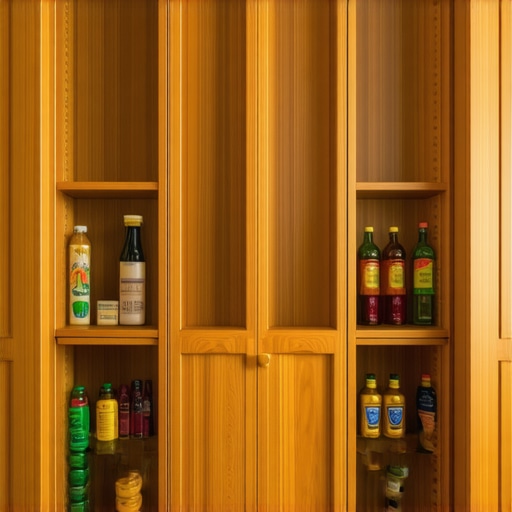
I remember the sound vividly. It wasn’t a crash, but a slow, agonizing groan of wood fibers reaching their absolute limit. I had just finished what I thought was a flawless [modern kitchen remodel](https://artisancabinetworkz.com/modern-kitchen-remodels-featuring-custom-cabinets-and-built-ins) for a friend, installing a towering, 84-inch tall pantry. We loaded it with the heavy hitters—gallons of olive oil, 20-pound bags of rice, and enough canned tomatoes to survive a long winter. Ten minutes later, I noticed the side gables were literally bowing outward like a pair of parenthesis. I had made the ultimate rookie mistake: I treated a seven-foot tall cabinet like a small wall cabinet. I didn’t include a fixed shelf to tie the whole thing together, and it nearly cost us the entire [custom cabinet](https://artisancabinetworkz.com/the-ultimate-guide-to-custom-cabinets-for-a-stylish-kitchen-overhaul) installation. Today, I am going to show you why that middle shelf isn’t just a suggestion—it is a structural requirement.
The Structural Secret That Keeps Your Pantry From Buckling
A tall pantry is a beast of a different nature. Unlike standard base cabinets, these towering units face immense lateral pressure from the sheer volume of weight they hold. When you load those adjustable shelves, the weight doesn’t just push down; it creates a force that pushes the side walls out. Without a fixed or permanent shelf—usually placed right at counter height—the sides of the cabinet can splay. This causes your adjustable shelves to lose their grip on the pins and come crashing down in a terrifying domino effect. Believe me, [innovative storage solutions](https://artisancabinetworkz.com/innovative-storage-solutions-for-modern-kitchen-remodels) mean nothing if the box itself fails. That is why I always recommend a fixed middle support to act as a structural tension tie. It is the backbone of any reliable [built-in storage](https://artisancabinetworkz.com/built-ins-and-storage-hacks-for-a-sleek-functional-kitchen) system, locking the two side panels together so they can’t wander under pressure. I’ve seen it time and again in [custom cabinets as a game changer](https://artisancabinetworkz.com/custom-cabinets-as-a-game-changer-in-your-kitchen-remodel-journey) projects where the homeowner is focused on the finish but ignores the skeleton. When I started out, I thought more holes for pins meant more value, but I was wrong. I once had a client whose entire spice collection ended up as a glass-and-cumin slurry on the floor because the cabinet gables had spread just enough for the pins to lose their bite. While choosing [plywood shelves over solid wood](https://artisancabinetworkz.com/why-we-recommend-plywood-shelves-over-solid-wood-for-long-spans) helps with the weight, that fixed middle shelf is what stops the cabinet box from spreading.
Will a Permanent Shelf Mess Up Your Custom Organization?
I get the hesitation. You want total freedom to move things around. But here is the reality: you are almost never going to need an 80-inch tall space for a single item unless you are storing a professional pole vault. By placing one fixed shelf about 36 to 42 inches from the floor, you gain massive stability without losing real-world usability. In fact, most [smart storage ideas](https://artisancabinetworkz.com/smart-storage-ideas-to-maximize-your-kitchen-space-this-year) rely on zones, and that middle shelf becomes the perfect natural divider between heavy floor items and eye-level essentials. According to engineering data from the Forest Products Laboratory, a fixed horizontal member can increase the lateral rigidity of a tall cabinet by over 40%, preventing that dreaded racking or swaying. Have you ever noticed your pantry walls bulging or your shelves feeling a bit wiggly under a full load? It is a sign that your structure is struggling, and we need to fix it before the pantry pancake happens.
Lock the Gable Walls with a Mechanical Bond
To prevent a towering pantry from splaying, you must move beyond simple shelf pins. Think of your cabinet as a suspension bridge: the side gables are the towers, and the shelves are the deck. If those towers move even a fraction of an inch, the whole system fails. In every modern kitchen remodel, I treat the center of the pantry as a structural anchor point. You need a mechanical bond that pulls the two sides toward each other, counteracting the outward pressure of heavy contents. This is the difference between a cabinet that lasts thirty years and one that ends up in a landfill after three. When I am on-site, I start by identifying the 38-inch to 42-inch mark from the floor. This height typically aligns with your countertops and provides a natural break for the pantry zone method, separating heavy bulk items from daily-use staples. 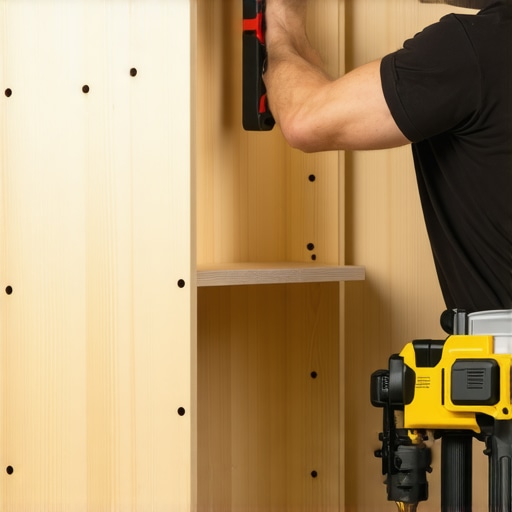
Why Pocket Screws are Your Pantrys Best Friend
In my early days, I tried using standard wood screws through the outside of the gables, but that left ugly holes to patch. Now, I exclusively use pocket-hole joinery on the underside of the fixed shelf. I once worked on a custom cabinet project in Canton where the client insisted on 100% adjustable shelving. Within six months, I was back in their kitchen with a pocket-hole jig because their collection of cast-iron cookware had pushed the gables out by nearly half an inch. The adjustable shelves were barely hanging onto the pins. By retrofitting one fixed shelf with 1-1/4 inch pocket screws, we pulled the sides back into square and permanently solved the bowing issue. It is a simple execution, but it requires precision. You must ensure your shelf is cut exactly to the interior width of the cabinet box; if it is even 1/16th of an inch too short, the screws will pull the gables inward, causing your doors to bind.
Avoid the Particle Board Trap for Heavy Storage
The strength of your structural tie is only as good as the material it is biting into. This is where how to tell if your cabinet maker is using low-grade plywood becomes a vital skill. For a pantry that needs to hold weight, you should always opt for plywood cases over particle board. Particle board is essentially compressed sawdust and glue; under the lateral tension of a structural shelf, the screw threads can eventually strip out or crumble the core. Plywood, with its cross-laminated layers, acts like a series of anchors for your screws. Following expert tips on selecting storage solutions means looking at the skeleton first. If you see a tall pantry without a fixed shelf, you are looking at a ticking time bomb. Use 3/4-inch pre-finished maple plywood for that middle support to ensure the box remains rigid even when loaded with fifty pounds of canned goods. These custom cabinet ideas are about more than just looks; they are about engineering a space that doesn’t buckle under the pressure of real-life usage. Even if you choose high-end finishes, the hardware mistake many make is ignoring the internal structure that keeps those expensive doors aligned.
Beyond the structural skeleton of the pantry, we need to talk about how the interior of your kitchen actually works on a Tuesday night when you’re in a rush. Everyone tells you that ‘more drawers are better’ when planning for smart storage solutions for small kitchens in 2025, but in my experience, that is a half-truth that can lead to a very expensive mistake. While drawers are superior to deep, dark base cabinets, over-drawer-ing your kitchen can actually kill your workflow. When you replace every large opening with three or four shallow drawers, you lose significant vertical clearance and internal volume to the drawer slides and the drawer boxes themselves. I recently consulted on a modern kitchen remodel where the homeowner had so many specialized drawers they couldn’t even fit a standard blender upright anywhere in the base units. It’s about balance, not just maximum drawer count.
Don’t Fall for the More is Better Drawer Myth
The trap many people fall into is prioritizing ‘organization’ over ‘accessibility.’ If you have to open four different drawers to find the components for one meal, your kitchen is failing you. Instead of an all-drawer layout, I advocate for the ‘Zone and Load’ method. Use deep drawers for pots, but keep at least one or two standard cabinets with adjustable shelving for those awkward, tall items like stand mixers or stockpots. Following expert tips on selecting storage solutions means looking at your inventory before you look at a catalog. I’ve seen homeowners insist on stack after stack of narrow drawers, only to find they’ve lost 20% of their usable volume to the mechanical hardware. If you find your drawers are already struggling, you might be facing the 3-step fix for drawer slides that wont stay closed, which is often a symptom of overloading a box that was never meant for that much weight.
Can You Really Over-Engineer a Simple Built-In?
Actually, the danger is usually under-engineering the points of movement. A common ‘oops’ factor I see with innovative storage solutions for modern kitchen remodels is failing to account for the vibration and torque of heavy-duty pull-outs. For example, if you are installing the heavy mixer lift, you cannot treat the cabinet walls like a standard unit. The lateral force of a 30-pound mixer swinging upward can rack a poorly built cabinet box. You need to avoid the cabinet screw mistake by using structural fasteners that bite into a solid plywood core, rather than just the face frame. 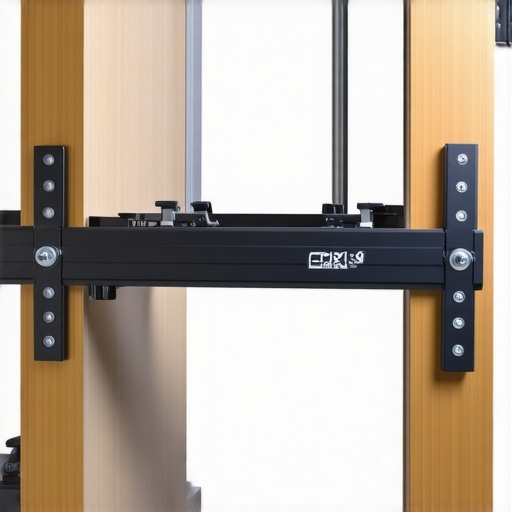
The Hidden Clearance Rule Experts Never Ignore
Sophisticated design is often about the inches you don’t see. A study by the National Kitchen & Bath Association (NKBA) highlights that ergonomic failures—specifically improper vertical spacing between work surfaces and upper cabinets—are the leading cause of post-remodel dissatisfaction. This is especially true when people try to add trendy features like an appliance garage. If you don’t account for the toaster garage error, you risk creating a fire hazard or a cramped corner that no one wants to use. Always ensure you have at least 15 to 18 inches of ‘breathing room’ for your countertop appliances. We often see these issues when people try to cram too many custom cabinets ideas that transform your homes style into a footprint that is too small. Have you ever fallen into this trap of over-organizing yourself into a corner? Let me know in the comments.
Building the cabinet is only half the battle; keeping it in peak condition requires a shift from construction to long-term maintenance. I always tell my clients that a high-end modern kitchen remodel is like a performance vehicle—it needs periodic tuning. Over the first year, your house will settle and the wood will breathe, meaning those perfectly aligned doors might start to drift. This is why I carry a specialized tool kit specifically for post-installation care, centered around the 360-degree green beam laser level. Why green? Human eyes perceive green light as up to four times brighter than red, making it indispensable when checking the plumb of a tall pantry end panel against a shifting floor.
The Pro Level Tools That Eliminate Guesswork
If you are serious about maintaining innovative storage solutions for modern kitchen remodels, you need to stop using a bubble level. I personally use a Bosch GLL3-330CG because it allows me to see exactly how a cabinet box is twisting in real-time as I adjust the feet. For the hardware itself, I never leave home without a Pozi-drive screwdriver. Most people make the mistake of using a standard Phillips head on European hinges, which eventually strips the soft zinc screws. Using the correct bit ensures you can adjust european hinges when your doors are crooked without ruining the mechanism. 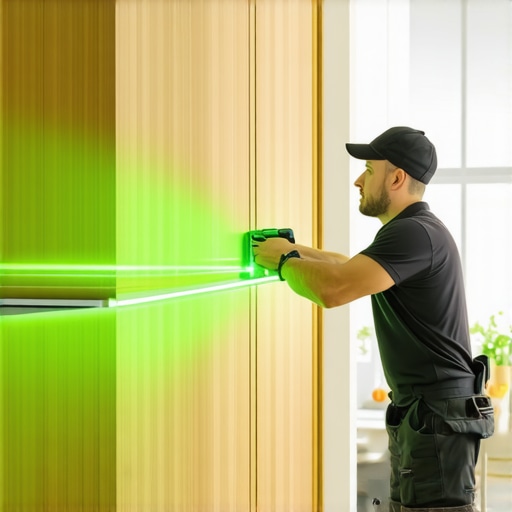
How do I keep my custom pantry moving smoothly for a decade?
Maintenance isn’t just about tightening screws; it is about managing the mechanical friction of your moving parts. According to the Blum Technical Product Manual, their premium slide systems are rated for up to 100,000 cycles, but that rating assumes the tracks remain free of household debris. I’ve seen $20,000 kitchens hampered by crunchy drawer movements because of simple dust buildup. Every six months, you should vacuum out the tracks of your heavy-duty pull-outs. If things feel sluggish, you might need the quick cleaning fix for soft-close slides. I recommend a dry PTFE spray rather than a wet oil; wet lubricants act like a magnet for flour and pet hair, creating a sticky paste that will eventually cause drawer slides that wont stay closed.
Predicting the Future of High-Tech Cabinetry
Looking ahead, I see the industry moving toward what I call the ‘Smart Skeleton.’ We are already seeing prototypes of hardware with integrated tension sensors that can alert a homeowner via smartphone if a shelf is beginning to sag or if the humidity inside a custom cabinet has reached levels that risk warping the solid wood doors. For now, the best ‘smart’ move you can make is following expert tips on selecting storage solutions that prioritize accessibility for repairs. Try this: tonight, check the gap between your two most-used cabinet doors. If it isn’t a perfectly straight 1/8-inch reveal, grab your Pozi-driver and give the depth screw a quarter-turn. Taking ten minutes once a season to re-square your doors will prevent the hinges from wearing unevenly and keep your kitchen looking brand new for twenty years. If you’re feeling overwhelmed by the technical side, you can always reach out through our contact page for a professional assessment.
Hard-Won Truths from a Decade in the Woodshop
After years of fixing failures, I’ve realized that a modern kitchen remodel isn’t about how many features you can squeeze into a floor plan, but how well those features survive daily use. Here are a few lightbulb moments I wish I had on day one: first, never assume a floor is level, even in brand-new construction. Always build your custom cabinets with adjustable feet to compensate for the house’s inevitable settling. Second, the “reveal” or the gap between your doors is the first thing to drift as humidity changes. Don’t panic when it happens; simply learn how to adjust european hinges when your doors are crooked to keep things looking sharp. Finally, prioritize the “skeleton” of the box over the “skin” of the finish. A beautiful hand-painted door won’t hide a sagging cabinet box for long if the internal supports aren’t there.
Tools and Resources That Keep My Shop Running
Precision is the difference between a DIY look and a professional finish. For setting the plumb of built-in storage, I swear by the Bosch GLL3-330CG green laser level—it’s much easier to see in bright kitchens than red beams. I also keep the Blum Technical Product Manual bookmarked on my tablet; it is the absolute gold standard for expert tips on selecting storage solutions and hardware tolerances. For those looking to dive deeper into ergonomics, the National Kitchen & Bath Association (NKBA) guidelines provide the data-driven clearances you need to ensure your island or pantry doesn’t become a bottleneck.
Turning Your Vision into a Structural Reality
Your home is your most personal environment, and getting the storage right is the ultimate gift to your future self. Whether you are deep in the technical planning of innovative storage solutions for modern kitchen remodels or just starting to browse styles, remember that structural integrity is what makes a design timeless. Don’t be afraid to demand better materials like plywood cores and mechanical fasteners—your custom cabinets as a game changer journey depends on a foundation that doesn’t buckle under the weight of real life. If you are ready to start building a space that lasts, feel free to reach out via our contact page for a consultation. Have you ever noticed your pantry shelves bowing under the weight of your groceries? Let me know your experiences in the comments below!