The Cabinet Screw Mistake That Causes Heavy Drawers to Fail
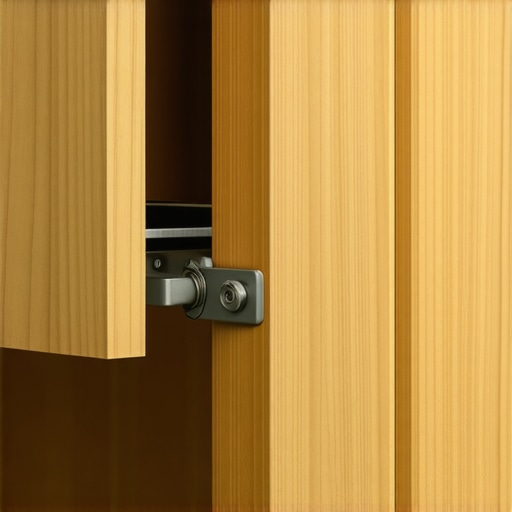
I will never forget the sound of my heavy cast iron skillet drawer hitting the floor at two in the morning. It sounded like a gunshot in a quiet house. My wife and I had just invested a small fortune into modern kitchen remodels, and I had insisted on installing the drawer slides myself to save a few bucks. I stood there in my pajamas, staring at a pile of pans and a drawer box that had completely sheared off its tracks. The culprit? A handful of tiny, #6 zinc-plated wood screws that I thought were good enough. It was a classic rookie move that turned a dream kitchen into a midnight disaster.
Don’t Let Your Heavy Drawers Become Floor Decor
The mistake I made is one I see all the time in DIY circles and even some professional custom cabinets projects. We spend thousands on high-end hardware but then use the cheapest fasteners available. If you are planning a kitchen remodel, you need to realize that a drawer filled with heirloom pots can easily weigh seventy-five pounds. Standard screws simply are not designed to withstand that kind of constant downward shear force. Today, I am going to show you how to avoid my expensive mistake and ensure your drawers stay rock-solid for decades. Have you ever noticed your drawer faces starting to sag or heard a strange clicking sound when you pull them out?
Is it really worth the extra trip to the hardware store?
I get it. You are in the middle of a project, the cabinets are looking great, and you just want to be done. You think that the manufacturer would not include these screws if they did not work. Wrong. Often, the screws bundled with slides are the bare minimum for empty drawers. According to the Woodworking Network, fastener failure remains a leading cause of mechanical issues in residential cabinetry. If you have ever dealt with a stripped screw hole in a cabinet door or a sagging drawer, you know the frustration of a finished project that falls apart under pressure.
The Small Fastener That Ruins Big Projects
When I first started building, I did not understand the difference between a tapered wood screw and a pan-head cabinet screw. I used those tapered heads everywhere. The problem is that the wedge shape of a tapered screw actually acts like a splitter, putting immense pressure on the wood fibers around the pilot hole. Over time, as you open and close a heavy drawer, that wedge wiggles. Eventually, the hole wallops out, and the drawer drops. This is especially critical when you are trying to fix a sagging pot and pan drawer with a center support. If the primary attachment points are weak, even the best support will fail. Let’s look at the specific hardware that actually keeps your kitchen functional.I learned the hard way that a screw is not just a screw. In one of my early modern kitchen remodels, I used standard drywall screws for internal drawer spacers because they were handy. Three months later, the drawer shifted, and the heads snapped under the shear weight of a mixer. I had to pull the whole stone-topped island apart just to reach those failed fasteners. Never again.
Ditch the Drywall Screws for Good
If you want your kitchen to last, you need specialized hardware. High-performance cabinet screws have a built-in washer head that distributes pressure across the metal track rather than biting into it. When you are looking for expert tips on selecting storage solutions for a perfect kitchen upgrade, start with the fasteners. Use #8 or #10 pan-head screws specifically designed for metal-to-wood contact. Standard tapered wood screws act like a wedge, slowly splitting the wood every time you pull the drawer. A pan-head screw sits flat, acting like a clamp that holds the hardware in place through years of vibration and weight.
Why Precision Pre-Drilling Saves Your Sanity
Think of wood fibers like a bundle of tightly packed straws. If you jam a thick screw into it without a path, the straws have nowhere to go but outward, causing a massive split. This is why you must use a Vix bit—a self-centering drill bit that fits perfectly inside the mounting holes of your slides. It ensures your pilot hole is dead-center every single time. If your hole is even a millimeter off, the screw head will sit at an angle, eventually catching on the ball bearings and causing that annoying grinding sound.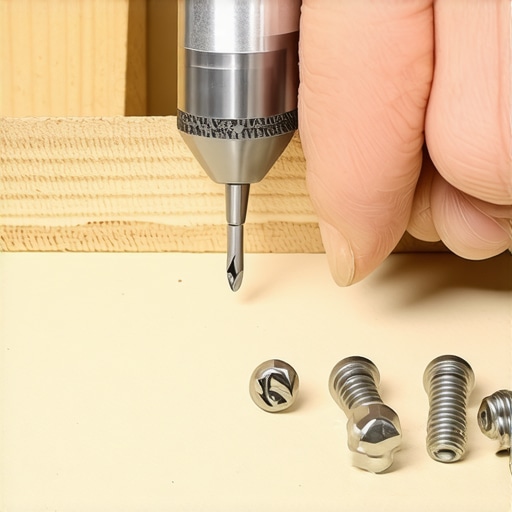
Reinforce for the Heavy Stuff
For those heavy solid oak drawers, you cannot rely on just two screws per side. I always add a third ‘security’ screw in the back vertical slot. This prevents the ‘pivoting’ effect that occurs when a drawer is fully extended and loaded with cast iron. If you have ever had to fix a sagging pot and pan drawer with a center support, you know that the initial anchor points are where the battle is won or lost. Doubling up on the fasteners at the front of the slide—where the most leverage is applied—is a pro move that prevents the track from pulling away from the cabinet wall over time.
The Secret to Perfectly Parallel Tracks
A fraction of an inch of misalignment is the difference between a silent glide and a grinding halt. I use scrap wood blocks cut to a specific height as ‘installation jigs.’ By resting the slides on these blocks while I screw them in, I ensure both sides are perfectly level without having to wrestle with a tape measure inside a dark cabinet box. This prevents the common drawer slides that won’t stay closed issue that plagues many DIY installs. It is about creating a foundation that respects the physics of custom cabinets and ensures your investment doesn’t end up on the floor in the middle of the night.The industry pushes ‘maximized storage’ as the ultimate goal for every modern kitchen remodel. But here is the contrarian truth: you can actually have too much of a good thing. I have seen homeowners cram so many innovative storage solutions into a small footprint that they lose the ‘working’ part of their kitchen. If you don’t respect the physics of movement, your high-end kitchen becomes a beautiful obstacle course. For instance, many people ignore the 4-foot clearance rule for islands, thinking they can squeeze in more depth. In reality, that extra three inches of cabinet space often results in a dishwasher door that you have to sidestep every time you load it.
Stop Crowding Your Kitchen Island
The biggest ‘oops’ factor I encounter with custom cabinets is the assumption that every square inch must be filled. This is especially true with built-ins and storage hacks. I once worked on a project where the client insisted on 18-inch deep uppers to maximize plate storage. It sounded great on paper, but because they didn’t account for the ‘nose-to-cabinet’ distance while prepping food, they felt claustrophobic every time they stood at the counter. The National Kitchen & Bath Association (NKBA) emphasizes that ergonomics should always trump raw volume; a kitchen that stores everything but allows no room to move is a failed design.
Why do my high-end slides still feel stiff after a year?
It is a common frustration. You invest in top-tier hardware, yet a year later, the motion feels ‘gritty’ or sluggish. Most people assume the hardware is failing, but the nuance is often environmental. High-performance slides are engineered to incredibly tight tolerances. If your home experiences seasonal shifts and you haven’t accounted for the inset cabinet gap during humidity changes, the wood can swell just enough to put lateral pressure on the tracks. This friction mimics the feel of a failing bearing. Before you replace anything, check for sawdust buildup in the lubricant. I recommend cleaning your soft-close slides with a dry teflon spray rather than a wet oil, which just attracts more grit.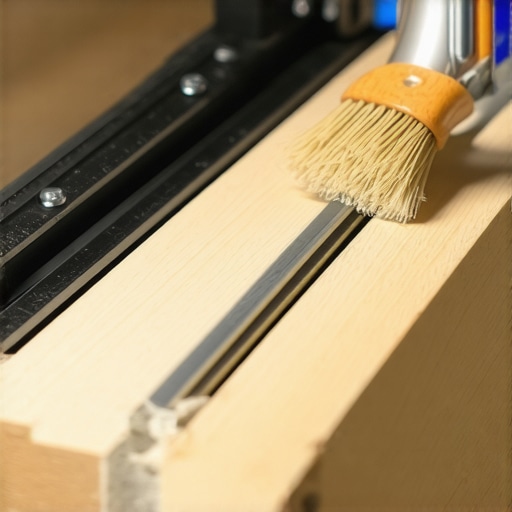
The material lie that high-end showrooms won’t tell you
There is a common myth that ‘solid wood is always better’ for every part of your kitchen upgrade. In reality, plywood box construction still wins over solid wood for the cabinet carcasses. Solid wood moves too much. If you build a large pantry box out of solid oak planks, it will eventually cup or bow, causing those expensive pull-out trays to bind. For long spans, we actually recommend plywood shelves over solid wood because the cross-laminated layers provide the structural stability needed to prevent sagging under the weight of heavy small appliances. Have you ever fallen into this ‘all-natural’ material trap? Let me know in the comments. When you are ready to move past the basics and design a space that actually works for your lifestyle, you can contact us to discuss a plan that balances storage with real-world usability.Even after the sawdust is vacuumed and the final drawer face is snapped into place, the job isn’t truly over. Think of your kitchen like a high-performance vehicle; you wouldn’t drive a luxury car for ten years without an oil change, yet we expect transformative custom cabinets to perform flawlessly without a single adjustment. Over time, the weight of your dishes and the natural expansion of the wood will cause things to shift slightly. If you ignore that one door that sits at a weird angle, you aren’t just dealing with a visual nuisance—you are putting uneven torque on the hinges that can eventually strip the wood and lead to a costly repair.
How do I maintain my custom cabinets over time?
The secret to a kitchen that feels new for a decade is a simple biannual ‘tune-up.’ I tell all my clients to mark their calendars for the start of spring and autumn. This is when humidity levels typically swing the most, affecting how the wood sits in the frame. You should check the gaps between your doors; if they look uneven, it’s time to adjust your European hinges before they start rubbing against each other and chipping the finish. Also, take a moment to see why your slow-close hinges might be sluggish. Often, a quick wipe-down with a microfiber cloth to remove aerosolized kitchen grease is all it takes to restore that silky-smooth motion.
The $10 tool that prevents $1,000 in damage
I have one specific tool that I believe every homeowner should own: a #2 PoziDriv screwdriver. Most people grab a standard Phillips head, but high-end European hardware like Blum or Grass is designed specifically for the PoziDriv tip, which has extra internal ridges for better grip. Using a standard Phillips screwdriver will eventually ‘cam out’ and round the screw heads, making future adjustments a nightmare. Precision is the difference between a pro and a rookie. According to technical load-rating documentation from Blum, their TANDEM slides are tested for 100,000 open/close cycles, but those ratings assume the hardware remains perfectly level and clean. If a slide is tilted because of a loose screw, you are effectively cutting its lifespan in half.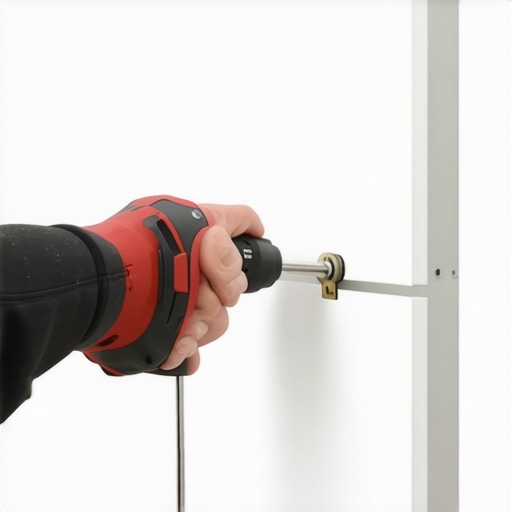
Why your kitchen’s future is modular
Looking ahead to the next decade, I predict we are going to see a massive shift toward ‘active’ storage. We are already moving away from static shelves and toward innovative storage solutions that can be reconfigured as your lifestyle changes. Think of built-ins and storage hacks that allow you to swap a spice rack for a hidden charging station without ripping out the millwork. This ‘future-proofing’ is why preventing solid wood warping through humidity control is so critical; you need a stable, plumb frame to support these evolving internal systems. I want you to try this right now: go to your most-used cabinet door and check the gap. If it is slamming or sagging, grab that PoziDriv and give the adjustment screw a quarter-turn. It is the single most satisfying ‘win’ you can have in under sixty seconds. If you find that the hardware has reached its limit or you are ready to scale your storage to the next level, contact us to see how we can build a system that stands the test of time.
The Hard Truth About Designing for Daily Use
After years of building and breaking things, I have realized that the most beautiful kitchen is a failure if it makes your daily life harder. One of my biggest lightbulb moments was realizing that hardware quality dictates the lifespan of your cabinetry more than the wood species ever will. You can have the most expensive walnut fronts, but if you use subpar fasteners, you are just building a ticking time bomb. I also learned that why plywood cases over particle board for heavy pantry shelves is a non-negotiable standard if you plan on actually using your pantry for more than just cereal boxes. If you are aiming for longevity, you have to look past the showroom shine and focus on the mechanical integrity of the box itself. Understanding how to spot quality dovetail joinery before you buy can save you from a drawer bottom falling out three years down the road.
#IMAGE_PLACEHOLDER_E#
The Three Tools I Never Start a Project Without
I do not care if you are a DIY enthusiast or hiring a pro—if these three things are not on-site, the job is not being done to my standards. First is the #2 PoziDriv screwdriver. As I mentioned earlier, using a standard Phillips on European hardware is the fastest way to ruin your adjustment screws. Second is a digital level. Bubble levels are great, but for custom cabinets as a game changer in your kitchen remodel journey, you need to be within a tenth of a degree to ensure those long runs of stone countertops do not crack. Finally, keep a dry Teflon lubricant handy. Avoid WD-40 or heavy oils in your kitchen; they attract dust and will eventually gum up your soft-close mechanisms. These small investments prevent the massive headaches that come with premature hardware failure.
Designing a Space That Lives as Hard as You Do
Your kitchen should be a place of joy, not a source of maintenance anxiety. When you focus on the small details—like the right screws, the proper clearances, and stable materials—you are investing in your own peace of mind. A successful modern kitchen remodel is the result of a thousand small, correct decisions layered on top of each other. Don’t be afraid to ask your builder the tough questions about what is happening behind the drawer faces. When you are ready to stop guessing and start building a space that truly stands the test of time, contact us to get your project moving in the right direction. Have you ever had a kitchen cabinet or drawer fail in a way that completely surprised you? Let me know in the comments below!