The Proper Way to Prep Indianapolis Kitchen Cabinets Before the First Coat of Paint
The Proper Way to Prep Indianapolis Kitchen Cabinets Before the First Coat of Paint
The Indianapolis housing market is currently witnessing a fascinating shift. From the historic charm of Meridian-Kessler to the modern sprawling estates in Fishers and Carmel, homeowners are looking for ways to modernize their spaces without the astronomical costs of a complete teardown. This has led to the rise of the kitchen “remaster.” As a kitchen cabinet specialist at Artisan Cabinet Workz with a background in the flooring industry, I, Taylor Douglas, have seen firsthand how a high-quality finish can transform a home. However, there is a hard truth that every house painter Indianapolis homeowners hire must acknowledge: a professional, factory-like finish is 80% preparation and only 20% painting.
In Central Indiana, our unique climate – swinging from bone-dry winters to sweltering, humid summers – places immense stress on wood surfaces. If the preparation isn’t handled with surgical precision, the paint will inevitably fail. Whether you are working with an indianapolis house painter or attempting a DIY project, understanding the technical nuances of preparation is the only way to ensure your cabinets don’t just look good for a month, but remain durable for a decade. In this guide, we will walk through the rigorous standards we use to ensure every cabinet we touch stands the test of time.
Why Preparation is the Secret to a Professional Paint Quote
When you begin reaching out to a painting company indianapolis residents trust, you will notice a wide variance in the pricing. You might receive a paint quote that seems like a steal, while another from a specialist like Artisan Cabinet Workz reflects a higher investment. The difference almost always lies in the labor hours dedicated to preparation. The average cost to paint kitchen cabinets in a mid-sized Indianapolis kitchen typically ranges from $3,000 to $7,000. While this is significantly less than the interior house painting cost for an entire home, it represents a highly specialized process.
Cheap quotes often come from “the painter guys” who treat cabinets like drywall. They might wipe the doors down with a damp cloth and start spraying. This is a recipe for disaster. Kitchen cabinets are high-touch surfaces exposed to heat, moisture, and oils. Without proper bonding, the paint will peel at the corners and around the handles within a year. When evaluating a quote, you aren’t just paying for the color; you are paying for the “insurance policy” that is the prep work. Understanding The Hidden Red Flags in a Cheap Kitchen Cabinet Paint Quote can save you thousands in the long run by avoiding the need for a total strip-and-redo later.
Step 1: The Tear-Down and Labeling Phase
The first step in a professional “5-day transformation” is the systematic disassembly of the kitchen. We never paint doors while they are hanging. To achieve a factory finish, the doors and drawer fronts must be removed and taken to a controlled environment (our shop) where they can be sprayed horizontally. This prevents sags and runs that are common with vertical spraying.
However, the biggest mistake an amateur painters Indianapolis crew makes is losing track of where each door goes. Every hinge, screw, and door must be labeled. We use a numbering system hidden inside the hinge cup. By placing a piece of specialized painter’s tape with a number inside the cup and a corresponding number on the cabinet frame, we ensure that every door returns to its original home. This is crucial because, over time, cabinet boxes can settle or shift slightly; putting a door back in the wrong spot can lead to alignment issues that are a nightmare to fix. While you’re thinking about hardware, you might also consider The One Tool You Need for Perfectly Aligned Cabinet Knobs Every Time to ensure your new handles look as professional as the paint.
Step 2: Intensive Degreasing (The Professional Method)
Kitchen cabinets are arguably the dirtiest surfaces in your home, even if they look clean. Years of cooking oils, steam, and skin oils from hands have created a microscopic film on the surface. Paint cannot bond to oil. If you’ve ever wondered Why Your Cabinet Paint Bubbles Near the Stove and How to Prevent It, the answer is almost always grease residue that was trapped under the primer.
We use Trisodium Phosphate (TSP) or a high-strength industrial degreaser to scrub every square inch of the cabinet frames and doors. This isn’t a light dusting; it’s a mechanical scrubbing that breaks down the molecular bond of the grease. We pay extra attention to the areas around the stove and the “pull” areas of the doors. If a columbus interior painter or a local crew skips this step, the paint may look fine initially, but it will eventually “bubble” or delaminate because the primer is sitting on a layer of grease rather than the wood itself.
Step 3: Mechanical Bonding via Sanding
Once the surfaces are chemically clean, we move to mechanical preparation. A common misconception is that you need to sand the cabinets down to bare wood. This is rarely necessary and can actually be counterproductive. Instead, we perform a “scuff sand.” The goal is to remove the sheen of the existing finish and create “profile” – microscopic scratches that give the primer something to bite into.
We typically use 120 to 150 grit sandpaper for this process. For the flat panels of the doors, we use orbital sanders with high-end dust extraction to keep your home clean. For the intricate profiles and the cabinet boxes inside your home, hand sanding is required. This is where the expertise of a painting company indianapolis homeowners trust really shines. We understand how much pressure to apply without rounding over the sharp, crisp edges of your shaker or raised-panel doors. Choosing the right substrate matters here, too; for instance, knowing The Best Wood Species for Painted Cabinets That Won’t Show Grain can help you understand why your specific cabinets might require more or less sanding effort.
Step 4: Repairing Imperfections and Filling Grain
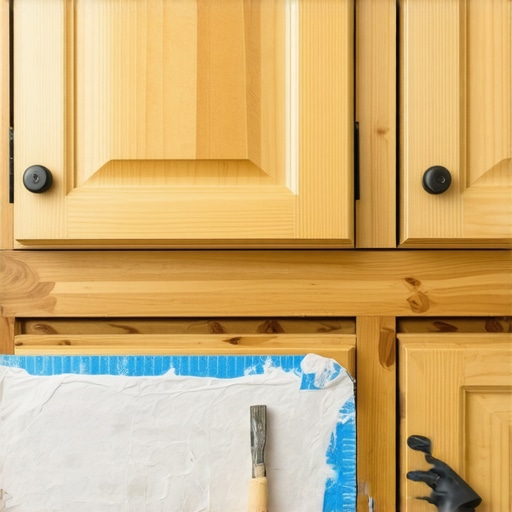
After sanding, the “skeletons” of your cabinets are revealed. This is the time to fix the dings, scratches, and “oops” moments that have accumulated over the years. We use high-performance wood fillers or even Bondo for deeper gouges. Bondo is a favorite among professional cabinet painters because it doesn’t shrink and it dries incredibly hard, making it perfect for high-traffic areas.
One of the biggest challenges for an indianapolis house painter is dealing with wood species like Oak. Oak has a very open, deep grain that paint will not hide; in fact, paint often accentuates the grain. If a homeowner wants a smooth, modern look on Oak cabinets, we must perform a “grain fill” operation, applying a specialized paste to level the surface. This is a different process than what you’d see from a columbus interior painting crew doing walls. It requires a specialist’s touch to ensure the filler stays in the grain and doesn’t create a messy texture. At Artisan Cabinet Workz, we often discuss material quality with our clients, such as Why We Use Solid Maple for Drawer Boxes Instead of Poplar, because the underlying material dictates the preparation strategy.
Step 5: Priming – The Bridge Between Prep and Paint
If sanding is the foundation, priming is the structure. You cannot use standard wall primer on kitchen cabinets. In the industry, we often say that Novi Painters Always Use a Shellac Primer for Dark Wood Cabinets, and for good reason. Shellac-based primers (like Zinsser BIN) are the gold standard for blocking “tannin bleed.” Many Indianapolis homes have older cherry or oak cabinets; the tannins in these woods are water-soluble. If you use a water-based primer, those tannins will bleed through the paint, creating ugly yellow or brown spots that no amount of topcoat can hide.
The primer acts as a bridge, bonding to the old finish and providing a perfect surface for the new paint. We also follow the “30-Inch Clearance Rule for Ovens.” When prepping and priming upper cabinets near the range, we ensure the coating is applied with extra care to withstand the heat cycles of cooking. This is also the stage where we decide between different coating technologies. Understanding The Difference Between Pre-Catalyzed and Post-Catalyzed Cabinet Lacquer is essential for the final durability of the project, as the primer must be compatible with these high-performance topcoats.
Choosing the Right Indianapolis Painting Company
When searching for “the painter guys” or “the painter guy” online, you will find hundreds of results. It is important to distinguish between a generalist and a specialist. A company that excels as an aluminum siding painter or local exterior house painters may have the best spray equipment in the world, but cabinet painting is a different discipline. It requires a clean-room environment, specific knowledge of wood chemistry, and a level of detail that exterior painting simply doesn’t demand.
A true painting company indianapolis residents should look for is one that treats your kitchen like a furniture factory. We aren’t just applying color; we are applying a multi-layer coating system designed to withstand grease, moisture, and the expansion and contraction caused by Indiana’s humidity. When you ask for a paint quote, ask about their degreasing process and what specific primers they use. If they don’t mention TSP or shellac/solvent-based primers, they are likely cutting corners that will cost you later.
Conclusion & Call to Action
In the end, the “proper way” to prep cabinets is the hard way. There are no shortcuts to a finish that looks like it came straight from a high-end showroom. By focusing on meticulous labeling, aggressive degreasing, mechanical sanding, and specialized priming, we ensure that your kitchen remaster is a success. This level of preparation is the ultimate insurance policy for your home investment.
If you are ready to move beyond the average interior house painting cost and invest in a kitchen that truly shines, we invite you to contact Artisan Cabinet Workz today. Whether you need a detailed paint quote for your existing cabinets or you are considering Custom Cabinets as a Game-Changer in Your Kitchen Remodel Journey, Taylor Douglas and our team of specialists are here to bring your design vision to life with durability and style.