Why Most 6-Stage Reverse Osmosis Systems Are Installed Incorrectly Under Modern Sinks
Why Most 6-Stage Reverse Osmosis Systems Are Installed Incorrectly Under Modern Sinks
The dream of a modern, deep undermount sink – paired with a sleek faucet and a clutter-free countertop – is a hallmark of contemporary kitchen design. However, this aesthetic dream often turns into a functional nightmare the moment you try to fit a high-performance water purification system for home use underneath it. Homeowners investing in high-end cabinetry and premium plumbing fixtures are increasingly seeking the purity of a 6 stage reverse osmosis system, but there is a growing disconnect between the kitchen’s design and the system’s technical requirements.
While a 6-stage system provides the highest level of water purity available for residential use, its physical footprint is substantial. Unfortunately, this footprint is often ignored during the kitchen design phase. The result? Systems are “forced” into spaces designed for aesthetics, not utility, leading to improper installations that compromise both the water quality and the integrity of your custom cabinetry. In this guide, we will explore why most RO systems are failing in modern kitchens and how to bridge the gap between design and pure water technology.
The Modern Sink Problem: Why Under-Sink Space is Shrinking
In the past, standard kitchen sinks were top-mounted and roughly 7 to 8 inches deep. This left ample vertical clearance for plumbing, cleaning supplies, and even bulky filtration units. Today, the trend has shifted toward deep, 10-inch undermount sinks. When you factor in the thickness of a 3cm stone countertop and the undermounting hardware, the bottom of the sink sits significantly lower in the cabinet than it used to.
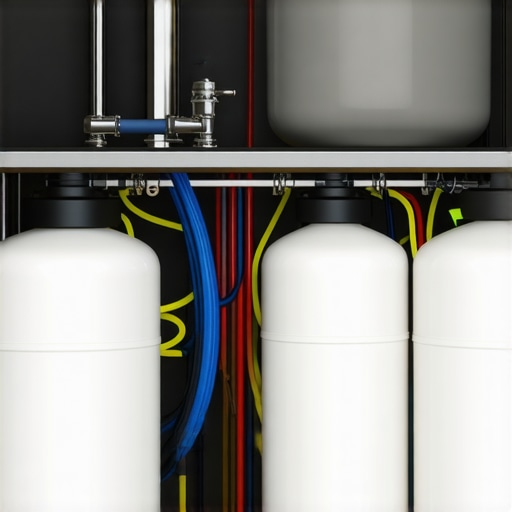
This reduction in vertical clearance creates a massive hurdle for installing a home water filtration system. A standard 6-stage RO manifold, which includes three vertical pre-filter canisters, a membrane housing, and two horizontal post-filters, often stands 16 to 18 inches tall. When the sink bowl sits lower, the available “clear height” above the cabinet floor is drastically reduced, often leaving no room for the manifold to hang properly on the cabinet wall.
Furthermore, the modern kitchen is more crowded than ever. The garbage disposal unit has become a “space hog,” centered directly under the drain and forcing the under counter water filter into awkward, inaccessible corners. Additionally, many homeowners now opt for pull-out trash can inserts or internal drawer systems. These functional upgrades often leave less than 12 inches of width for the entire filtration assembly. To understand how to navigate these choices before you build, see our guide on How to Choose the Right Sink for Your Kitchen Remodel.
The 3 Most Common Installation Blunders
Because installers are often fighting for every square inch, they frequently take shortcuts that lead to long-term performance issues. Here are the three most common mistakes we see in modern kitchen remodels.
Mistake 1: Improper Drain Saddle Placement
Every reverse osmosis water filter produces “brine” or wastewater that must be carried away. This is handled by a drain saddle – a clamp that connects the RO’s waste line to the sink’s drain pipe. In cramped modern cabinets, installers often place this saddle in the first available spot. If the saddle is placed above the P-trap or too close to the garbage disposal, it creates a constant, annoying “gurgling” noise whenever the system is processing water. Worse, if it is placed on a horizontal run of pipe, sediment from the sink can back up into the RO waste line, causing a bottleneck in the sink’s drainage and potentially fouling the RO membrane.
Mistake 2: Ignoring Feed Water Pressure Dynamics
A sophisticated water filter system is not a passive device; it relies on physics. To push water through a semi-permeable membrane that filters down to 0.0001 microns, a specific PSI (usually a minimum of 40-60 PSI) is required. In many modern homes, especially those with “green” low-flow plumbing or high-rise apartments, the pressure is insufficient. When the pressure is too low, the system struggles to function. This results in a skyrocketing waste-to-pure ratio. While a standard RO system can waste as much as 5 gallons of water for every 1 gallon of filtered water produced under ideal conditions, low pressure can push that ratio to 10:1 or higher, leading to high water bills and premature filter wear.
Mistake 3: Poor Tank Positioning and Support
The pressurized storage tank is the largest component of a 6 stage reverse osmosis system. In a crowded cabinet, installers often lay the tank on its side to make it fit. While many tanks are designed to work in this orientation, they must be properly supported. If a tank is rolled into a corner without a cradle, it can vibrate against the cabinet walls or put stress on the plastic John Guest fittings. This eventually leads to slow leaks that can rot the base of expensive custom cabinets before they are even detected. For a better way to manage this crowded space, check out The Simple Pivot That Reclaims Your Under-Sink Plumbing Space.
The 6-Stage Advantage: Why It’s Worth the Struggle
Despite the installation challenges, the 6 stage reverse osmosis system remains the gold standard for home water purification. Unlike basic 3-stage filters or a standard tap water filter, the 6-stage process ensures that your water is not just clean, but healthy and great-tasting.
The stages typically include:
- Stage 1: Sediment filtration to remove rust, sand, and dirt.
- Stage 2 & 3: Carbon block filtration to remove chlorine, VOCs, and odors.
- Stage 4: The RO Membrane, which removes up to 99% of TDS (Total Dissolved Solids) including lead and arsenic.
- Stage 5: Post-carbon polishing for a crisp taste.
- Stage 6: Remineralization.
The remineralization stage is what sets the best home water filters apart. Pure RO water can sometimes taste “flat” because it is slightly acidic and devoid of minerals. A high-quality little luxury water filter ensures that essential minerals like calcium and magnesium are added back into the water, balancing the pH and providing a refreshing taste comparable to premium bottled spring water.
Whether you are looking for an under counter water filter or a countertop water filter, the goal is consistent: removing contaminants while maintaining the “luxury” of great-tasting water. For those who cannot accommodate an under-sink unit, a countertop water dispenser or a water cooler dispenser can be a viable alternative, though they rarely match the 6-stage filtration power of a dedicated under-sink system.
Cabinet-First Solutions: Planning for Purity
To avoid the “shoved-in” look and the mechanical failures associated with improper installation, you must plan your cabinetry around your water filtration system for home use, not the other way around. At Artisan Cabinetworkz, we recommend a “Cabinet-First” approach to water purity.
The Dedicated “RO Niche”
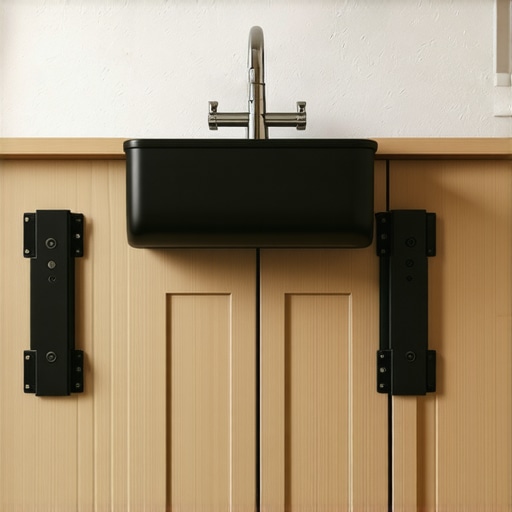
When designing custom kitchen cabinets, we can create a dedicated “RO Niche.” This involves offsetting the plumbing slightly to one side and creating a reinforced shelf or a side-mount bracket specifically for the RO manifold. By planning this in advance, we ensure the manifold is at the correct height for easy filter changes without having to disconnect the entire system. You can learn more about this in our article on The Hidden Cabinet Layout That Fits a 6-Stage Reverse Osmosis System Without Losing Storage.
Maintenance Access
One of the biggest reasons RO systems fail is lack of maintenance. If a homeowner has to crawl into a dark, cramped cabinet and move five bottles of cleaner just to reach the filters, they won’t do it. We design sink bases that integrate with organization systems to keep the path clear. For tips on keeping this area functional, see The Best Way to Organize Your Cleaning Supplies Under the Sink. Remember, easy access is vital for little luxury water filter replacement; if you can’t reach the canisters, your 6-stage system quickly becomes a 0-stage system as the filters clog and fail.
Structural Integrity
Modern deep sinks are heavy, especially when filled with water. Many installers rely on flimsy clips that can fail over time. We often recommend a plywood cradle fix to support the sink, which also provides a stable mounting surface for the reverse osmosis water filter manifold. Read more about why Most Undermount Sink Clips Fail and the Plywood Cradle Fix.
Conclusion: Designing for a Healthier Home
Don’t let a household water filter system be an afterthought in your kitchen remodel. The complexity of a 6 stage reverse osmosis system requires a marriage of technical plumbing knowledge and smart cabinetry design. By addressing the constraints of modern deep sinks and garbage disposals during the planning phase, you can ensure your system operates at peak efficiency, providing your family with the purest water possible without sacrificing your kitchen’s aesthetic or storage capacity.
If you are planning a kitchen upgrade and want to ensure your water filter system for home is integrated perfectly, consult with an expert. Contact Artisan Cabinetworkz today to design a sink base that works for your lifestyle, your cabinetry, and your health.