The Hidden Cabinet Layout That Fits a 6-Stage Reverse Osmosis System Without Losing Storage
The Hidden Cabinet Layout That Fits a 6-Stage Reverse Osmosis System Without Losing Storage
Everyone wants the peace of mind that comes with a 6 stage reverse osmosis system. We want the 99% purity rate, the crisp taste of remineralized water, and the assurance that our families are protected from contaminants. However, as a plumbing and home improvement expert, I’ve seen the same conflict play out in hundreds of kitchens: the desire for the best home water filters versus the reality of limited under-sink storage. Most homeowners fear that installing a comprehensive water filter system for home use means sacrificing 50% or more of their cabinet space to a bulky tank and a complex array of filters.
Hi, I’m Eric Phillips. With years of experience in water purification and custom cabinetry, I’ve dedicated my career to solving the “plumbing puzzle.” I first became interested in water safety when I realized how many high-end kitchen remodels were being compromised by poorly planned filtration layouts. I’m here to tell you that you don’t have to choose between pure water and an organized kitchen. With a specific “hidden” layout and a few custom cabinet tweaks, you can have both a professional-grade reverse osmosis water filter and plenty of room for your cleaning supplies. The secret lies in moving away from standard installation practices and adopting a strategic, spatial-first approach.
Why a 6-Stage Reverse Osmosis System is the Gold Standard
When discussing a home water filtration system, the “6-stage” designation isn’t just marketing fluff – it represents a significant leap in water quality over standard 3 or 4-stage units. To understand why this system requires a specific cabinet layout, we first need to understand what is happening inside those canisters. Based on research from industry leaders like AMPAC USA, a 6-stage system provides a comprehensive barrier against nearly all known tap water contaminants.
- Stage 1: Sediment Filter. This is the first line of defense, removing large particles like rust, sand, and silt that can clog the more delicate membranes downstream.
- Stage 2: Carbon Block Filter. This stage focuses on chlorine, volatile organic compounds (VOCs), and odors, protecting the RO membrane from chemical degradation.
- Stage 3: Granular Activated Carbon (GAC) Filter. This provides a secondary layer of chemical filtration, ensuring that even trace amounts of pesticides or industrial chemicals are captured.
- Stage 4: Reverse Osmosis Membrane. The heart of the water purification system for home use. This semi-permeable membrane removes up to 99% of dissolved solids, including lead, arsenic, and fluoride.
- Stage 5: Post Carbon Polishing Filter. After the water leaves the storage tank, it passes through this final carbon stage to remove any “tank taste” and ensure the water is refreshing.
- Stage 6: Alkaline or Mineral Filter. This is what sets the 6-stage system apart. Standard RO water can be slightly acidic because it is so pure. This final stage adds essential minerals like calcium and magnesium back into the water, improving the pH balance and the flavor profile.
While this process produces the highest quality water, the physical footprint of six individual canisters plus a pressurized storage tank is substantial. Before you commit to a system, it is vital to consider how to choose the right sink for your kitchen remodel, as the sink’s depth and drain placement will directly impact where these six stages can live.
The Storage Crisis: Why Standard Cabinets Fail
The primary reason homeowners struggle with an under counter water filter is that standard kitchen cabinets are designed for general storage, not for housing complex mechanical systems. A typical 6 stage reverse osmosis system includes a manifold that is roughly 15 to 18 inches wide and 16 inches tall, plus a 3.2-gallon pressurized storage tank that is about 11 inches in diameter and 15 inches tall.
In a standard 30-inch or 36-inch sink base cabinet, a plumber will often install the manifold directly against the back wall and place the tank right in the center. This creates what I call “dead zones.” By placing the tank in the middle, you lose the ability to store tall spray bottles or large bins. Furthermore, the manifold often blocks access to the shut-off valves and the P-trap, making future plumbing repairs a nightmare. This is exactly why we recommend 36-inch base cabinets for every modern remodel; the extra six inches of width provides the critical “breathing room” needed to tuck these systems away without paralyzing the entire cabinet.
Without a plan, the under counter water filtration system becomes a cluttered mess of tubes and canisters that prevents you from using the very space you paid to renovate. The goal of a “hidden layout” is to treat the RO system as an integrated appliance rather than an afterthought thrown into a cupboard.
The “Hidden Layout” Solution: Reclaiming Your Under-Sink Space
The “Hidden Layout” isn’t about buying a smaller, less effective filter; it’s about utilizing the vertical and lateral planes of your cabinet more effectively. Here are the three pillars of a layout that fits a 6 stage reverse osmosis system while maintaining 60-70% of your storage capacity.
1. The Side-Mount Manifold
Most installers default to the back wall because it’s the easiest place to drive a screw. However, the back wall is also where your plumbing exits. Instead, mount the filter manifold to the *side panel* of the cabinet. By securing the filters to the left or right interior wall, you keep the center of the cabinet open for drainage and storage. This also makes changing the little luxury water filter replacement or the RO cartridges much easier, as you can reach them from the front without crawling over the sink’s plumbing. This is a key part of the simple pivot that reclaims your under-sink plumbing space.
2. The Tank Offset
The storage tank does not have to be under the sink. In fact, an RO tank can be located up to 10-15 feet away from the faucet with minimal pressure loss. If you have a “dead corner” in your kitchen cabinetry or an adjacent cabinet that isn’t used for heavy items, consider running the 1/4-inch tubing through the cabinet sidewalls to house the tank there. If the tank *must* stay under the sink, push it to the absolute furthest back corner. This leaves the front-most area of the cabinet – the most accessible part – free for your daily-use items.
3. The U-Shaped Drawer
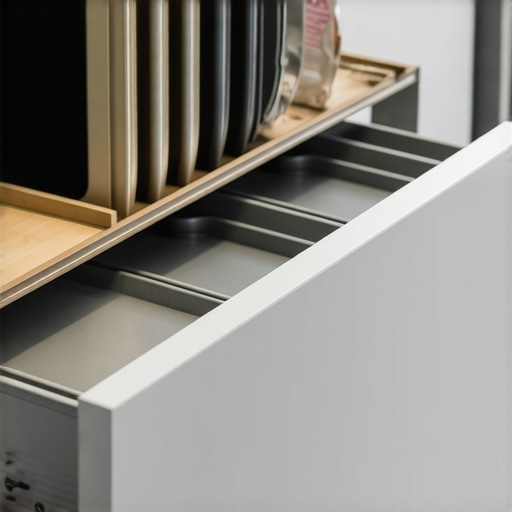
This is the “holy grail” of custom cabinetry for a water filtration system. Instead of standard doors and a deep, dark floor, we install a custom U-shaped pull-out drawer. The “U” shape allows the drawer to slide out *around* the sink drain and the RO manifold. You get a full-extension drawer that holds all your sponges and soaps, while the RO system sits securely in the “void” created by the U-shape. This layout ensures that every square inch of the cabinet is utilized, and nothing is buried in the back.
Installation Hacks for Maximum Efficiency
To truly optimize a 6 stage reverse osmosis system, you need to think like an engineer during the installation process. Beyond just the layout, there are several “hacks” that can improve the performance and serviceability of your home water filtration system.
First, consider the use of a “diaphragm booster pump.” Many homeowners find that their RO system takes up too much space because they are trying to compensate for low water pressure with a larger tank. A booster pump is small – roughly the size of a loaf of bread – and can significantly increase the speed of water production, potentially allowing you to use a smaller 2-gallon tank instead of the standard 3.2-gallon version. This saves a massive amount of cubic space.
Second, I always recommend the “Removable Cabinet Back” move. When installing a water purification system for home use, the network of tubes can make it impossible to see the wall behind the cabinet. By creating a modular, removable panel in the back of the cabinet, you ensure that the removable cabinet back move simplifies your next drain pipe repair. You won’t have to tear out your expensive filtration system just to fix a leaky pipe.
Lastly, if you are installing a heavy farmhouse sink along with a 6-stage system, remember that the weight of the water in the RO tank (about 25-30 lbs when full) adds to the load on your cabinet floor. Ensure you are following the best way to reinforce a sink base for heavy farmhouse sinks to prevent the cabinet floor from sagging over time, which could crimp your RO lines and cause leaks.
Organizing What’s Left: Beyond the Filter
Once you have implemented the hidden layout, you will likely find that you still have 40% to 60% of your original storage space available. The key to making this space feel “big” is verticality. Because the 6 stage reverse osmosis system is now tucked to the side or back, you have a clear vertical column in the center of the cabinet.
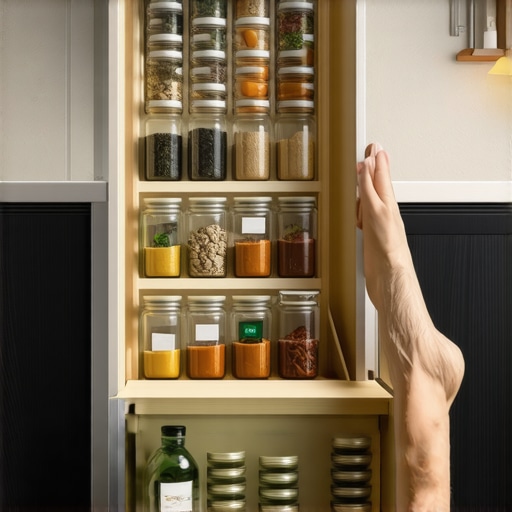
Use tiered organizers or “pull-and-rotate” spice racks for your cleaning supplies. Door-mounted racks are also excellent for holding dish soap and sponges, keeping them off the cabinet floor entirely. When you treat the area under the sink as a utility room rather than a junk drawer, the presence of a whole house water filter or a localized RO system becomes a non-issue. For more specific tips on this, check out our guide on the best way to organize your cleaning supplies under the sink.
Remember that accessibility is part of organization. Ensure that your “leak stop” valve (a small tray that shuts off the water if it detects moisture) is placed at the lowest point of the cabinet floor and is not blocked by heavy bins. This small device is a critical component of any under counter water filter setup, protecting your custom cabinetry from water damage.
Comparing Under-Counter vs. Countertop RO Systems
Some homeowners, intimidated by the logistics of an under counter water filtration system, consider countertop water filters or water cooler dispensers like the little luxury water filter. While these are excellent for renters or those with extremely limited space, they come with significant trade-offs.
A countertop water filter or a filtered water dispenser usually lacks the 6th stage of remineralization found in premium under-counter systems. Furthermore, they consume valuable counter space, which is often more “expensive” in a kitchen than cabinet space. While a little luxury water filter replacement is easy to handle, the total volume of purified water produced is lower, and the filtration is generally less rigorous than a dedicated reverse osmosis water filtration system. If you want the “gold standard” of water quality without the visual clutter on your counters, the hidden under-counter layout is the superior choice.
Even compared to a whole house water filter system, a 6-stage RO system at the kitchen sink is often preferred because it provides “point-of-use” perfection. While a whole house water filter removes chlorine and sediment for your showers and laundry, the RO system provides the ultra-pure, mineral-rich water you actually want to drink and cook with.
Conclusion & Final Expert Tips
Achieving the perfect balance between high-end water filtration and functional kitchen storage is entirely possible with the right plan. By utilizing a 6 stage reverse osmosis system and employing a side-mount manifold, tank offset, or U-shaped drawer, you transform your sink base from a cluttered “dead zone” into a high-performance utility hub.
As you plan your next kitchen upgrade, remember that the best water filter for the home is one that you can maintain easily and one that doesn’t make your daily life more difficult by stealing storage space. Don’t let a plumber simply “toss” the system under your sink. Insist on a layout that respects your cabinetry and your need for organization.
If you’re ready to reclaim your kitchen space or need custom cabinetry designed specifically for your home’s mechanical needs, contact Artisan Cabinet Workz today. We specialize in making the complex look simple and the cluttered look clean. For more expert advice on kitchen remodeling and smart storage, stay tuned to our blog.