
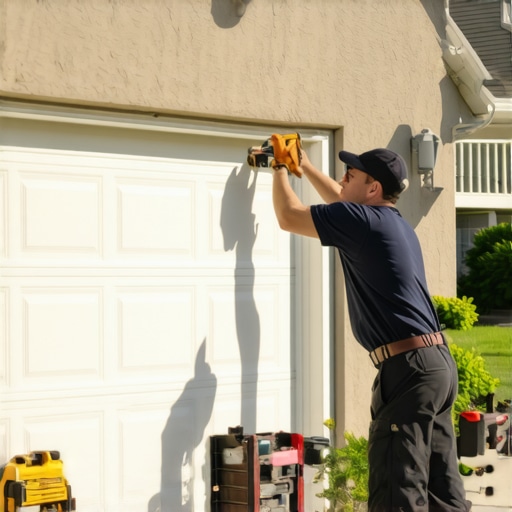
Why Your Residential Garage Door Repair Usually Costs More Than the Initial Quote
Why Your Residential Garage Door Repair Usually Costs More Than the Initial Quote
It’s a scenario played out in driveways across the country every single day. You’re heading out for work or a Saturday morning errand when you hear a deafening “bang” from the garage. The door won’t budge. You pull out your phone, search for garage door repair, and call a few local companies. One technician gives you a verbal quote of $150 over the phone. You breathe a sigh of relief, thinking you’ve dodged a financial bullet. However, once the technician inspects the system in person, the final invoice climbs to $450 or more. This “Quote vs. Reality” gap is one of the biggest sources of friction in the home improvement industry.
As the Business Owner at Garage Door Repair Dallas USA, I have spent years serving the Dallas – Fort Worth area, and I’ve seen firsthand how these discrepancies occur. Our commitment to honest service means educating the homeowner before the truck even pulls into the driveway. The reality is that a garage door is the largest moving object in your home – a complex system of high-tension springs, precision-aligned tracks, and sensitive electronics. In this comprehensive guide, we will break down why those initial estimates are often just the tip of the iceberg and how you can navigate the repair process with confidence.
The Limitation of the “Sight-Unseen” Phone Estimate
The primary reason garage door repair companies struggle to give accurate fixed prices over the phone is that a garage door system is highly interdependent. When you describe a “squeaky door,” that sound could be anything from a dry hinge to a failing bearing or a frayed cable about to snap. Giving a firm price without a physical inspection is like a doctor prescribing surgery based on a text message.
Data shows that while minor repairs might average between $75 and $250, these figures usually represent “base” services. This might include a simple sensor alignment, weather stripping replacement, or basic lubrication. However, these prices rarely account for the underlying mechanical failures that caused the symptom in the first place. For instance, if your door is jamming, it might look like a simple track issue, but it could be rooted in a shifting foundation or a warped frame. This is very similar to how a professional cabinet maker must account for environmental factors; you wouldn’t expect a firm price on a custom installation without the professional seeing how to scribe a base cabinet to a wonky floor without a gap. The physical context dictates the complexity of the labor.
When you call for a quote, most reputable companies provide a range or a service fee that covers the travel and the diagnostic time. If a company promises a flat $49 fix for any problem, be wary – they are likely using a “foot-in-the-door” tactic to upsell you on parts you may or may not need once they arrive.
High-Tension Components: The Hidden Cost Drivers
The most common major repair involves the garage door springs. These components are under immense tension, responsible for lifting doors that can weigh anywhere from 150 to over 500 pounds. Because of the inherent danger involved, these repairs require specialized tools like winding bars and high-grade steel components that aren’t available at your local big-box hardware store.
Research into industry pricing reveals that skilled labor and specialized tools for high-tension parts are the primary reasons for higher-than-expected costs. There is also a technical reality that many homeowners overlook: the “Pair Principle.” Most residential doors use a two-spring system. If one spring snaps, the other spring has been subjected to the exact same amount of wear and tear. It is statistically certain to fail shortly after the first one. A professional technician will almost always recommend replacing both springs at once. While this doubles the parts cost and increases labor, it saves you a second service fee and a second “emergency” call-out three months down the line.
This mechanical wear isn’t unique to garage doors. In the world of interior design, we see similar patterns. For example, understanding why your appliance garage door keeps jamming and the hardware fix often reveals that small-scale springs and tracks in kitchen cabinets suffer from the same fatigue as their full-sized counterparts in the garage. Whether it’s a bread box or a two-car garage, hardware under tension has a finite lifespan.
The “While We’re Here” Safety Inspection
A professional residential garage door repair is never just about fixing the broken part. It is a comprehensive safety audit. When a technician arrives to fix a broken cable, they aren’t just looking at the steel wire. They are checking the rollers, the drums, the center bearing, and the end plates.
Often, the “broken part” is merely a symptom of a larger systemic failure. If your rollers are seized, the motor has to work twice as hard to pull the door, which leads to premature opener failure. If the tracks are slightly out of alignment, the cables will rub against the metal and fray. Replacing the cable without fixing the track is a temporary bandage. This is why the quote increases – the technician is identifying the cause, not just the symptom.
Mechanical components have specific lifespans based on “cycles” (one open and one close). Just as you might learn why soft-close dampers fail early and the heavy-duty fix for your kitchen drawers, garage door components like nylon rollers and torsion springs are rated for 10,000 to 20,000 cycles. During an inspection, a technician can see when these parts are reaching the end of their safe utility, adding to the immediate cost but preventing a catastrophic failure later.
Structural vs. Cosmetic: When Repair Becomes Replacement
Sometimes, the reason a quote balloons is that the door has crossed the threshold from “repairable” to “structurally unsound.” If a teenager accidentally taps the bottom panel with the car, it might look like a simple dent. However, if that dent has compromised the structural integrity of the section, the door can no longer support its own weight during the lift cycle. This puts the user at risk of the door collapsing.
In these cases, a garage door installation is often the more cost-effective and safer long-term solution. While a single panel replacement can cost $300-$700, a brand-new, insulated steel door might start at $1,200. When you factor in that the new door comes with all new hardware, tracks, and a warranty, the value proposition shifts.
It is important to note that material choices significantly impact these costs. A standard ribbed steel door is relatively inexpensive to install. However, if you have a custom carriage-house door or a heavy solid-wood door, the installation costs rise significantly due to the weight and the precision required. This is a common theme in high-end home improvement; just as you would look for quality in doors, you must also know how to spot poor joinery in custom cabinets before you buy to ensure your investment lasts. Poorly constructed garage doors – or cabinets – will always cost more in repairs over their lifetime than high-quality originals.
Labor, Service Fees, and the 2025 Economic Outlook
One of the most misunderstood parts of an invoice is the service fee. In 2025, many reputable companies have service fees starting at $130 or more. This fee isn’t just “profit”; it covers the cost of a fully stocked service van, insurance (which is high for high-tension work), fuel, and the technician’s specialized training.
The 2025 economic landscape has seen a continued rise in the cost of skilled labor. There is a shortage of qualified technicians who understand both the mechanical and electronic aspects of modern smart-garage systems. Furthermore, the cost of high-quality galvanized steel for springs and tracks has fluctuated, leading to higher parts prices across the board. When a technician quotes you a price that seems high, they are often reflecting the current market rate for materials that won’t fail within six months.
Homeowners often try to save money by purchasing their own parts online and asking a pro to install them. Most garage door repair companies will decline this work. Why? Because they cannot warranty the part. If an online spring snaps and hurts someone, the liability is too great. Quality labor and quality parts are a packaged deal designed for safety.
How to Spot Garage Door Repair Scams
Unfortunately, the garage door industry is a frequent target for “fly-by-night” operators. These companies often use predatory pricing, quoting $29 service fees to get into your garage, only to hold your door “hostage” by taking it apart and then claiming it needs $1,500 in immediate repairs to be safe.
To avoid these scams, look for these red flags:
- Quotes that are significantly lower than the industry average ($100-$500 for most repairs).
- Technicians who refuse to show you the worn or broken parts they are replacing.
- Companies that do not have a physical address or use unmarked vans.
- A lack of a formal, written estimate before work begins.
You can use the same logic for vetting these pros as you would for any contractor. For instance, using the 5-step checklist for evaluating a custom cabinet shop’s quality can be adapted here: look for reviews, check their physical location, ask about their warranty, verify their insurance, and assess their communication style. A professional who takes the time to explain why the price changed is usually more trustworthy than one who simply demands more money.
Maximizing Your Investment: Maintenance Tips
The best way to ensure your repair costs stay low is to prevent the need for major repairs in the first place. Much like a car, a garage door requires a “tune-up” once a year. This involves:
- Lubrication: Use a lithium or silicone-based spray on all moving parts (hinges, rollers, and springs). Avoid WD-40, as it is a degreaser, not a lubricant.
- Tightening Hardware: The vibration of the door can loosen screws over time. Check the bolts on the tracks and hinges. If you find a hole that won’t tighten, you might need to know how to fix a stripped screw hole in a heavy cabinet hinge, as the physics of a stripped screw are the same whether it’s on a pantry door or a garage door.
- Balance Test: Disconnect the opener and lift the door halfway by hand. If it stays in place, it’s balanced. If it slams down or shoots up, your springs need professional adjustment.
Furthermore, a well-organized garage can prevent accidental damage. If you maximize space with innovative storage solutions, you reduce the risk of garden tools or bikes falling into the path of the door, which is a leading cause of bent tracks and fried motors.
Small maintenance tasks are the “five-minute fixes” of the garage world. Just as you might learn why your cabinet pulls are getting loose and the five-minute fix to keep your kitchen looking sharp, a little bit of grease and a wrench can keep your garage door running for years beyond its expected lifespan.
Conclusion
Transparency is the foundation of a good relationship between a homeowner and a service provider. While it can be frustrating to see a quote increase after an on-site inspection, it is often a sign of a diligent technician who is prioritizing your safety and the longevity of your home. A higher final quote usually reflects a more complete, safer repair that addresses the root cause of the problem rather than just masking a symptom.
By understanding the complexities of high-tension springs, the necessity of full-system safety inspections, and the current economic reality of skilled labor, you can better prepare your budget for home maintenance. If you are currently dealing with a door that won’t open, or if you are looking for expert garage door installers to upgrade your home’s curb appeal, remember that quality craftsmanship is always the best long-term value. Don’t settle for the cheapest quote – settle for the most thorough one. Contact a local professional today for an on-site evaluation and get your home back on track.