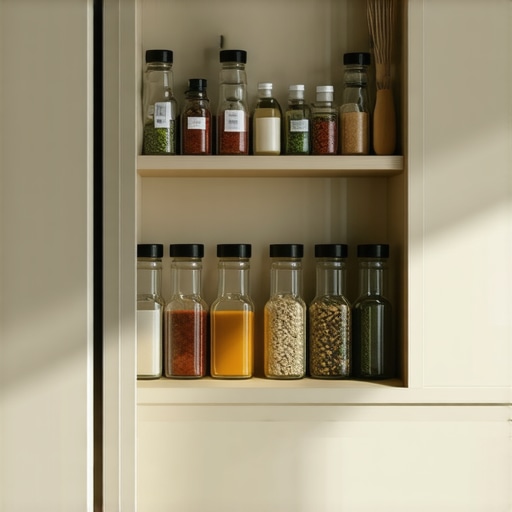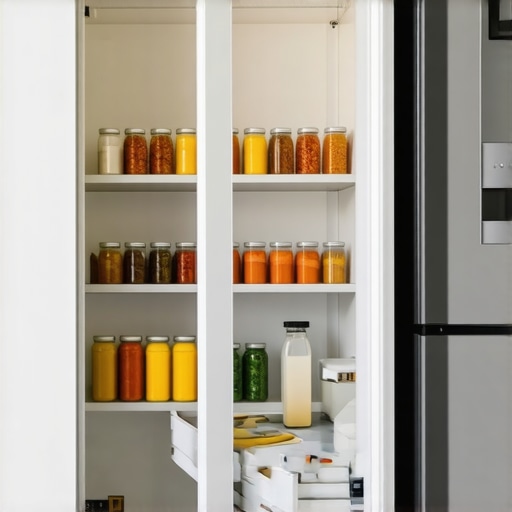
Why a Pull-Out Pantry Beats Deep Walk-In Shelves for Visibility
I was on my hands and knees, flashlight in one hand and a dusty jar of marshmallow fluff in the other. It was 7:00 PM on a Tuesday, and I was just trying to find a box of pasta. My walk-in pantry, a feature I once bragged about, had become a black hole. Things went in, but they rarely came out—at least not before their expiration date. This was my lightbulb moment. I realized that deep, static shelves are where groceries go to die. It is a classic case of out of sight, out of mind, and it is costing you money every single time you buy a duplicate of something you already own. Today, I am going to show you why switching to a pull-out system is the single best decision you can make for your kitchen’s functionality. We are not just talking about aesthetics; we are talking about saving your sanity.
Stop Losing Your Groceries in the Dark
Most of us think a walk-in pantry is the gold standard of a custom cabinets project. I certainly did. But those 24-inch deep shelves are a trap. Unless you have the arm length of a professional basketball player, you are never going to see what is at the back. I made the mistake of building fixed, deep shelving in my first kitchen remodel, and I spent three years rebuying spices I already owned because they were buried behind the flour. It was wasteful and, frankly, embarrassing. When you are planning innovative storage solutions for your home, the goal should be to reduce friction. Every time you have to move three boxes of crackers to find the baking soda, that is friction. A pull-out system eliminates that entirely. It brings the contents to you, bathing every jar and can in the light of your kitchen instead of the shadows of a deep closet.
Don’t pull-outs actually waste valuable storage space?
It is a fair question. You see the hardware and think, there goes my shelf width. But visibility is the ultimate space-saver. According to the National Kitchen & Bath Association (NKBA), accessibility is a primary driver of kitchen efficiency. When you can see everything at a glance using the pantry zone method, you use what you have. No more mystery cans gathering dust for a decade. This is why a pantry pull-out move is such a game-changer. It optimizes the footprint of your smart storage ideas by ensuring every square inch is usable. Have you ever reached for a box of cereal only to find a half-empty bag of pretzels from three years ago hiding behind it? I want to know your biggest pantry relic discovery—tell me in the comments! Today, I am going to walk you through exactly why these sliding marvels beat deep shelves and how you can integrate them into your next modern kitchen remodel. [image placeholder] The problem with deep walk-in shelves is not just the depth; it is the static nature of the wood. Wood does not move. You do. You twist, you lean, you strain. But with a pull-out, the kitchen works for you. Let us look at the mechanics of why this shift matters so much for your daily routine.First, we need to address the weight distribution. Think of your pull-out shelf like a bridge; if the foundation is weak, the whole structure collapses once you load it with those heavy Costco-sized olive oil jugs. I learned this the hard way during a custom cabinets as a game changer project where I used standard-grade slides for a client who loved to bulk-buy flour. Three weeks later, I was back at their house cleaning up five pounds of white powder because the tracks had literally buckled under the pressure. That is why I now insist on heavy-duty, full-extension slides that can handle at least 100 pounds. When you are looking at expert tips on selecting storage solutions, the hardware is the one place you absolutely cannot skimp.
Ditch the Particle Board if You Want Your Shelves to Last
The material of the box matters just as much as the metal it slides on. Many big-box retailers sell pull-outs made of thin particle board, but for a pantry that actually works, you need to look for plywood construction. We always suggest this because plywood cases beat particle board for heavy pantry shelves every single time. Plywood holds screws better, which means your slides stay anchored even after thousands of cycles of opening and closing. If you use cheap materials, you will eventually find yourself searching for the 3-step fix for drawer slides that won’t stay closed. Invest in quality wood up front so you do not have to become a part-time carpenter just to get to your cereal.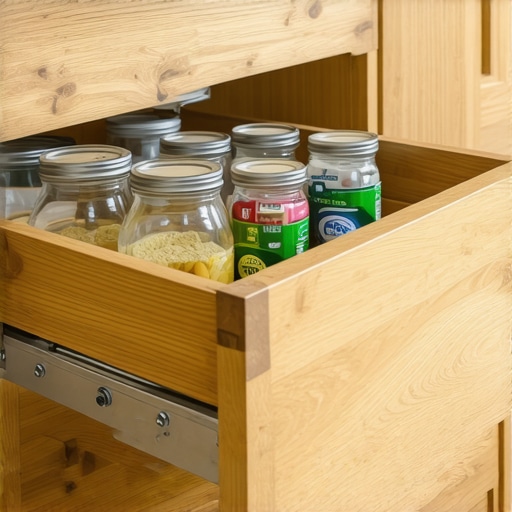
How to Fix the Infamous Slide Derailment
There is nothing more frustrating than a pantry drawer that feels gritty or jumps off the tracks. This usually happens because of poor alignment during the initial custom cabinets overhaul. If your pull-out is even an eighth of an inch out of level, gravity will eventually win and pull the bearings out of their race. This is specifically why your pull-out pantry keeps derailing and why a side-mount fix or a precision under-mount system is crucial. When I am installing these, I use a dedicated jig to ensure the tracks are perfectly parallel. It takes an extra ten minutes, but it saves ten years of headaches. If you are DIY-ing this, use a scrap piece of wood cut to the exact width between the slides as a spacer to keep everything square.
Full Extension is the Only Way to Fly
If you choose a slide that only comes out three-quarters of the way, you have just recreated the original problem of the deep shelf. You still have a 6-inch cave at the back where the balsamic vinegar goes to hide. Full-extension hardware allows the entire drawer to clear the cabinet face, giving you 100% visibility. This is a core part of smart storage solutions for small kitchens in 2025. It turns a frustrating reach into a simple top-down view. Think about your innovative storage solutions as a way to map your inventory. When you can see the labels of every can from above, you stop buying duplicates. I once found four jars of cream of tartar in my old pantry—four! Since I switched to the pantry pull-out move, I haven’t over-purchased a single spice. It is about creating a system where the easiest thing to do is also the most organized thing to do.But there is a catch that most people miss when they start designing their dream storage: the obsession with maximum depth. The conventional wisdom says that a 24-inch deep cabinet is the peak of storage. In reality, unless that shelf moves, those last 10 inches are effectively a graveyard for canned pumpkin and expired crackers. One huge “oops” factor most homeowners miss is the clearance trap. I have walked into dozens of homes where a beautiful modern kitchen remodel was ruined because the pull-out hardware was installed without accounting for the door hinge. If your drawer hits the door every time you pull it out, you have not built a storage solution; you have built an expensive frustration. This is why I always advocate for European hinges that allow for a zero-gap look and full clearance.
Why Huge Pantry Shelves are Often Your Biggest Kitchen Liability
It is a common belief that more cubic inches always equals more value. But in the world of custom cabinets as a game changer, visibility is the only metric that truly matters. When you have static, deep shelving, you are forced into a “first-in, never-out” inventory system. You buy a jar of honey, it gets pushed to the back, and you buy another one three months later because you could not see the first. This “ghost inventory” can easily cost a family hundreds of dollars a year in wasted groceries. By switching to a pull-out, you transform that 24-inch cave into a manageable surface where everything is accounted for at a glance.
Can Your Cabinet Walls Actually Support Those Heavy-Duty Slides?
This is the question that separates the amateurs from the pros. Advanced users often notice their high-end hardware starts to feel “crunchy” or sluggish after just a year. It usually is not the slide itself failing; it is the lack of structural reinforcement in the cabinet carcass. According to research from Blum, a leading global authority on kitchen hardware, the dynamic load capacity of a drawer is only as good as the rigidity of the mounting surface. If you are mounting heavy-duty slides to thin side walls, those walls flex under the weight of your canned goods, causing the bearings to bind. This is exactly why we recommend plywood cases over particle board because plywood provides the lateral stability required to keep the tracks perfectly parallel over time.#IMAGE_PLACE_HOLDER_C#
The Hinge Clearance Mistake That Ruins Custom Pull-Outs
One hidden nuance I always discuss during the ultimate guide to custom cabinets overhaul is the relationship between the drawer and the door hinge. If your cabinet maker does not use “zero-protrusion” hinges, the drawer box will scrape against the door when you try to pull it out. It is a heart-sinking moment to see a custom walnut pull-out get a deep gouge on day one. Beyond the base cabinets, we are also seeing a shift toward 15-inch deep upper cabinets. Matching your upper depth to your specific storage needs prevents that “looming” feeling while providing the space needed for modern, oversized dinnerware. Have you ever fallen into the trap of building a pantry so deep you needed a headlamp to find the salt? Let me know in the comments below! If you are currently fighting with hardware that sticks, you might need to check out the 3-step fix for drawer slides that won’t stay closed. Your kitchen should be an innovative storage solution that adapts to your lifestyle. When you focus on creating seamless kitchen remasters, the goal is always visibility over volume.Even the most expensive hardware will eventually complain if you treat it like a ‘set it and forget it’ feature. I have seen thousand-dollar units in a custom cabinets as a game changer installation turn into grinding, sticky messes within two years simply because of dust and neglect. Most people reach for WD-40 the second they hear a squeak, but please, for the love of your cabinetry, put that can down. Standard oil-based lubricants are dust magnets. In a kitchen, where flour and spice particles are constantly airborne, oil creates a sticky paste that will eventually seize your bearings. I personally only use a high-quality dry PTFE spray. It creates a slick, non-stick surface that doesn’t attract debris, ensuring those slides feel like they are floating on air for years.
The Dry Lube Secret for Silky Slides
When I am working on creating seamless kitchen remasters, I always leave a small maintenance kit for my clients. This includes a micro-vacuum attachment—the kind used for cleaning keyboards—and that dry PTFE spray. According to the Architectural Woodwork Institute (AWI), cabinet hardware performance is rated by cycle counts, and the biggest killer of those cycles isn’t weight; it is grit. You should be vacuuming out your drawer tracks every six months. If you find that things are already feeling sluggish, you might need a more aggressive approach, which is why I wrote about why your soft-close slides are failing and the quick cleaning fix. Keeping the tracks clear is the difference between a kitchen that feels premium and one that feels like a renovation project gone wrong.
How do I maintain these high-end pull-outs over time?
Maintenance isn’t just about the metal; it is about the wood’s reaction to your home’s micro-climate. If you notice your pull-out fronts are starting to rub or the gaps look uneven, it is likely due to seasonal humidity shifts. This is particularly common in the winter when heaters dry out the air. Knowing why solid wood doors warp and how to prevent it is vital for anyone investing in modern kitchen remodels featuring custom cabinets and built-ins. Check your hardware tension twice a year. A simple turn of a screw on a European hinge can realign a door that has moved a fraction of an inch, preventing the wood from catching and splintering. [image placeholder] 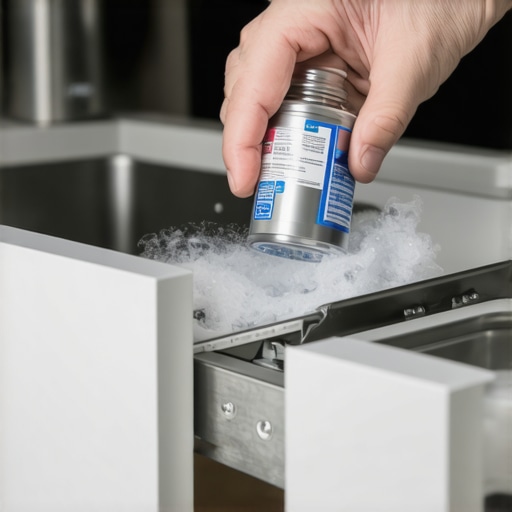
Why Your Pantry is About to Get Even Smarter
Looking ahead, the next evolution of smart storage ideas is moving toward motorized assistance and integrated inventory sensing. We are already seeing high-end European systems where a gentle tap of the knee opens a heavy flour pull-out—perfect for when your hands are covered in dough. I predict that within the next five years, innovative storage solutions will include weight-sensitive liners that alert your phone when you are low on staples. For now, the most advanced thing you can do is focus on the fundamentals of quality and alignment. I want you to go to your kitchen right now and check the tracks on your heaviest drawer. If they feel gritty, grab a vacuum and some dry lube. It is a ten-minute task that protects a ten-year investment.
The Costly Mistakes I Made Before Switching to Pull-Outs
Looking back at my first renovation, I realize I prioritized volume over visibility. I thought more shelf space meant a better kitchen, but I was wrong. One of the biggest lightbulb moments was realizing that a deep, dark shelf is actually a liability. When you cannot see your inventory, you are essentially throwing money away on duplicates. I have learned that the pantry pull-out move is the only way to ensure every item gets used before it expires. I also underestimated how much seasonal changes affect my hardware; for instance, knowing why solid wood doors warp and how to prevent it saved me from several alignment headaches later on. Finally, never assume your current cabinet walls can handle the weight without a little reinforcement—rigid mounting is the secret to a slide that never sags.
The Short List of Tools That Keep My Kitchen Running
If you want your kitchen to feel premium for decades, you need more than just a screwdriver. I always recommend keeping a maintenance kit tucked away in your utility drawer. First, a high-quality dry PTFE spray is non-negotiable; it is the only way to keep your tracks gliding without attracting dust. Second, a micro-vacuum attachment is a lifesaver for cleaning those narrow tracks where crumbs love to hide. For those planning an upgrade, I highly suggest checking out expert tips on selecting storage solutions to ensure you are picking the right grade of hardware from the start. These small investments in maintenance and knowledge prevent major repairs down the road. [image placeholder]
Take the First Step Toward a Stress-Free Pantry
Your kitchen should be a place of creativity, not a source of frustration. Transitioning away from deep, static shelving is more than just a trend; it is about reclaiming your time and your budget. Whether you are planning a full custom cabinets as a game changer project or just looking for small wins, prioritizing accessibility will transform how you interact with your home. Use these smart storage ideas to maximize your kitchen space this year and stop digging through the shadows. What is the oldest or weirdest relic you have ever found hiding in the back of a deep pantry shelf? Let me know in the comments below!