Why Solid Wood Door Panels Still Need Room to Breathe in Summer
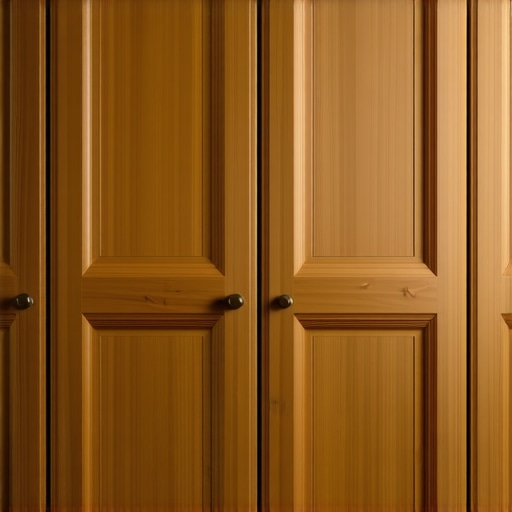
I remember my first major custom cabinets project like it was yesterday. It was mid-August, the kind of humidity that makes your shirt stick to your back, and I got a frantic call from a client. Their ‘perfect’ inset doors were suddenly refusing to close. I had built them with such tight tolerances in the dry winter months that the summer air turned them into stubborn wooden blocks. It was a humbling lesson in the raw power of nature. When we talk about wood, we aren’t talking about a dead piece of furniture; we are talking about a material that is constantly reacting to its environment. [image_placeholder_1]
The Physics of Why Wood Moves When the Heat Rises
Wood is a bundle of fibers that never truly stops ‘breathing.’ When the dew point climbs, those fibers soak up moisture like a sponge. Even the most expensive stylish kitchen overhaul can be ruined if you do not account for this seasonal dance. I see it all the time with homeowners who want that ‘zero-gap’ look, only to find their inset cabinet doors won’t close flush come July. This is not a defect in the craftsmanship; it is simply what happens when solid wood meets high humidity. Today, we are going to look at why your solid wood door panels need that breathing room and how you can prevent your modern kitchen remodel from turning into a jammed-door nightmare. We will explore the mechanics of floating panels and why giving wood space is the greatest gift you can give your cabinetry.
Is Solid Wood Even Worth the Hassle Anymore?
You might be thinking that choosing a material this temperamental is more trouble than it is worth. While engineered materials stay flatter, nothing beats the grain and soul of real timber. But you have to respect it. According to the USDA Forest Products Laboratory, wood can change dimensions significantly based on relative humidity, sometimes moving up to 1/8th of an inch across a standard panel. That is enough to warp a frame or crack a joint if there is no place for that energy to go. Early in my career, I made the mistake of thinking extra glue would solve the problem. Big mistake. I learned the hard way that you should never glue cabinet doors into the frames because it restricts that natural movement, leading to ugly splits in the wood. Have you ever walked into your kitchen on a humid morning and found a door that was perfect yesterday suddenly rubbing against the frame? It is a frustrating feeling, but understanding the ‘why’ is the first step toward a permanent fix.
Master the Art of the Floating Panel
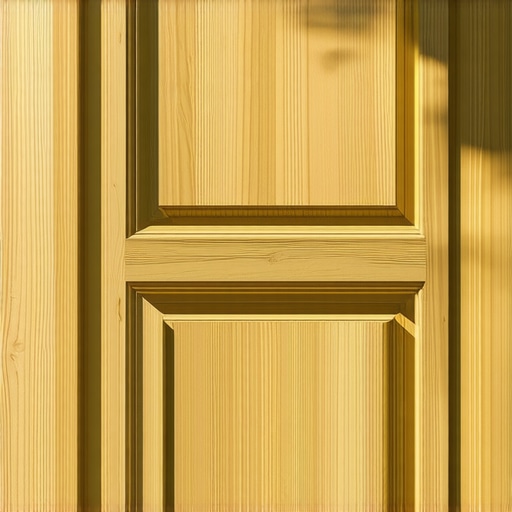
To prevent your cabinetry from self-destructing, you have to embrace the floating panel. Think of the center of your cabinet door like a picture in a frame, but one that isn’t taped or glued down. It needs to sit in a groove with just enough room to expand laterally. When I am in the shop, I aim for a 1/16th to 1/8th inch gap on either side of the panel within the frame. This space is the ‘insurance policy’ for your custom cabinets. If you build it too tight in the summer, it will rattle in the winter; build it too tight in the winter, and it will literally blow the joints of your door frame apart when July hits. I once ignored this rule on a large pantry door for a modern kitchen remodel, and by the time the homeowner called me back in August, the stiles had actually bowed outward because the panel had nowhere to go. I had to remake the entire door from scratch. 
Stop Using Glue Where It Does Not Belong
One of the biggest mistakes DIYers and even some ‘pros’ make is trying to stabilize wood by force. You cannot win a fight against moisture. This is why you should never glue cabinet doors into the frames or glue the center panel into its grooves. The panel must be free to move. If you are worried about the panel rattling when it dries out and shrinks, use space balls—small rubber grommets that sit in the groove and provide constant, flexible pressure. This keeps the panel centered without locking it in place. This same logic applies to larger surfaces; for instance, the butcher block mistake of bolting wood directly to a base cabinet often leads to massive cracks. Wood needs to slide, not be held captive.
Avoid the Mudroom Bench Trap
I have seen this issue most often with built-in seating. Homeowners love a solid wood top on a mudroom bench, but they often install it right over a heater or vent. This creates a micro-climate of extreme dry heat on one side and ambient humidity on the other. This is the mudroom bench trap where solid wood tops crack because the expansion is uneven. If you are building built-ins that elevate your living room or mudroom, you must use elongated screw holes or Z-clips to allow that top to breathe.
Fixing the Inset Gap When Nature Strikes
Even with perfect construction, you might still need to align inset cabinet doors that wont close flush after a particularly humid week. This is where high-quality hardware pays for itself. If you are using European-style hidden hinges, a simple turn of a screwdriver can shift the door a fraction of a millimeter to the left or right, restoring that perfect reveal. If you are dealing with the inset cabinet gap, remember that it is a living adjustment. Do not reach for the plane or the saw immediately. Often, a small adjustment to the hinge or simply waiting for the HVAC system to stabilize the indoor humidity will solve the problem without removing any wood.
A common myth in the world of high-end design is that solid wood is the superior choice for every single component. In my experience, this mindset is exactly what leads to structural failure in a modern kitchen remodel. While solid wood is beautiful for doors, it is often the wrong tool for the job when it comes to long-span shelving. I have seen countless $80,000 kitchens where the pantry shelves began to sag like a sad smile because the maker used solid oak instead of a engineered core. The Forest Products Laboratory notes that plywood’s cross-laminated structure offers significantly more dimensional stability for horizontal loads. This is precisely why we recommend plywood shelves over solid wood for long spans; it prevents that embarrassing dip that occurs when you load up on heavy cast iron or bulk groceries.
Ditch the Deep Pantry for Better Visibility
Everyone seems to want a massive, cavernous walk-in pantry, but deep shelves are where food goes to die. If you have to move three boxes of pasta to find the salt, your storage has failed you. This is why a pull-out pantry beats deep walk-in shelves for visibility every single time. It brings the items to you, allowing you to see the full depth of the cabinet at a glance. I often tell my clients that a custom cabinets as a game-changer in your kitchen remodel journey is not about how much you can fit, but how much you can actually find. If you are working with a tight footprint, don’t overlook the hidden pantry secret of turning a 4-inch gap into a spice wall. It is these narrow, high-visibility solutions that make a kitchen feel professional rather than cluttered.
The Counterintuitive Trap of Over-Reinforcement
One of the biggest mistakes I see is the ‘Oops’ factor of over-reinforcing the wrong areas while neglecting the basics. For instance, people focus on the thickness of the shelf but forget why every tall pantry needs a fixed middle support shelf. Without that one fixed point to tie the gables together, the entire cabinet can ‘rack’ or bow outward over time, especially in humid climates. Similarly, I’ve walked into homes where the modern kitchen remodels featuring custom cabinets and built-ins look perfect, but the upper cabinets are literally pulling away from the wall. This usually happens because they didn’t how to reinforce an upper cabinet for a heavy microwave or a built-in coffee station. You cannot just screw a standard box into the studs and hope for the best when you are adding 50 pounds of localized weight.
Can You Really Trust Solid Wood for Every Component?
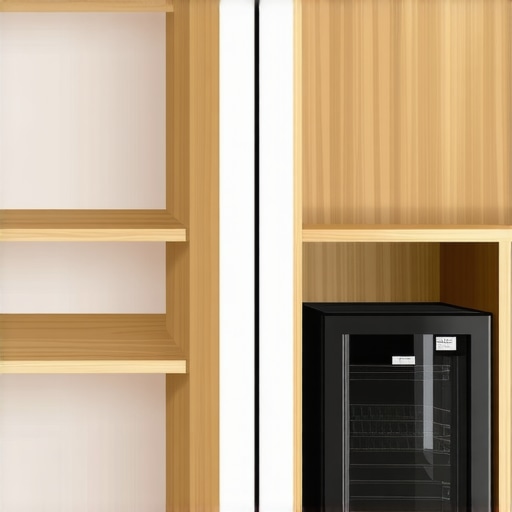
An advanced reader once asked me if using all-plywood construction was just a way for cabinet makers to save money. The truth is quite the opposite. Using high-quality plywood for the boxes and reserved solid wood for the face frames is an engineering choice, not a budget one. Solid wood expands and contracts across its grain, which can cause drawer slides to bind. If you have noticed your drawers catching, it might not be the hardware; it could be the real reason your cabinet drawer slides are grinding is the cabinet box itself shifting with the seasons. We also stopped putting wine racks over the refrigerator because the heat from the compressor actually accelerates the wood’s movement (and ruins your Malbec). Designing for longevity means understanding these environmental micro-climates. Have you ever fallen into this trap where your ‘premium’ materials started causing headaches? Let me know in the comments.
Why These Three Specific Tools Save Every Kitchen Install
After twenty years in the shop, I have realized that expensive wood won’t save a bad installation. I never start a modern kitchen remodel without a self-leveling 360-degree laser. Why? Because floors are never flat, and walls are never plumb. If you aren’t using a laser to find the highest point of your floor, you are just guessing. I also swear by a high-quality scribe tool—not just a compass from a school geometry set. You need something rigid to how to scribe a bookshelf to a wonky plaster wall so the final product looks like it grew out of the drywall. Finally, I use a dedicated torque-limiting driver for hardware. It prevents the hardware mistake that makes expensive cabinets look cheap: stripped screw heads and crooked pulls. These tools are the bridge between ‘hand-made’ and ‘professionally engineered.’
Stop Fighting Your Drawers and Start Cleaning the Tracks
I get calls all the time from people complaining that their high-end hardware is ‘broken.’ Most of the time, it is just dirty. According to Blum’s Technical Data Sheets for their Movento runner systems, these mechanisms are designed for 100,000 open-and-close cycles, but they are vulnerable to construction dust and kitchen grease. If you find why your slow close hinges are suddenly sluggish and how to clean them, do not reach for the WD-40. That just attracts more gunk. Instead, use a can of compressed air and a dry microfiber cloth. This is the same logic for why your soft close slides are failing and the quick cleaning fix: usually, a tiny crumb has jammed the hydraulic damper. A ten-second cleaning can save you a $50 replacement part. If cleaning does not work, remember the reason your cabinet doors are slamming despite having soft close hinges might simply be a tension setting that needs a quarter-turn adjustment.
How do I maintain custom cabinetry over time?
Maintenance is about climate control and chemistry. You must keep your home between 35% and 55% relative humidity; anything outside that range and you are asking for trouble with custom cabinets as a game-changer in your kitchen remodel journey. For the finish, stay away from silicone-based polishes. They create a film that makes future touch-ups impossible. Also, pay attention to heat zones. I have seen why your cabinet paint bubbles near the stove and how to prevent it—it is usually a lack of a heat shield or a failing oven gasket. I predict the next decade of smart storage ideas to maximize your kitchen space this year will involve integrated sensors that monitor these environmental factors for you, but for now, you are the sensor. Keeping things clean and dry is the best way to ensure built-ins that elevate your living room stay as beautiful as the day they were installed. If you want to truly level up your cabinetry game, go to your kitchen right now and check the tension on your hinges. Most people do not realize there is a small toggle or screw that lets you adjust the ‘close speed.’ Adjusting this one tiny feature can make a standard kitchen feel like a luxury one instantly. For more expert tips on selecting storage solutions for a perfect kitchen upgrade, check out our full guide on maximizing every square inch.
The One Mistake That Still Keeps Me Up at Night
After decades in this trade, I have realized that the greatest enemy isn’t a lack of skill, but a lack of patience with the material itself. I used to think I could outsmart the seasons with enough fasteners, but the truth is, wood always wins. Here are a few lightbulb moments that changed everything for me:
- Stop over-tightening your hardware: I have seen too many homeowners crack a beautiful door panel because they wanted it to feel extra secure. You must let the wood breathe.
- Trust the engineering: There is a reason we switched to screws for cabinet backing; it allows for the minor structural shifts that nails simply cannot absorb.
- The moisture meter is your best friend: Never start a project without knowing the water content of your boards. If you ignore the ambient humidity during the build, you are essentially building a future failure.
The Gear That Separates Amateurs from Craftsmen
If you want your project to look like the work of a professional, you need to stop guessing and start measuring with precision. Here is the toolkit I trust for every high-end install:
- The Wood Handbook: This isn’t just a book; it is the definitive guide to forestry. It explains the cellular structure of timber so you can predict movement before you even make your first cut.
- A Professional Scribe Tool: Do not rely on a standard pencil and a prayer. Learning how to scribe a bookshelf to a wonky wall correctly is what creates those seamless, zero-gap results that distinguish high-end work.
- Manufacturer Technical Manuals: Don’t just install hardware; understand the physics behind the pivot points. These guides will teach you more about door geometry than any generic tutorial.
#IMAGE_PLACE_HOLDER_FINAL#
Your Kitchen Remodel Deserves a Legacy of Quality
Creating a space that stands the test of time is not just about the aesthetics; it is about the silent engineering hidden behind the face frames. Whether you are tackling smart storage solutions for small kitchens or a massive full-scale renovation, remember that you are building something that families will interact with every single day. Do not be afraid to take it slow and respect the science of the wood. Your custom cabinets as a game-changer in your kitchen remodel journey are more than just boxes—they are the functional heart of the home. Have you ever heard your cabinets pop or creak in the middle of a humid summer night? Let me know your experiences with wood movement in the comments below!