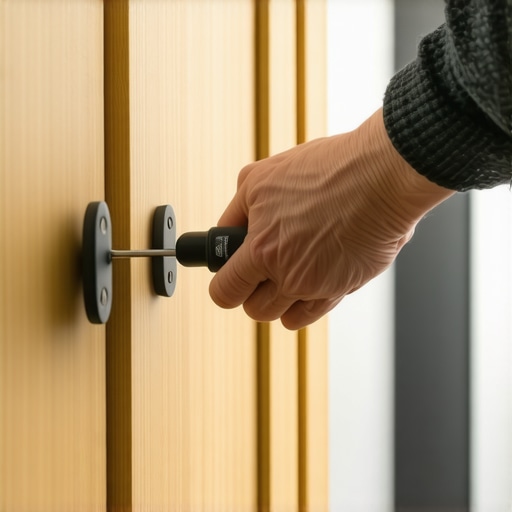
How to Fix a Cabinet Door That Won’t Stay Closed Without Replacing Hinges
It was 2:00 AM, and the house was dead silent until I heard that familiar, rhythmic *creak-thump* of the cabinet door in my kitchen slowly swinging open for the fifth time that night. I call it my ‘ghost’ cabinet, but the reality is far less supernatural and much more annoying. I used to think that once a door lost its grip, the only solution was to head to the hardware store and drop forty bucks on new hardware. I actually once tried to ‘fix’ a sagging door by jamming a folded-up piece of cardboard into the hinge, which, as you can imagine, lasted about three openings before it fell into my soup. I even made the rookie mistake of trying to glue parts of the frame together thinking it would provide stability—don’t do that. It’s messy, and it solves nothing. Today, I’m going to show you how to reclaim your sanity and keep those doors flush against the frame without spending a dime on replacements.
Stop Hunting for Replacement Hinges
The urge to just rip everything off and start over is strong, especially when you’re dealing with modern kitchen remodels where everything is supposed to be perfect. But before you break out the drill to install new hardware, we need to talk about why that door is behaving like it wants to escape. Most of the time, the issue isn’t that the hinge is ‘broken’; it’s that the wood has shifted or the tension has vibrated loose over years of slamming. If your screws are spinning in place, you might just need to learn how to repair a stripped screw hole in a cabinet door using nothing more than a toothpick and some wood glue. According to the Architectural Woodwork Institute, wood can expand and contract up to 1/4 inch across a 12-inch span depending on the relative humidity in your home, which is often why your inset cabinet doors need re-aligning after a particularly damp summer.
Will these hacks really last longer than a week?
I know what you’re thinking because I thought it too: ‘If I don’t buy the heavy-duty stuff, isn’t this just a temporary band-aid?’ The truth is that even the most expensive custom cabinets require maintenance. Gravity and vibration are constant enemies. By using a few clever tricks, like installing a hidden magnetic catch or simply knowing how to adjust European hinges properly, you aren’t just delaying the inevitable; you’re actually performing the precise calibration that the factory intended. Have you ever found yourself propping a kitchen chair against a stubborn door just to keep the cat out of the pantry? I’d love to hear your most desperate DIY ‘fix’ in the comments below! We are going to move past the chairs and cardboard today and get those doors clicking shut exactly the way they did on day one.
Make Those Stripped Screws Grip Again
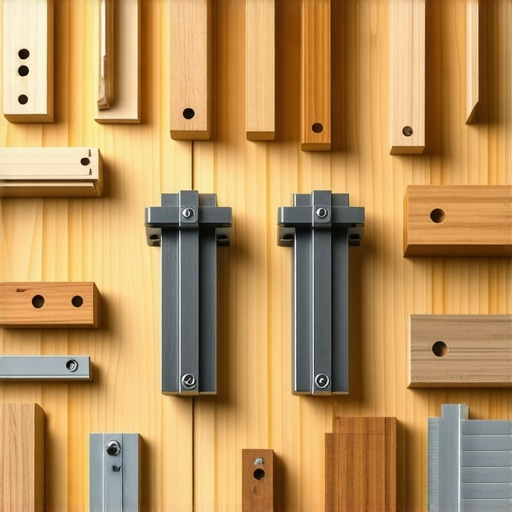
The most common reason a cabinet door won’t stay shut is that the screws holding the hinge to the frame have lost their bite. Imagine a rock climber trying to grip a crumbling ledge; eventually, gravity wins. When your screw is spinning in the hole, it’s not the hardware that failed, it’s the wood. You don’t need to be a pro to learn how to repair a stripped screw hole in a cabinet door using common household items. I remember my first “pro” job where I accidentally over-torqued a screw into a soft maple frame—the sinking feeling was immediate. I grabbed a few flat toothpicks, dipped them in wood glue, and tapped them into the hole. Once dry, I snapped off the excess and drove the screw back in. The result was a grip tighter than the original factory setting, saving me a trip to the store and a very awkward conversation with the homeowner.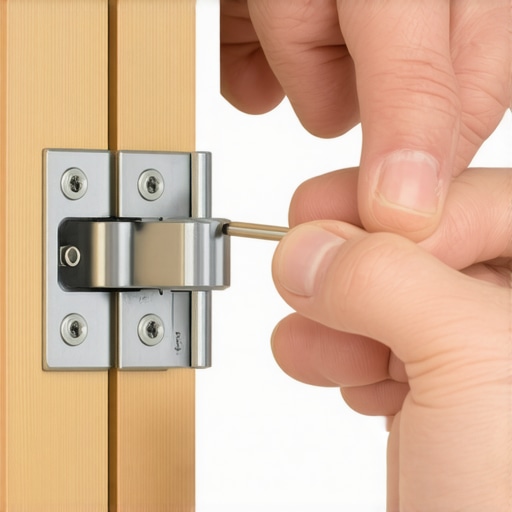
Find the Hidden Adjusters on Your Hinges
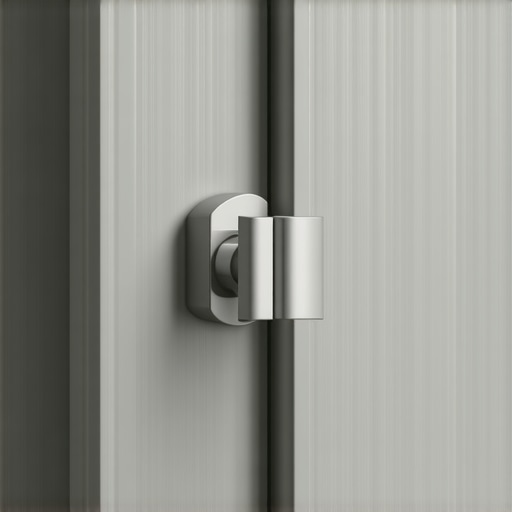
If your screws are tight but the door still sits crooked, you’re likely dealing with European-style concealed hinges. These are the “smart” components of custom cabinets, designed with three-way adjustment capability. There is usually a screw toward the back of the hinge that controls the depth—how far the door sits away from the cabinet face. If your door is sticking out too far, a quick turn pulls it back flush. You also need to know how to adjust European hinges for side-to-side movement. I’ve seen homeowners try to plane down the wood when all they needed was a Phillips head screwdriver and ninety seconds of patience. It’s like tuning a guitar; small adjustments make all the difference in the final harmony of your kitchen.
Stop Your Doors From Fighting in the Middle
When two doors meet in the center of a cabinet and start bumping into each other, it creates a frustrating bottleneck. This is common in built-ins and storage hacks for a sleek functional kitchen where tolerances are tight. To fix this, look at the front-most screw on your hinge—this is your lateral adjustment. Turning it clockwise usually moves the door toward the edge of the cabinet, while counter-clockwise brings it toward the center. If you are struggling with how to fix cabinet doors that hit each other in the middle, small, incremental turns are better than big ones. Even custom cabinets as a game changer in your kitchen remodel journey settle over time, and these micro-adjustments keep the aesthetic sharp.
Stop the Slamming and Drifting
Sometimes, even the best hinge adjustment doesn’t solve the problem of a door that won’t stay shut due to seasonal shifts. This is where the hidden magnetic catch: how to keep cabinet doors shut perfectly becomes a game-changer. I once had a client with beautiful transform your kitchen with custom cabinets: expert guide for 2025 in a high-humidity area whose the inset cabinet gap: re-aligning doors after seasonal humidity changes meant we had to adjust them twice a year. Instead of fighting the physics of wood, we added low-profile magnets. It provided the tension the humidity was taking away without ruining the lines of the modern kitchen remodels featuring custom cabinets and built-ins. If you have soft-close hardware, remember that why soft-close hinges fail and the simple tension adjustment needed is often just a matter of toggling the resistance switch inside the hinge cup. For heavy pantry doors, ensure you are using why we recommend plywood cases over particle board for heavy pantry shelves to ensure your hardware has a solid foundation for these fixes to last.It’s easy to get distracted by shiny hardware and shaker doors, but the real soul of a professional kitchen remodel lies in the engineering most people ignore. I see it all the time: homeowners demand the deepest shelves possible, thinking they’re winning the storage game. In reality, deep, fixed shelving is where canned goods go to die. Professional designers are moving toward a more nuanced approach because, as the National Kitchen & Bath Association (NKBA) points out, ergonomics and ‘points of use’ are far more critical than raw cubic footage. This is why why 15-inch deep upper cabinets are replacing the standard 12-inch; it’s about fitting larger dinner plates without creating a cavern where you can’t reach the back. If you’re still digging through a dark corner, the pantry pull-out move that saves you from digging for cans is a far more sophisticated solution than simply adding more depth.
Stop Bolting Your Butcher Block Directly to the Frames
Then there’s the ‘solid wood’ obsession. Everyone thinks solid wood is the gold standard for every component, but that’s a dangerous oversimplification. For example, the butcher block mistake: why you should never bolt it directly to cabinets is a classic pro-level warning. Wood is a living material; it expands and contracts with the seasons. If you pin it down with rigid screws through the frame, it will eventually split itself apart in a desperate bid to move. This is the same reason the mudroom bench trap exists—heat sources cause uneven drying, leading to massive structural cracks. Have you ever fallen into this trap and heard that dreaded ‘crack’ in the middle of the night? Let me know in the comments! 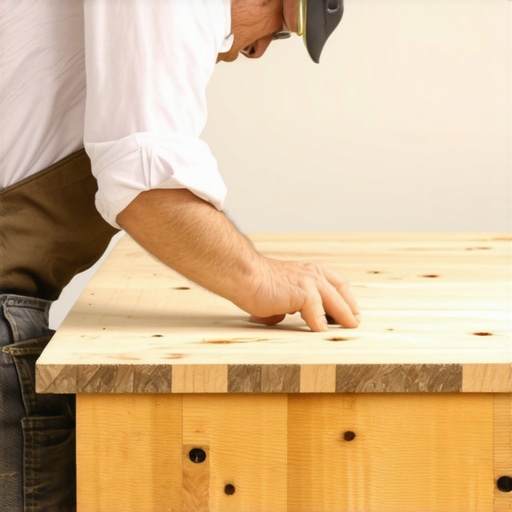
Is plywood always the right choice for your cabinet boxes?
While many marketing brochures push all-plywood construction as the only premium option, there is a specific nuance to consider. In bone-dry climates, high-density furniture board can actually be more dimensionally stable than plywood because it doesn’t have the internal tension of cross-laminated layers. However, in any ‘wet zone’ like the kitchen or bathroom, why plywood box construction still wins over furniture board in wet areas is non-negotiable. Plywood handles the occasional slow leak or humidity spike without swelling into a useless sponge. When you’re looking at expert tips on selecting storage solutions for a perfect kitchen upgrade, always ask your builder about the specific core materials used near the sink versus the dry pantry. Understanding these micro-decisions is what separates a five-year kitchen from a thirty-year kitchen. Don’t let the ‘all wood’ marketing cloud the reality of moisture management.Maintaining the structural integrity of your kitchen goes beyond a simple wipe-down; it’s about understanding the mechanics of your hardware. I’ve seen too many homeowners ignore a slightly sticky drawer until the ball bearings start dropping like rain. The truth is, even the most expensive ultimate guide to custom cabinets won’t save you if you don’t address friction. If your drawers are fighting back, you need to master the 3-step fix for drawer slides that won’t stay closed. Usually, it’s just a build-up of kitchen grease and dust. According to Blum’s technical documentation, their high-end runners are tested for 100,000 to 200,000 opening and closing cycles, but that rating assumes a clean environment. If you notice a lag, don’t just pull harder. I personally use a non-residue silicone spray once a year on all my slides because it doesn’t attract the same grit that standard WD-40 does.
How do I keep my custom storage looking brand new for a decade?
The secret to longevity is preventing the small wobbles from becoming structural cracks. This is especially true for built-ins and storage hacks for a sleek functional kitchen where the weight of appliances can stress the joints. Every six months, I take a screwdriver to every hinge in the house. It’s a 15-minute ‘audit’ that prevents the cabinet screw mistake that causes heavy drawers to fail. If you have a heavy pantry, look at why we recommend plywood cases over particle board; the screw-holding power of plywood is significantly higher, meaning those hinges won’t sag as easily under the weight of a hundred cans of soup. 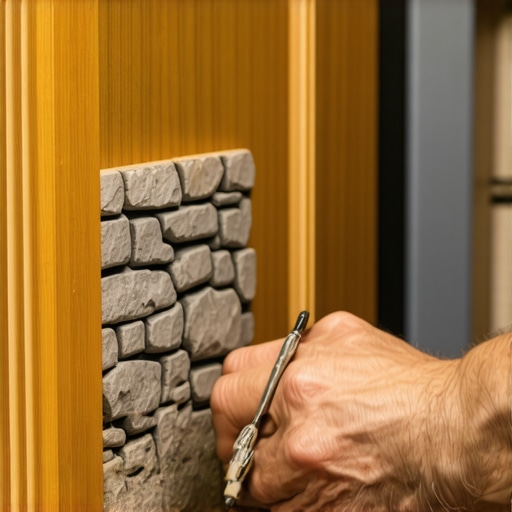
Invest in a Scribe Tool Instead of More Caulking
If you are adding built-ins that elevate your living room’s functionality, please put down the caulk gun for a second. The hallmark of a professional is a ‘zero-gap’ look against the wall. To get this, I swear by a dedicated scribe tool like the FastCap AccuScribe. Most people try to eyeball the curve of a wonky wall, but learning how to scribe a bookshelf to a wonky plaster wall or how to scribe a bookshelf to a brick fireplace allows the wood to follow the exact contour of the stone. This prevents the ‘cracking caulk’ syndrome that plagues DIY projects after a single season. Looking ahead, I predict we will see more ‘smart’ hardware that alerts your phone when a hinge is out of alignment or a sink base detects moisture. Until then, you are the sensor. Grab a damp cloth and some mild soap to tackle why your soft-close slides are failing and the quick cleaning fix today—it will save you hundreds in replacement costs down the road.
What a Decade of Woodworking Taught Me About Gravity
After years of installing custom cabinets, I’ve realized that the biggest mistake isn’t buying the wrong wood; it’s assuming that “installed” means “finished.” Wood is a living thing, and no matter how much you invest in a transform your kitchen with custom cabinets: expert guide for 2025, the material will expand and contract with the seasons. Don’t panic when you see a tiny gap in August that wasn’t there in January; it is simply the house breathing. I’ve also learned that gravity always wins; every door, no matter how light, eventually pulls toward the floor, making an annual hinge audit a mandatory part of homeownership. Lastly, cheap hardware is a trap that often ruins $20,000 kitchens, so prioritizing expert tips on selecting storage solutions for a perfect kitchen upgrade is the only way to ensure your cabinets look as good in year ten as they did on day one.
#IMAGE_PLACEHOLDER_E#
The Precision Tools That Never Leave My Belt
To keep your kitchen remodel looking like a professional showroom, you need to look beyond the basic toolbox. I personally swear by the FastCap AccuScribe; if you want to know how to scribe a bookshelf to a wonky plaster wall, this is the only tool that handles the complex curves of an older home. I also recommend keeping a digital copy of the Blum Technical Manuals on your phone, as they are the gold standard for understanding how high-end innovative storage solutions for modern kitchen remodels are engineered to move. Finally, always keep a bottle of non-residue silicone spray on hand; unlike traditional grease, it won’t attract the flour and dust common in a working kitchen, keeping your slides smooth for decades.
Reclaiming Your Kitchen One Hinge at a Time
You don’t need a massive budget to fix the small things that annoy you every day. Taking thirty minutes to realign your doors or swap out a stripped screw can make your kitchen remodel feel brand new again without the five-figure price tag. Whether you are dealing with built-ins and storage hacks for a sleek functional kitchen or a traditional pantry, a little maintenance goes a long way in preserving your home’s value. If you’re ready for a bigger change and want to stop fighting with old hardware, feel free to contact us to discuss a more permanent storage solution. Have you ever had a cabinet door that simply refused to stay shut no matter what you tried? Let me know in the comments below!