Why Your Corner Cabinet Needs a Super Susan, Not a Pole-Mount
I remember the exact moment I realized my kitchen corner cabinet was a design disaster. I was reaching for a heavy ceramic slow cooker, and as the flimsy plastic shelf rotated on its central metal pole, I heard a sickening crack. That pole wobbled, the slow cooker slid into the dark abyss of the cabinet corner, and I spent the next twenty minutes fishing out shards of pottery. It was a classic mistake I made during my very first DIY project because I didn’t understand how custom cabinets as a game-changer could have solved the problem before it started. I thought a lazy susan was just a lazy susan. I was wrong.
The Pole is Secretly Stealing Your Sanity
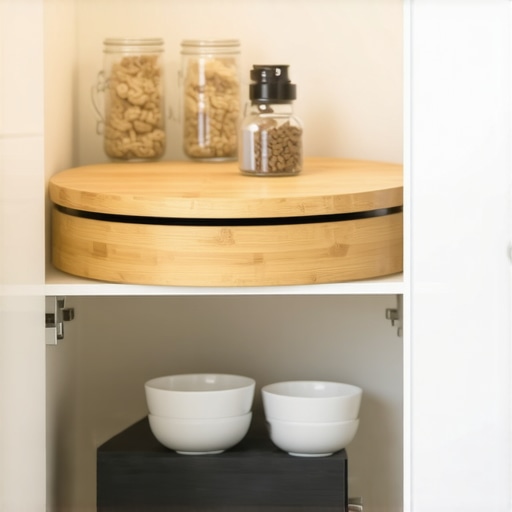
When you are planning a kitchen remodel, the corner cabinet usually feels like a puzzle you can’t quite solve. The traditional pole-mount lazy susan is the most common “solution,” but it is fundamentally flawed. That center pole acts like a barrier, preventing you from storing wide platters or large pots. Even worse, things constantly fall off the back of the trays into the bottom of the cabinet. Once a lid or a spice jar disappears back there, you practically need a flashlight and a reacher-grabber tool to get it back. In my early days, I even ignored the fact that the real reason your cabinet drawer slides are grinding or your rotating trays are sticking is often due to the structural instability of that single center rod. The Super Susan, however, sits on a fixed shelf with a ball-bearing swivel underneath each tray. This means no pole, more clearance, and significantly higher weight limits.
Will a Super Susan really hold my heavy cast iron?
This is the question I get most often from skeptical homeowners. The answer is a resounding yes. Because the Super Susan is supported by a thick plywood shelf rather than a tension-mounted pole, it can handle the weight of heavy Dutch ovens and stand mixers without bowing. In fact, professional design standards often cite that a well-installed Super Susan can support nearly double the weight of its pole-mounted cousin. According to the National Kitchen & Bath Association, storage that requires bending and reaching into deep corners is one of the leading causes of user dissatisfaction in older kitchens. By switching to a pole-less design, you are prioritizing longevity over a cheap, quick fix. Have you ever had to crawl halfway into your cabinet just to find a lost Tupperware lid? It’s time to stop the madness.
We are going to dive into the structural differences that make this the superior choice for built-ins and storage hacks that actually last. Trust me, your back and your cookware will thank you for making the pivot now before your next project is set in stone.
The Plywood Shell is Your Secret Weapon
Before you even look at a swivel, you have to look at the box itself. I once made the classic mistake of trying to retrofit a high-end Super Susan into a cheap, off-the-shelf cabinet. I thought the hardware would do the heavy lifting, but within three months, the bottom of the cabinet was bowing under the weight of my cast iron. It is the same reason why plywood box construction still beats particle board for kitchens; you need a rigid foundation to handle the torque of a rotating shelf filled with forty pounds of kitchen gear. When you are looking at expert tips on selecting storage solutions for a perfect kitchen upgrade, you will find that the best Super Susans are essentially fixed shelves with a turntable on top. If your cabinet walls are flimsy, the whole system will eventually lean, and you will be back to square one with a door that does not close properly.
Choose Materials That Last
In that failed project, I realized that the interior finish also matters more than you would think. Spilled oil or flour in a corner cabinet can be a nightmare to clean if you are dealing with raw wood or thin paper laminates. This is why I always tell homeowners that why pre-finished maple interior is better than melamine. It is slick, it is durable, and it allows those trays to spin without any friction from debris. Think of the cabinet box as the chassis of a car; if the frame is weak, it does not matter how fast the engine is.
Forget the Pole and Focus on the Bearings
The magic of the Super Susan is not just the lack of a pole; it is the ball-bearing swivel mechanism. Instead of the weight being suspended from a single point in the middle, it is distributed across a 10-inch or 12-inch circular ring. This creates a much more stable turntable effect. 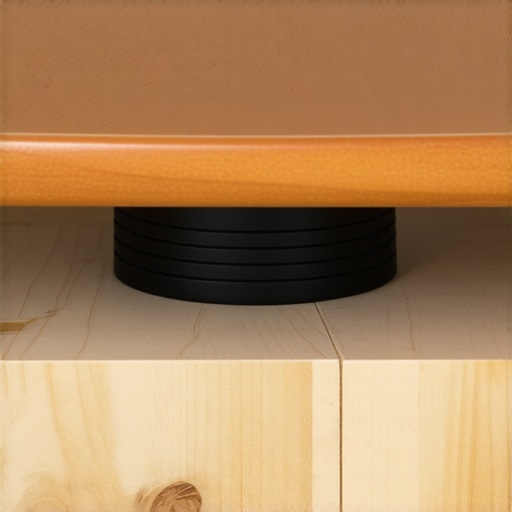 If you have ever dealt with the real reason your cabinet drawer slides are grinding, you know that friction is the enemy of any moving part. In the corner cabinet, the swivel needs to be rated for at least seventy-five to one hundred pounds. When I am doing a kitchen remodel, I look for industrial-grade swivels that operate silently. A cheap swivel will crunch and groan after six months of holding your heavy stand mixer.
Load It Up with Your Heaviest Cast Iron
People are often terrified to put their heavy Dutch ovens in a corner, but that is exactly what a Super Susan is for. Because the weight rests directly on a structural shelf, you do not have to worry about the avalanche effect where the shelf drops an inch every time you rotate it. It is a similar logic to how to fix a sagging pot and pan drawer with a center support; by supporting the weight from below rather than hanging it from above, you defy gravity far more effectively. In my own kitchen, I keep three massive pots on the bottom tray, and it still spins with the flick of a finger. This is the level of engineering that makes a kitchen actually functional for a real cook, not just someone who uses the microwave.
Why Clearances Make or Break the Design
You can have the best hardware in the world, but if your clearances are off by even a quarter-inch, you will hate using it. You need to ensure there is enough vertical space between the top of your tallest pot and the bottom of the next shelf. I usually aim for at least a two-inch gap above the highest item to prevent anything from snagging as the tray turns. This is where custom cabinets as a game-changer really comes into play. You are not stuck with the factory-set heights of a pole-mount system. You can move that structural shelf up or down during the build to fit your specific inventory. It is about tailoring the space to your life, not the other way around.
You might think the battle is won once you choose the Super Susan, but there is a nuance most designers overlook: the ‘dead space’ trap. Most people believe that the goal of a kitchen remodel is to use every single cubic inch of space. I’m here to tell you that chasing 100% space utilization is a mistake that will ruin your workflow. If you pack a corner cabinet so tight that you can’t see the back of the tray, you’ve just created a high-tech junk drawer. Expert designers often suggest leaving 15% of your shelf space empty to allow for ‘visual breathing room,’ ensuring you can actually identify what is on the tray as it spins.
Why Those Trendy Pull-Out Clouds Are a Maintenance Nightmare
Everyone seems to be obsessed with those ‘Magic Corner’ or ‘Cloud’ pull-outs right now. They look amazing in a showroom, but in my experience, they are a frequent point of failure. These systems rely on complex articulated arms and tracks that are prone to misalignment. I have seen countless homeowners regret these because a single grain of rice or a stray breadcrumb in the track can cause the whole mechanism to seize. This is exactly the cabinet screw mistake that causes heavy drawers to fail, only amplified by complex geometry. A Super Susan is superior precisely because of its simplicity. It’s a circle on a bearing—there is almost nothing to go wrong.
Can your cabinet floor really handle the weight of a professional mixer?
This is where we get into the advanced engineering of your kitchen. Many ‘custom’ shops will still use a thin 1/4-inch or 3/8-inch bottom panel for the cabinet floor. If you are planning to store a 30-pound KitchenAid mixer on a rotating shelf, that thin bottom will eventually ‘belly’ out. The Woodworkers Guild of America notes that shelf deflection can lead to catastrophic hardware failure if the load exceeds the material’s structural limits. You must ensure your builder uses at least a 3/4-inch plywood base. This is why plywood box construction still beats particle board for kitchens, especially in these high-stress corner zones. 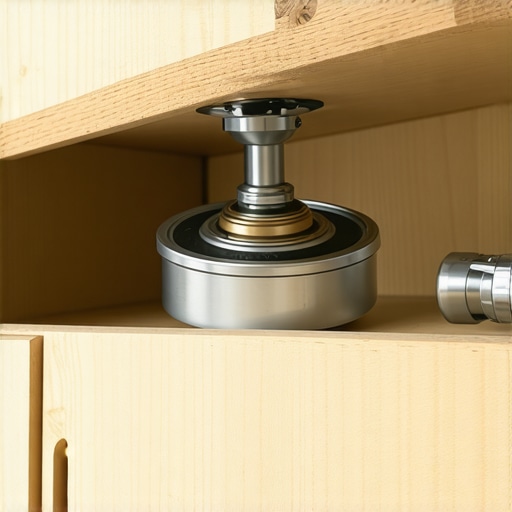 Without a rigid floor, even the most expensive industrial swivel will eventually start to grind.
The real ‘Oops’ factor I see most often is the hardware mounting. If your contractor uses standard wood screws to mount an industrial swivel to a shelf, the vibration of the rotation will eventually back those screws out. For a truly high-end stylish kitchen overhaul, we use machine bolts with T-nuts. It’s a small detail, but it’s the difference between a cabinet that lasts ten years and one that lasts fifty. When you are looking for expert tips on selecting storage solutions for a perfect kitchen upgrade, always ask about the fastening methods, not just the brand of the tray.
At the end of the day, your kitchen should serve you, not demand constant maintenance. By prioritizing structural integrity over flashy mechanical gadgets, you’re investing in peace of mind. Have you ever fallen into the trap of choosing a ‘fancy’ kitchen gadget only to have it break six months later? Let me know in the comments. If you’re ready to build something that actually lasts, you can always contact us to discuss your next project.
Maintaining a high-end corner unit isn’t just about wiping down the shelves; it is about the mechanical health of the hidden swivel. I have seen fifty-thousand-dollar kitchens brought to their knees by a single unlubricated bearing. To avoid this, I always keep a can of dry-film PTFE lubricant in my maintenance kit. Unlike standard oils that attract dust and eventually turn into a sticky sludge, a dry-film lubricant creates a slick surface that repels debris. This is crucial because why your soft close slides are failing and the quick cleaning fix often comes down to the same culprit: environmental gunk. If you hear a faint clicking when your tray rotates, that is a sign that a ball bearing is struggling against a piece of grit. A quick blast of compressed air followed by the right lubricant usually solves it before any permanent damage occurs.
Stop the Grinding Before It Starts
When you are investing in innovative storage solutions for modern kitchen remodels, you have to think about the ‘wear-and-tear’ cycle. According to the Architectural Woodwork Institute (AWI) Standards for Cabinet Hardware, Grade 1 pivoting hardware is required to withstand 25,000 cycles under a full load without failure. However, that rating assumes a clean environment. In a real kitchen with flour, sugar, and spilled oils, those cycles can be cut in half if you are not careful. I recommend a quarterly ‘clear and check’ where you remove the heavy items, wipe the pre-finished maple interior with a damp microfiber cloth, and ensure the swivel ring is clear of obstructions. It takes five minutes but adds decades to the life of the hardware.
How do I keep my Super Susan spinning smoothly for decades?
The secret is actually in the weight distribution. Even though a Super Susan is a beast, you should place your heaviest items—like that massive cast iron Dutch oven—closest to the center of the tray rather than at the very edge. This reduces the centrifugal torque on the ball bearings and keeps the rotation perfectly horizontal. If you notice a slight tilt, it is often because the real reason your cabinet drawer slides are grinding or your trays are leaning is due to shifting house foundations. You might need to use the one tool you need for perfectly aligned cabinet knobs every time—a high-quality laser level—to check if the structural shelf has settled and needs a slight shim adjustment.
The Future of Corner Storage is Electric
Looking ahead to the next decade, I predict we will see a massive shift toward motorized corner assistance. We are already seeing prototypes where a gentle tap on the cabinet door triggers a sensor-driven rotation, bringing the desired item to the front automatically. This is especially relevant for smart storage solutions for small kitchens in 2025, where accessibility for aging-in-place homeowners is becoming a primary design driver. While I still prefer the reliability of a manual Super Susan, the integration of LED strip lighting that activates as the tray spins is a trend you should absolutely consider right now. It eliminates the ‘dark abyss’ problem once and for all. If you want to see how these advanced systems fit into a total home plan, check out how we use built-ins that elevate your living rooms functionality to create a cohesive look. My best advice for your next project? Pick up a can of PTFE spray this weekend and give your current hinges and swivels a quick service; you will be amazed at how much ‘new’ life it breathes into your daily routine.
The Hardest Lesson I Learned After Three Broken Turntables
I used to think that maximizing every square inch was the hallmark of a great designer. I was wrong. The hardest lesson I learned is that accessibility beats capacity every single time. If you pack a corner cabinet to the brim just because you have the space, you’ll never actually use what’s in there. I’ve realized that innovative storage solutions for modern kitchen remodels aren’t about how much you can fit, but how easily you can get it back out. Another lightbulb moment? Don’t skimp on the mounting hardware. I’ve seen beautiful trays fail because they were held in by standard wood screws rather than machine bolts. Finally, remember that the “dead zone” behind the circular tray isn’t wasted space—it’s the buffer that keeps your items from getting jammed against the cabinet walls.
My Go-To Toolbox for a Smoother Spin
When I am finishing a project, there are three things I never leave the job site without. First is a high-quality dry-film PTFE lubricant. Standard oils are a magnet for kitchen dust and flour, which is why your soft close slides are failing and the quick cleaning fix often involves switching to a dry spray. Second, I always keep a self-centering drill bit (Vix bit) in my kit to ensure every swivel screw is perfectly vertical; a tilted screw is the first step toward a wobbly tray. Lastly, I recommend a simple handheld laser level. Checking that your structural shelves are perfectly level before the hardware goes on is the difference between a tray that stays where you put it and one that slowly drifts to one side every time you let go.
Stop Settling for a Kitchen That Fights Back
Your kitchen should be a place of creativity and flow, not a source of physical frustration or a reminder of design flaws. Choosing a Super Susan over a traditional pole-mount system is more than just a hardware upgrade; it is a commitment to a kitchen that respects your time and your back. When you embrace custom cabinets as a game-changer, you are building a foundation that will last as long as the home itself. Don’t let a dark corner dampen your joy of cooking. You deserve a space where even the hardest-to-reach spots are a pleasure to use. If you ever feel like the real reason your cabinet drawer slides are grinding or your trays are sticking is due to poor construction, it might be time to start fresh. Ready to banish the abyss for good? You can always contact us to start planning your custom storage layout today. Have you ever struggled with a wobbly lazy susan or lost a lid in the ‘dark abyss’ of a corner cabinet? Let me know in the comments below.