How to Build a Custom Floating Desk That Won’t Pull Away from the Wall
I remember the first time I sat down at my “perfect” DIY floating desk. I had spent all weekend staining the wood and obsessing over the finish. It looked beautiful. Then, I leaned my elbows on it to check my email, and I heard it—that sickening, slow-motion creak. The gap between the wood and the drywall started widening right before my eyes. It wasn’t just a desk; it was a structural disaster waiting to happen. I once thought four long screws and a dream were enough to hold up a walnut slab, but gravity proved me wrong. If you’ve ever felt that pit in your stomach when your furniture starts pulling away from the studs, you know why I’m so obsessed with doing this right the first time. Today, I am going to show you how to build a floating desk that feels like it’s part of the foundation of your house.
Stop Your Desk from Doing the Slow Motion Sag
The secret isn’t just about finding the studs—though that’s where most people start and stop. It’s about understanding leverage. When you lean on a floating desk, you are applying a tremendous amount of downward force that wants to pivot the desk right out of the wall. I’ve learned the hard way that the best way to mount heavy floating shelves or desks is to create an internal skeleton that distributes that weight across multiple points. When I first started dabbling in built-ins that elevate your living rooms functionality, I didn’t account for the “creep” of cheap fasteners. I used standard deck screws. Don’t do that. You need structural lags. Also, people often get the height wrong and regret it later. Trust me, 29 inches is the only correct height if you want to avoid a literal pain in the neck and shoulders.
Is a floating desk actually strong enough for a heavy monitor?
It’s a valid fear. You’re putting thousands of dollars of tech on something held up by what looks like thin air. But if you use the right materials—like why we recommend plywood shelves over solid wood for certain long-span applications to manage weight and warping—you can create a surface that supports well over 200 pounds. In fact, the Architectural Woodwork Institute notes that the integrity of wall-hung cabinetry depends entirely on the blocking behind the finished wall. Without solid internal blocking or specialized heavy-duty brackets, even the most expensive wood will eventually fail. Have you ever noticed a tiny hairline crack forming where your desk meets the paint? That’s the first sign of a mounting error. Does your current setup feel like it’s one heavy coffee mug away from a total collapse? Reach out or leave a comment; I’ve likely made that same mistake before!
Build a Skeleton Strong Enough for a Bridge
To make a desk truly float, you have to stop thinking about a flat piece of wood and start thinking about a torsion box. This is essentially a structural sandwich: two thin layers of plywood glued to a internal grid of spacers. This design provides incredible rigidity without the massive weight of a solid slab. Think of it like a hollow-core door, but built to withstand the weight of a person. I once tried to shortcut this by just screwing a thick piece of maple directly into a wall cleat. It looked great for exactly three days until the wood began to warp and pull the screws out of the grain. By using a torsion box, you distribute the load across the entire internal frame. When we discuss long-term durability, this is exactly why plywood box construction still beats particle board for kitchens and home offices; it holds its shape under pressure. 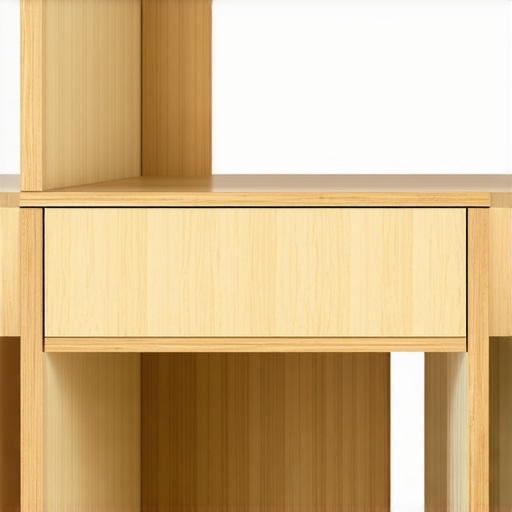
Grab These Lags Instead of Cheap Screws
The most common point of failure is the connection between the wall and the desk. Standard wood screws or deck screws are designed for vertical sheer, but they are surprisingly brittle. If you use them to mount a floating desk, the heads can actually snap off under the tension of the desk pulling away from the wall. You need structural lag screws, specifically 3-inch or 4-inch GRK fasteners. These behave more like steel bolts than screws. I learned this the hard way when a client’s heavy printer caused a shelf to sag nearly an inch overnight. Now, I always ensure I am not making the cabinet screw mistake that causes heavy drawers to fail by using hardware rated for thousands of pounds of pull-out force. If you are dealing with a non-standard wall, you must know how to anchor a heavy bathroom vanity to metal studs securely, as the principles of load-bearing are identical for a floating workspace.
Keep Your Tech Hidden and Powered Up
A floating desk loses its magic the moment a dozen black cables start dangling toward the floor. To keep the look clean, I always build a shallow “tech channel” into the back of the torsion box. This is a 2-inch deep recess where power strips and bricks can live, completely out of sight. It is essentially the built-in charging station that finally clears your countertops, but integrated into your wood surface. When I was finishing my own office, I neglected this step and spent three months kicking my power bar every time I stretched my legs. Do not skip the wire management phase; it is the difference between a professional-looking built-in and a DIY project that feels unfinished. For those looking for a total home upgrade, modern kitchen remodels featuring custom cabinets and built-ins often use these same hidden channel techniques to keep surfaces clutter-free. By planning for the electronics during the framing stage, you ensure the final result is as functional as it is beautiful.
The Solid Wood Myth That Destroys Your Walls
Many of my clients insist on solid wood for every inch of their custom projects because they believe ‘solid’ equals ‘quality.’ However, when it comes to long spans like a floating desk or large built-ins, solid wood can be your worst enemy. Unlike plywood, which is dimensionally stable, a massive slab of oak or walnut is a living, breathing thing. It expands and contracts with the seasons. If you bolt a heavy solid wood slab directly to your wall without allowing for movement, the wood will eventually win the tug-of-war against your drywall. I have seen 2-inch thick slabs literally crack the studs they were attached to because the maker didn’t account for humidity shifts. This is one of the most overlooked expert tips on selecting storage solutions for a perfect kitchen upgrade or home office: sometimes the engineered choice is the superior structural choice.
Should you really be using solid wood for a six-foot span?
It is a question that separates the hobbyists from the pros. According to the Forest Products Laboratory’s Wood Handbook, wood can move as much as 1/4 inch across a 12-inch wide board depending on species and climate. Now, imagine that movement on a 30-inch deep desk. If you don’t understand that why solid wood door panels still need room to breathe in summer applies to your desk surface too, you are headed for a structural failure. This is exactly why I advocate for the torsion box method or high-quality plywood cores—they give you the look of a massive timber without the destructive forces of seasonal movement. 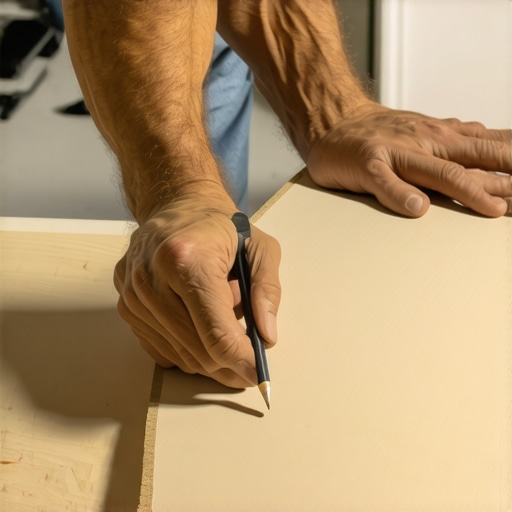
The Scribe Trap and Why Perfection Is Often a Lie
One of the biggest mistakes I see in DIY built-ins is the ‘perfectionist gap.’ People spend hours trying to cut a board perfectly straight, only to realize their walls are as wavy as the ocean. If you force a straight desk against a crooked wall, you create tension points that will eventually pop your fasteners. You have to learn how to scribe a bookshelf to a wonky plaster wall or a desk surface to ensure a zero-gap look that doesn’t put stress on the mounting hardware. I once watched a guy try to fill a half-inch gap with caulk; six months later, the caulk had pulled away and the desk was sagging because the uneven pressure had worked the screws loose. It is a classic ‘oops’ factor: ignoring the wall’s imperfections while obsessing over the wood’s.
Stop Gluing Everything Into a Solid Block
There is a common belief that more glue equals more strength. In cabinetry, that is a recipe for disaster. If you are building cabinets to support your workspace, you must remember why you should never glue cabinet doors into the frames—the same logic applies to your desk’s internal skeleton. Glue is rigid; walls move. You need a mix of mechanical fasteners and strategic glue points to allow the assembly to survive the natural settling of your home. If you turn your desk into a single, monolithic block of glued timber, the first time your foundation settles a fraction of an inch, your beautiful built-in will crack right down the middle. Have you ever fallen into the trap of over-engineering with the wrong materials? Let me know in the comments!
The One Tool That Actually Makes You Look Like a Pro
I have spent thousands of dollars on gadgets that ended up gathering dust, but if you want your floating desk to look like it belongs in a magazine, you need a track saw. I used to struggle with a standard circular saw and a prayer, but that always led to jagged edges that no amount of wood filler could fix. When you are deep into custom cabinets as a game-changer in your kitchen remodel journey, those perfectly straight, splinter-free cuts are what separate the amateurs from the craftsmen. A track saw allows you to break down large sheets of plywood with the precision of a massive shop table saw, ensuring that your torsion box fits together like a puzzle. If you are serious about innovative storage solutions for modern kitchen remodels, this is the one investment that pays for itself in saved material alone.
How do I maintain my floating workspace over the long haul?
Maintenance is the part of the project nobody wants to talk about, but it is why my builds still look new five years later. First, check your fasteners every six months. Houses settle, and the tension on those structural lags can shift. Second, be obsessive about your drawer hardware. If you start hearing a grit-on-metal sound, you need to find the real reason your cabinet drawer slides are grinding before the ball bearings fail completely. For the wood surface itself, avoid any cleaners containing silicone or wax. These products create a buildup that makes it impossible to touch up the finish later. A damp microfiber cloth is usually all you need to keep a high-quality lacquer or hard-wax oil looking pristine. According to the National Kitchen & Bath Association (NKBA), durability in custom built-ins is 40% material choice and 60% consistent environmental control, so keep your home’s humidity stable to prevent that seasonal wood movement we talked about earlier.
Why Invisible Tech Is the Next Big Thing for Built-ins
Looking ahead, I am convinced that the future of home offices and smart storage solutions for small kitchens in 2025 lies in
The Hardest Lessons I Learned on the Job
Building a desk that stays level for a decade requires more than just good intentions. One thing I realized early on is that the wall is never your friend; it is a wavy, inconsistent surface that wants to sabotage your straight lines. You have to learn expert tips on selecting storage solutions for a perfect kitchen upgrade and apply them to your office, specifically the rule of checking for plumb and level every single time you add a support. Another lightbulb moment for me was the ‘lean test.’ Before you ever put the top on your desk, you should be able to put your full weight on the skeleton. If it flexes even an eighth of an inch now, it will sag an inch later. Finally, remember that your tech will change. Today’s monitor setup might be replaced by something heavier or larger next year, so always over-engineer your internal framing.
The Gear I Won’t Start a Build Without
If you want your project to have that professional edge, you need to look beyond the basic hardware store shelf. I swear by GRK structural lags because they never snap, unlike the brittle deck screws most people use. I also highly recommend investing in a high-quality track saw; it is the absolute custom cabinets as a game-changer in your kitchen remodel journey because it gives you shop-quality edges on the job site. For the finish, stay away from hardware store polyurethanes and look into hard-wax oils like Rubio Monocoat or Osmo. They are easier to repair and feel like real wood rather than plastic. Lastly, always keep a set of cabinet shims handy; you will need them to bridge the gap between your perfectly straight desk and your ‘perfectly’ crooked walls.
Give Yourself the Office You Actually Deserve
There is a profound sense of satisfaction that comes from sitting down at a desk you built with your own hands, especially when it doesn’t move a millimeter when you lean on it. Whether you are integrating this into built-ins that elevate your living rooms functionality or creating a dedicated workspace, the principles of structural integrity remain the same. Don’t be intimidated by the physics of it. By focusing on a strong skeleton and hidden cable management, you are creating a piece of furniture that is truly part of your home. Your custom storage solutions and workspace are an investment in your daily productivity and peace of mind. What’s the one thing stopping you from ripping out your old, wobbly desk and starting your own rock-solid floating build today? Let me know in the comments!