The Best Way to Store Heavy Small Appliances in a Base Cabinet
I was on all fours, head buried in the dark abyss of a corner cabinet, trying to extract a cast-iron Dutch oven that felt like it was filled with lead. One wrong tug and—crack—my lower back let me know it wasn’t happy, and my cabinet floor earned a permanent gouge. That was the day I realized that even the most innovative storage solutions for modern kitchen remodels are useless if you cannot actually get to your gear without a physical therapist on standby. If you have ever found yourself ignoring your favorite bread maker or air fryer simply because it is too much of a “production” to pull it out, you have hit the wall I hit years ago. Today, we are going to fix that.
Stop the Heavy Lifting and Save Your Back
We tend to think of storage as just a place to put things. But when it comes to the heavy hitters—the stand mixers, the slow cookers, and the food processors—storage is actually about accessibility. Early in my DIY journey, I made the amateur mistake of assuming a deep, fixed shelf was the gold standard. I thought, “Look at all that room!” But deep shelves are where heavy appliances go to die or to hide behind the Tupperware you never use. In a modern kitchen, the goal is to bring the tool to you, not to go diving for the tool. This is why the deep drawer move for storing blenders and food processors is such a game-changer. Drawers allow you to look down and lift up, which is a much more ergonomic motion than the reach and drag that ruins your joints and your cabinet finish. In fact, ergonomics experts at the Mayo Clinic emphasize that lifting heavy objects from a bent-over position creates excessive strain on the lumbar spine. We are here to solve that today by looking at how revolutionizing your kitchen remodel using built-ins can save your sanity.
Is a Dedicated Appliance Lift Actually Worth the Hype?
I hear this all the time from neighbors: “Is it really worth losing a whole cabinet section just for a mixer lift?” It is a fair question. Space is at a premium, especially when we recommend 36-inch base cabinets for every modern remodel to maximize volume. The skepticism usually comes from a fear of mechanical failure or the loss of versatile space. But let me ask you this: Have you ever nearly dropped a expensive mixer because it was buried under a pile of heavy pans? Or worse, has your heavy gear become a permanent countertop eyesore because you are too tired to put it away? If you are nodding along, you are exactly who I wrote this for. We are going to look at why moving away from the standard door and shelf combo is the single best decision you can make for your kitchen’s longevity.
Stop Diving Into Dark Corners and Start Using Pull-Outs
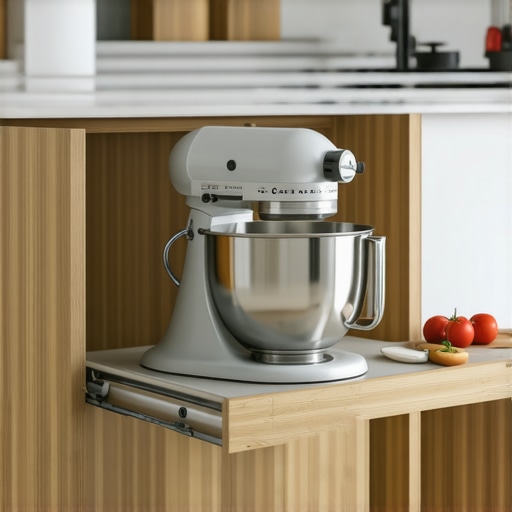
Think of your lower kitchen cabinets like a library where all the books are stacked five deep; you are never going to read the ones in the back. In modern kitchen remodels featuring custom cabinets and built-ins, the solution is to treat every heavy item like it is on a conveyor belt. The most effective method for immediate relief is the heavy-duty pull-out shelf. Last summer, I helped a friend who had basically given up on her 25-pound professional mixer because it lived in what we call a ‘dead’ corner. We ripped out the old fixed shelving and installed a custom pull-out tray with full-extension slides. Now, she just opens the door, pulls the tray, and the mixer is right there. The result was not just a prettier kitchen; it was a kitchen she actually used again. This is the best way to organize your small appliances because it eliminates the friction between the idea of cooking and the physical labor of setup.
The Secret Sauce is in the Weight Rating
Not all drawer slides are created equal. If you use standard 50-pound rated slides for a drawer full of cast iron and a heavy blender, you will find that your drawer slides are grinding within a year. For heavy hitters, you need slides rated for at least 100 to 150 pounds. This ensures that even when the drawer is fully extended—putting maximum leverage on the hardware—it remains stable and silent. It is like the suspension on a truck; you do not want it bottoming out just because you are carrying a full load. When planning custom cabinets as a game changer in your kitchen remodel journey, always over-spec your hardware for these high-stress zones. 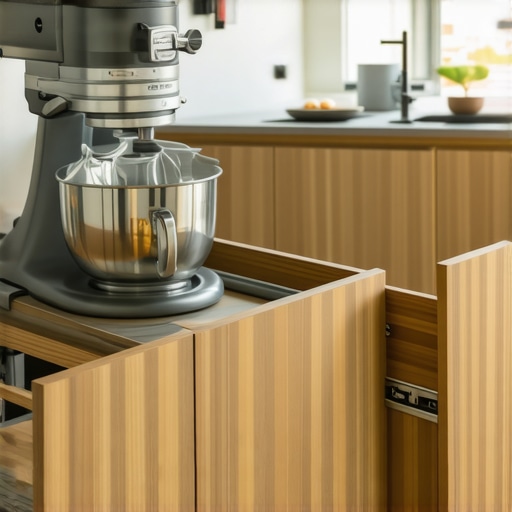
Hidden Outlets Make Your Storage a Workspace
The ultimate move is to stop moving the appliance altogether. This is where built-ins and storage hacks for a sleek functional kitchen really shine. By installing a dedicated ‘appliance garage’ with a lift-up door, you can keep the gear plugged in and ready to go. However, a common mistake is forgetting the power layout. Why you need a flush-mount outlet inside your toaster garage comes down to safety and aesthetics; it prevents cords from getting pinched in the tracks and keeps your countertops clear of cable spaghetti. I remember a client who insisted on a sleek, minimalist look but forgot the power inside her hidden pantry. Every morning, she had to drag her heavy espresso machine out to the main counter just to plug it in. We eventually had to retro-fit a circuit, which was a mess. Do it right the first time by planning your electrical layout alongside your cabinet dimensions.
How to Nail the Geometry of a Swing-Up Lift
If you decide on a mechanical mixer lift, the execution is all about the clearance. These mechanisms require a specific cabinet width—usually a minimum of 12 to 18 inches—and they need ‘breathable’ space so the metal arms do not rub against the cabinet face frame. During a perfect kitchen upgrade, I once watched a DIYer install a lift so high that the mixer hit the upper cabinets when it swung up. The fix is simple: measure for the arc, not just the final resting position. You are calculating the ‘swing radius,’ much like how a door needs a clear path to open. Using innovative storage solutions for modern kitchen remodels effectively means accounting for the path of motion, ensuring that the heavy lifting is done by the hardware, not your lumbar spine.While many designers will tell you that more cabinets always equals better storage, I have found that is one of the biggest lies in the industry. Efficiency isn’t about the quantity of boxes you hang on the wall; it is about the density of the storage and the durability of the moving parts. If you are just adding standard boxes, you are just adding more places for clutter to hide.
Why Your Lazy Susan is Wasting More Space Than It Saves
Everyone says the Lazy Susan is the classic fix for a dead corner, but in my experience, it is an outdated relic that actually kills your workflow. Those rotating trays often leave a significant amount of ‘dead’ air in the corners of the cabinet that you can never actually access. Plus, if a small lid falls off the back of the tray, you are looking at a full afternoon of disassembly just to clear the jam. This is exactly why you should skip the lazy susan and install lemans pull-outs instead. These systems extend fully out of the cabinet, bringing every square inch of storage into the light. According to the National Kitchen & Bath Association (NKBA), functional storage should be prioritized by the frequency of use, and a fixed rotating tray simply doesn’t allow for the ergonomic flexibility that modern cooks require. 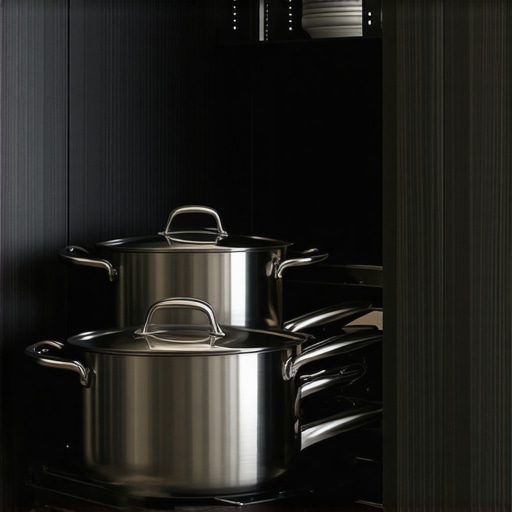
The Hidden Trap of the Standard 10×10 Estimate
One of the most common ‘oops’ factors I see occurs during the early budgeting phase. Homeowners get hyper-focused on the square footage of their kitchen, but they forget that the complexity of the interior determines the cost more than the exterior finish. You might see a low price and think you are getting a deal, but the 10×10 kitchen remodel math often fails to account for the specialized hardware needed for heavy appliance storage. If you don’t account for the weight of your equipment now, you will be paying a contractor to replace failing hinges in three years. This is where custom cabinets as a game changer in your kitchen remodel journey really prove their worth; they are engineered for the specific load-bearing requirements of your actual tools.
Can Your Layout Actually Handle a 6-Stage Filtration System?
This is an advanced question I get from homeowners who want a truly professional-grade kitchen. Many people plan beautiful sink bases but forget that high-end water systems take up massive amounts of room. In fact, why most 6-stage reverse osmosis systems are installed incorrectly under modern sinks usually comes down to a lack of clearance for the storage tank and the filters. If you don’t design the cabinet specifically for this footprint, you end up with a tangled mess of tubes and zero room for your cleaning supplies.
Don’t Settle for Low-Grade Interior Materials
Another mistake is focusing entirely on the door style while ignoring the box construction. I always warn my clients about the truth about pre-finished plywood vs. on-site staining. For heavy storage, you need a high-density core that won’t sag under the weight of a heavy mixer or a stack of cast iron. Using thin, unfinished particle board for a heavy-duty pull-out is a recipe for disaster. Have you ever fallen into the trap of designing for aesthetics but forgetting about the sheer weight of your gear? Let me know in the comments.Even the most robust custom cabinets as a game changer in your kitchen remodel journey will eventually need a little TLC to keep those heavy mixers and cast-iron stacks moving smoothly. I personally keep a can of dry-film PTFE lubricant in my utility drawer. Unlike standard WD-40, which acts as a magnet for flour and dust, a dry-film spray provides a slick barrier without the sticky residue. If you start hearing a grit-like sound when you pull out your stand mixer, it is time to act before you have to worry about drawer slides grinding and the ball bearings failing.
How do I keep my heavy-duty drawers sliding like butter?
Maintenance is not about a full overhaul; it is about the ‘quarter-turn’ rule. Every six months, I take a screwdriver to my hinge plates and drawer runners. Because wood is a natural material, cabinet doors warping in the summer heat is a reality that can throw off your alignment. A simple adjustment of the screws can prevent a heavy drawer from rubbing against the face frame, which saves your finish from unsightly gouges. If you find a screw that just won’t bite anymore, you need to know how to fix a stripped screw hole in a solid wood cabinet door using the toothpick and wood glue trick—it is a five-minute fix that prevents a lifetime of sagging. 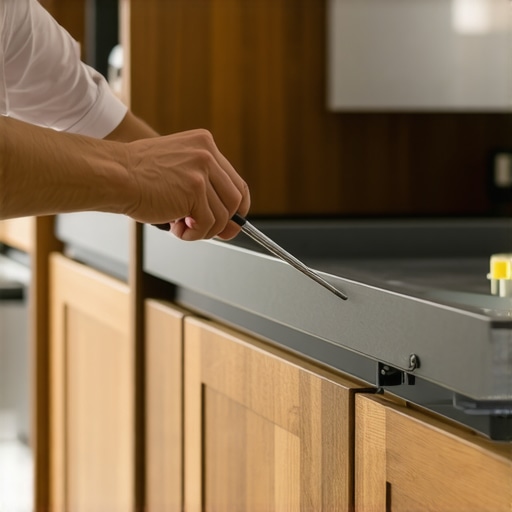 For those of us obsessed with a peaceful home, the secret to a quiet kitchen lies in checking your soft-close dampers. Over time, the hydraulic fluid in cheaper dampers can leak or lose pressure. If your heavy pot drawer is suddenly slamming, it is likely the damper, not the slide itself. Technical documentation from Blum, a leader in hardware engineering, suggests that heavy-duty runners are rated for 100,000 cycles, but only if the load is centered. If you have been stacking all your cast iron on one side of the drawer, take ten minutes today to redistribute that weight. Looking forward, the next evolution in innovative storage solutions for modern kitchen remodels is likely ‘smart’ weight sensors. Imagine a drawer that pings your phone when the weight distribution is uneven or when the humidity inside the cabinet exceeds a safe threshold for your wood. We are already seeing this in high-end built-ins that elevate your living rooms functionality, and it is only a matter of time before it hits the kitchen. I challenge you to go into your kitchen right now and check the ‘gap’ between your two most-used drawer fronts. If they aren’t perfectly parallel, try the adjuster screw fix today. It’s the easiest way to make an old kitchen feel brand new again.
Hard-Won Truths About Storing Heavy Kitchen Gear
After years of tweaking layouts and hearing from frustrated homeowners, I have realized that the biggest mistake is designing for the “perfect day” instead of the “real day.” On a real day, you are tired, the kids are hungry, and that 30-pound stand mixer feels like it is bolted to the floor. Here are the lightbulb moments I wish I had known earlier:
- The One-Finger Test: If you cannot slide out your heaviest drawer with a single finger, your hardware is underspecified or misaligned. Don’t wait for it to fail; fix the friction now.
- Weight Distribution is Math: Centering your cast-iron collection in a wide drawer prevents the runners from torquing. It is a simple shift that doubles the life of your custom cabinets as a game changer in your kitchen remodel journey.
- Accessibility Beats Aesthetics: A beautiful door is useless if the junk behind it is a safety hazard. Always prioritize the path of motion for your gear over the symmetry of the cabinet doors.
My Go-To Resources for a Flawless Kitchen Build
I do not recommend products unless I have personally seen them survive a decade of heavy use. If you are serious about implementing innovative storage solutions for modern kitchen remodels, these are the standards I live by:
- The Blum Hardware Catalog: This is the “bible” of cabinet motion. I trust their MOVENTO series for heavy-duty applications because they handle dynamic loads without sagging over time.
- 3/4-Inch Baltic Birch Plywood: For the interior boxes, I always look for high-density plywood. It provides the structural integrity needed to hold up heavy lifts and pull-outs without stripping screw holes.
- The NKBA Planning Guidelines: This resource is invaluable for getting the ergonomics right, especially regarding the ‘work triangle’ and clearance requirements for built-ins and storage hacks for a sleek functional kitchen.
Transform Your Kitchen into a Stress-Free Zone
You deserve a space that works for you, not against you. Whether you are just starting your planning or looking to retrofit an existing space, remember that every small adjustment toward better ergonomics is an investment in your well-being. Do not be afraid to demand high-quality hardware and thoughtful layouts in your modern kitchen remodels featuring custom cabinets and built-ins. You will thank yourself every time you effortlessly pull out that heavy mixer for a Saturday morning bake. Have you ever had a kitchen feature that looked great but was a total pain to actually use? Let me know in the comments below!