Why Every Master Bathroom Needs a Tower Cabinet for Linens
I remember the exact moment I lost my temper with my master bathroom. I was dripping wet, shivering, and playing a high-stakes game of “find the washcloth” behind a forest of shampoo bottles. My towels were shoved into the dark abyss of a deep base cabinet, and honestly, I was over it. I realized right then that a standard vanity is great for pipes, but it’s a graveyard for linens. If you’ve ever done the “drip-dry shuffle” across the tile because your clean towels are stored in a hallway closet three doors down, this is for you. Today, I’m showing you why a dedicated tower cabinet isn’t just a luxury—it’s the sanity-saving piece your bathroom remodel is missing.
Stop Digging Through Your Vanity for a Dry Towel
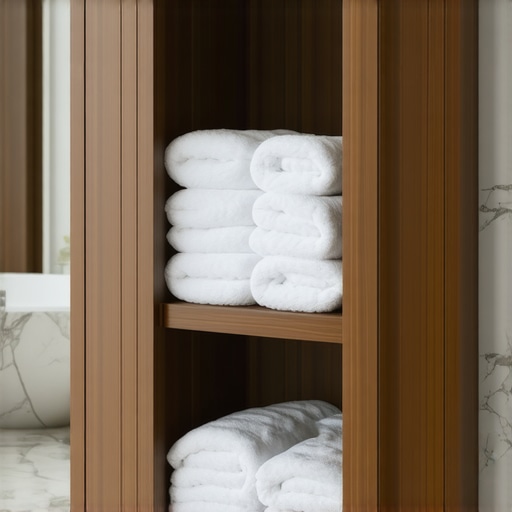
For years, I told myself that my bathroom just didn’t have the footprint for more furniture. I made the classic mistake of thinking horizontal space was the only space I had. I even tried those flimsy wire racks that sit over the toilet, but they looked like college dorm leftovers and wobbled every time I reached for a hand towel. The real game-changer happened when I looked up. By utilizing vertical space with a tower cabinet, I finally stopped treating my linens like hidden clutter. When you’re planning a custom cabinet journey, we often focus on the kitchen, but the bathroom deserves that same level of detail. A tower keeps everything at eye level. No more crouching. No more digging. It provides the same organized feel as built-ins that elevate a living room’s functionality, just in a more humid environment.
Is a massive cabinet going to make my bathroom feel tiny?
It’s the most common fear I hear from my neighbors. “Won’t a floor-to-ceiling cabinet swallow the room?” Actually, it’s the opposite. Clutter makes a room feel small. Visual noise from stacks of towels on the counter or overflowing baskets on the floor creates a sense of chaos. According to the National Kitchen & Bath Association, efficient storage is one of the top three priorities for homeowners during a remodel because it actually increases the perceived square footage. A sleek tower draws the eye upward, making the ceiling feel higher. If you choose the right materials, like how plywood box construction holds up better in wet areas than cheaper alternatives, you’re building something that lasts. Have you ever felt like your bathroom was working against you every morning? I’d love to hear your biggest storage frustration—let me know if you’re fighting the towel battle too. We’re about to dive into how to size these towers so they fit even the tightest corners without losing that spa feel.
Find Your Perfect Tower Dimensions
I usually start by measuring from the floor to the ceiling, but you don’t always want to go all the way up if you have high ceilings. A tower that is too skinny looks like a toothpick, and one that is too wide crowds the toilet. I’ve found that a 15-inch width is the sweet spot for most standard bathrooms. It’s wide enough to fit a stack of plush bath towels without folding them into weird origami shapes. If you’re working with a tighter corner, you can go down to 12 inches, but you’ll have to get creative with your folding. Just like how you’d maximize space with innovative storage solutions for every room, the goal here is to balance the depth. Don’t make it deeper than your vanity—usually 21 inches is the max—or you’ll feel like you’re walking into a wall every time you brush your teeth.
Build It to Withstand the Steam
Bathrooms are essentially tropical rainforests for half an hour every morning. If you use cheap particle board, that tower will swell and flake within two years. I always insist on plywood because plywood box construction still wins over furniture board in wet areas. It’s not just about the box; it’s about how you secure it. You have to anchor a heavy bathroom vanity to metal studs securely or wooden ones, depending on your home’s bones. A tall tower has a high center of gravity. If you pull on a stuck drawer and it isn’t anchored, you’re in for a very dangerous surprise.
Stop the Shelf Sag Before It Starts
Here’s a micro-story from my own first DIY attempt years ago. I built a beautiful tall linen cabinet and loaded it with heavy Costco-sized packs of shampoo and extra-large towels. Three months later, the middle shelf looked like a frowny face. I hadn’t realized that every tall pantry needs a fixed middle support shelf to keep the sides from bowing out. Now, I always use adjustable shelf tracks for the rest of the shelves, but that middle one? It’s glued and screwed. This allows you to swap from tall bottles to small washcloth stacks as your needs change without the whole thing collapsing.
Leveling is the Secret to Success
Most bathroom floors are about as level as a mountain range. If your tower is even a fraction of an inch off, the doors will never hang straight. You’ll be fighting the hinges for hours. I learned the hard way that you need to know the proper way to shim a cabinet on a slanted slab floor. Use plastic shims, not wood, because wood will rot if water ever seeps under the cabinet. Once it’s level, you can hide the gap with a toe kick or molding.
Customize the Internal Layout
Don’t just throw shelves in and call it a day. Think about how you actually move. I like to put the things I use every day—deodorant, face wash, daily towels—at eye level. Put the “once-a-month” stuff like spare light bulbs or the guest towels at the very top. If you have kids, keep their stuff lower so they don’t try to climb the shelves like a ladder. This is the same logic used when selecting storage solutions for a perfect kitchen upgrade: group items by frequency of use.
Stop equating cabinet depth with actual storage capacity
Most homeowners believe that more depth always equals better value, but that is the first major mistake in a high-end remodel. I’ve seen countless dream kitchens become cluttered nightmares because the base cabinets were too deep for the average arm reach. In my professional experience, 24 inches of depth is a black hole unless you integrate mechanical help. This is why a pull-out pantry beats deep walk-in shelves for visibility and ease of use every single day. If you cannot see the back of the shelf without a flashlight, the design has failed its primary purpose. Have you ever fallen into this trap of bigger is better only to realize you can never find your stockpot? Let me know in the comments.
Will heavy hardware eventually cause my cabinet doors to sag?
It is a common misconception that the quality of a cabinet is purely in the wood species. The nuance most people miss is the load-bearing synergy between the hardware and the substrate. If you pair heavy, solid-metal pulls with a weak core material, you are going to see catastrophic sagging within two years. This is the hardware mistake that makes expensive cabinets look cheap over time. According to the Woodwork Institute’s Manual of Millwork, the screw-holding capacity of the cabinet box is the primary failure point for long-term durability in wet or high-use areas. This technical detail is especially crucial when planning modern kitchen remodels featuring custom cabinets and built-ins. Furthermore, do not overlook specific dimensions for specialty items; the cabinet depth secret for storing large pizza stones and trays often requires a specific 15-inch vertical clearance that standard cabinetry ignores. This level of micro-planning is what separates a basic renovation from a truly stylish kitchen overhaul. Even small additions, like understanding why narrow spice pull-outs are often harder to use than you think, can save you from thousands of dollars in functional regret later. Always prioritize access over raw square footage to ensure your storage actually serves your lifestyle.
If you’ve followed my advice on depth and materials, you’re already ahead of 90% of the DIY crowd. But here is the secret most contractors won’t tell you: the install is only half the battle. To keep that tower from leaning or the doors from overlapping, you need to think like a precision engineer. I’ve seen beautiful stylish kitchen overhauls and bathroom remodels fail simply because the owner didn’t have a long-term maintenance plan. It’s not just about cleaning the wood; it’s about the mechanical soul of the cabinet.
Ditch the Bubble Level for a 360-Degree Laser
When I’m installing a tall tower, I don’t touch a standard spirit level. Floors are rarely flat, and walls are almost never plumb. I personally swear by a 360-degree green beam laser level. It allows me to project a perfectly level line around the entire room, ensuring the tower aligns with the vanity and any nearby built-in storage solutions. If you are off by even a sixteenth of an inch at the base, that error will be magnified to a full half-inch by the time you reach the ceiling. For the hardware, don’t eyeball it. Use a dedicated jig; it is the one tool you need for perfectly aligned cabinet knobs every time. It removes the human error that leads to crooked handles that drive you crazy every morning.
How do I keep my tower functioning smoothly over time?
Maintenance in a high-humidity environment is all about the hinges and slides. Every six months, I recommend a quick inspection of your door reveals. Wood naturally expands and contracts, which can cause doors to rub. You should know how to adjust European hinges for a perfectly level door reveal to prevent the finish from chipping where the doors meet. According to Blum’s technical specifications for their TANDEM plus BLUMOTION system, these components are tested for 100,000 cycles, but that rating assumes the tracks stay free of debris. If you notice a change in feel, it’s likely dust or hair—not a broken part.
Stop Your Soft-Close Slides From Getting Sluggish
In a bathroom, hairspray and steam create a sticky residue that acts like a magnet for dust. This is the primary reason why your soft-close slides grind and the quick lubrication fix is usually just a thorough cleaning with a dry cloth and a shot of pressurized air. Never use heavy oils like WD-40 on your slides; it will only gum up the works. If you keep the tracks clear, your modern kitchen remodels featuring custom cabinets or your bathroom towers will feel brand new for a decade. It’s about being proactive rather than reactive.
Integrated Tech is Taking Over the Bathroom
Looking ahead, the trend for 2025 and beyond is moving toward “active” storage. We are seeing a massive shift toward smart storage solutions for small kitchens in 2025 bleeding over into the bathroom. Think internal LED strip lighting triggered by motion sensors and built-in charging stations for electric toothbrushes hidden behind a door. The goal is to keep the counters 100% clear. My advice? When you’re building your tower now, run an electrical line into the back of it. Even if you don’t use it today, you’ll want it tomorrow. I challenge you to grab a screwdriver this weekend and check your hinge alignment—you’ll be surprised how much better a perfectly level door makes your whole room feel.
Three Harsh Truths About Tower Cabinets I Learned the Hard Way
Over the years, I have seen many well-intentioned DIY projects and professional installs fall apart simply because the builder ignored the physics of a bathroom. First, moisture doesn’t just sit on the surface; it penetrates. I’ve seen expensive doors warp because someone forgot that solid wood door panels still need room to breathe in summer and high-humidity environments. Second, gravity is a relentless enemy. If you’re building a tall storage unit, the logic of why your base cabinets should be secured with 3-inch rugged screws applies double to anything that reaches eye level; you need that mechanical bite to keep things safe. Finally, never underestimate the psychological toll of a slamming door at 6:00 AM. Investing in high-end soft-close hinges is a gift to your future self, but remember that the reason your cabinet doors are slamming despite having soft-close hinges is often a simple tension adjustment or a cleaning fix away.
My Go-To Resources for a Flawless Install
I never start a bathroom project without a specialized layout plan that respects the flow of the room. For inspiration on how to blend these towers into a larger home aesthetic, I often look at modern kitchen remodels featuring custom cabinets and built-ins because the core storage principles are identical: accessibility over depth. I also recommend using the one tool you need for perfectly aligned cabinet knobs every time—a high-quality drilling jig—to ensure your hardware is millimeter-perfect. For those tackling their own shelving, keep in mind that why we recommend plywood shelves over solid wood for long spans is all about preventing that unsightly sag under the weight of heavy towels and bulk toiletries.
#IMAGE_PLACE_FINAL#
Take Back Your Master Bath Today
Your bathroom should be a sanctuary, not a source of frustration. By choosing high-quality custom cabinets and focusing on vertical efficiency, you’re not just adding storage—you’re adding peace of mind to your daily routine. No more digging through the dark abyss of a base cabinet, and no more shivering while you hunt for a washcloth. It is about creating a space that finally works for you instead of against you. Have you ever felt the frustration of a ‘black hole’ cabinet where your favorite towels go to disappear? Let me know your biggest bathroom storage struggle in the comments below!