Why Your Pantry Needs a Ladder if You Have High Ceilings
I’ll never forget the day I decided to bake my grandmother’s famous sourdough. I had everything ready on the counter, except for the high-protein flour I’d tucked away for “safekeeping” on the very top shelf of my nine-foot-tall pantry. I grabbed the nearest dining chair, hopped up, and reached. The chair slid on the hardwood, my heart skipped a beat, and I barely caught myself on the doorframe while flour exploded across the floor like a powdery crime scene. That was my wake-up call. We spend so much time dreaming about innovative storage solutions for modern kitchen remodels but often forget that “more space” doesn’t mean “usable space” if you need a parachute to reach it.
Stop Staring at the Dead Space Above Your Head
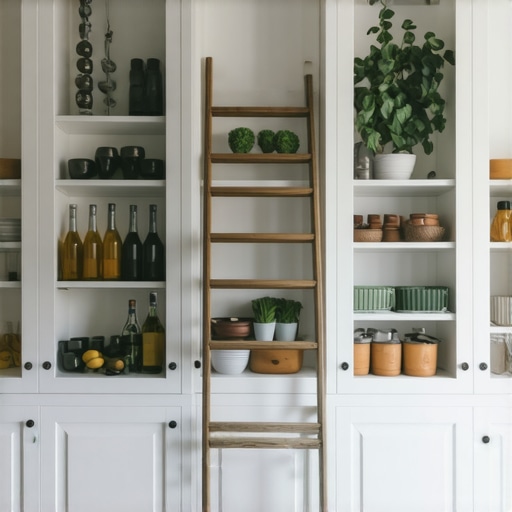
Having high ceilings is a double-edged sword. On one hand, your kitchen feels airy and grand. On the other, you’ve got about four feet of vertical real estate that is essentially a graveyard for holiday platters and George Foreman grills you haven’t used since 2012. I made the mistake early on of thinking I could just “deal with it” by using a cheap folding stool. Spoiler: I couldn’t. The stool was always in the way, or worse, buried in the back of a closet when I actually needed it. If you’re going to invest in the ultimate guide to custom cabinets for a stylish kitchen overhaul, you have to consider how you’ll actually access the summit. A dedicated pantry ladder isn’t a luxury; it’s the bridge that makes your high-ceiling storage functional. I’ve walked into too many beautiful homes where the upper cabinets are just dust-collectors because the homeowners are terrified of the “climbing” aspect.
Is a Rolling Ladder Just an Expensive Dust Collector?
You might be thinking, “Do I really want a giant wooden ladder taking up space in my kitchen?” It’s a fair question. I used to think they were just for old-world libraries or people who had way too much money to spend on custom cabinets ideas that transform your homes style. But here’s the truth: a well-designed rolling ladder actually saves floor space because it stays flush against the cabinetry when not in use. It eliminates the “pantry shuffle”—that annoying dance where you move three things to get to one. Plus, when you realize that according to the National Safety Council, falls are a leading cause of home injuries, suddenly a stable, rail-mounted ladder seems a lot more practical than balancing on a swivel chair. It’s about creating a workspace that respects your safety as much as your style.
Practicality Meets Aesthetics
One of the biggest mistakes I made was thinking why your pantry shelves should be adjustable not fixed was the only solution I needed. While adjustable shelves are vital for organizing different heights of cereal boxes, they don’t solve the “reach” problem. I’ve seen so many homeowners settle for a hidden toe kick drawer move for storing step ladders, which is a great start for reaching the middle shelves, but for those truly high reaches, a rolling track system is a total game-changer. It turns your pantry from a frustrating storage locker into a boutique experience where every inch of your home is utilized. Have you ever stood in your kitchen and felt like you were wasting half the room because you couldn’t reach the top cabinets? If you have, you are definitely not alone.
Build a Cabinet That Does Not Crumble Under Pressure
If you are planning to hang a rolling ladder, your cabinetry needs to be more than just pretty; it needs to be structural. Most big-box store cabinets are held together with staples and prayers. When you add a rail and the weight of a full-grown adult, those face frames can peel off faster than a wet sticker. This is why I tell everyone that why your cabinet boxes should be stapled, glued, and screwed during the assembly phase is the absolute baseline. I learned this the hard way on a project in a historic home where we tried to retrofit a ladder onto existing units. One morning, while testing the glide, we noticed the top molding beginning to pull away from the wall. We had to take the whole thing down and reinforce the internal backing with solid blocking. It was a messy, three-day setback that could have been avoided by building for strength from day one.
Stop Your Ladder from Ghost-Rolling
The most frustrating thing about a ladder system is not the climbing—it is when the ladder will not stay put. This usually happens because your walls are wonky. In my own kitchen, the floor sloped nearly an inch from left to right. If I had not spent the extra hour learning how to align cabinet doors when your walls are out of plumb and shimming the track perfectly level, my ladder would have spent its life ghost-rolling into the refrigerator. You have to treat the track like a precision instrument. Use a laser level, not just a bubble level, to ensure the rail is perfectly horizontal, even if the ceiling or floor says otherwise. If the track is even a hair off, gravity becomes your enemy every time you let go of the rungs.
Ditch the Heavy Lifting at High Altitudes
Just because you can reach the ceiling does not mean you should store your heaviest gear there. A common mistake in built-ins and storage hacks for a sleek, functional kitchen is placing dense, heavy items on the top tier. I once watched a client try to wrestle a massive stand mixer down from a nine-foot shelf while balanced on a ladder. It was a safety hazard waiting to happen. Use those upper reaches for things like seasonal Tupperware, light serving bowls, or extra paper goods. For the heavy hitters, you are much better off learning the best way to organize heavy dutch ovens in a deep drawer at waist level. Reserve the ladder for the light and airy inventory that won’t throw you off balance.
Anchor Everything Like Your Life Depends on It
When you are installing the base units that support the whole vertical stack, do not skimp on the fasteners. Standard screws will not cut it when the physics of a moving ladder come into play. You need a serious bite into the wall studs. This is exactly why your base cabinets should be secured with 3-inch rugged screws. I have seen cabinets sag under the dynamic load of someone climbing, which then throws off the alignment of the doors and the track. It creates a domino effect of maintenance issues that are a nightmare to fix later. While you are at it, consider the best way to organize your small appliances in those middle-height zones so the ladder is only used for the stuff you touch once a month. Real efficiency is about minimizing the number of climbs you have to make during a busy dinner prep.
Your Hardware Is Not Just Decoration
Most designers call cabinet handles the jewelry of the kitchen. I think that is a dangerous way to look at it. If you treat hardware as purely aesthetic, you end up with knobs that snag your pockets every time you walk past or pulls that are nearly impossible to grip with wet hands. In my experience, the secret to choosing hardware that does not snag your pockets is actually about the physical return of the handle to the door face, not just the finish. According to the National Kitchen & Bath Association (NKBA), ergonomic accessibility and safety are the most frequently ignored aspects of high-end design. If your jewelry makes it hard to open a heavy drawer or catches your clothing while you are holding a knife, it is not a luxury—it is a design failure.
How do I stop my white cabinets from looking like a yellowing refrigerator?
This is the number one question I get from homeowners who want that timeless, crisp look. The oops factor here is almost always the top coat and the environment where it was applied. Many people insist on on-site painting because they think it looks more custom, but the truth about pre-finished plywood vs on-site staining is that factory-controlled environments produce a far more durable, UV-resistant bond. If you choose an on-site spray without proper chemical knowledge, you will eventually discover the real reason your white painted cabinets are turning yellow is often a reaction between the top coat and the ambient light or kitchen grease. 
The Small Detail That Ruins an Expensive Kitchen
Have you ever noticed a kitchen that looks expensive but feels slightly off? It is almost always the reveals—those tiny gaps between the doors. People spend a fortune on smart storage solutions for small kitchens in 2025, only to have the entire project look sloppy because a single door is hanging a sixteenth of an inch lower than the rest. Mastering the 5-minute hinge adjustment for fixing wonky cabinet reveals is what separates a DIY-level project from a master craftsman’s finish. Do not let your installer leave until every horizontal line is laser-straight and every gap is perfectly uniform. Have you ever fallen into this trap where a tiny detail ruined the big picture for you? Let me know in the comments.
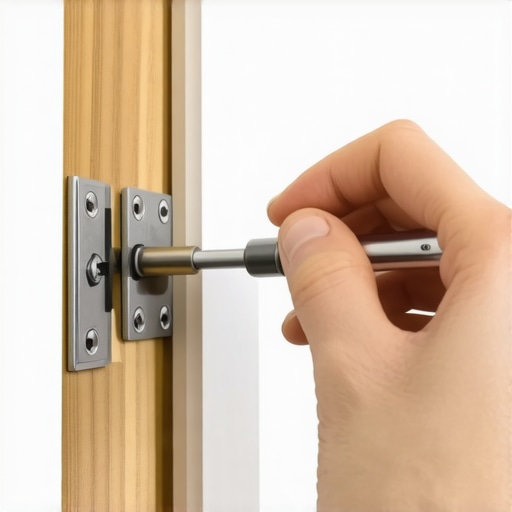
Once the sawdust settles and the last screw is driven, most homeowners think the job is done. But a high-end kitchen is a living machine. Over the first year, your house will breathe, the wood will expand and contract, and those perfectly aligned doors might shift just a hair. I always keep a specialized Pozidriv screwdriver in my junk drawer—specifically for the European hinges I use. Unlike a standard Phillips, it won’t cam out and strip the head, which is essential when you are performing a quick 5-minute hinge adjustment for fixing wonky cabinet reveals. If you hear a gritty sound when pulling out a heavy pot, don’t ignore it. Usually, it is just a bit of debris, and knowing why your drawer slides are grinding and how to clear the ball bearings can save you from replacing an expensive soft-close runner three years down the line.
Keep Your Drawers Gliding Like Silk
Maintenance is not just about cleaning; it is about mechanical preservation. According to technical documentation from Blum, their TANDEM plus BLUMOTION slides are rated for 100,000 open-and-close cycles, but that rating assumes the cabinet box remains perfectly square. This is why I advocate so strongly for modern kitchen remodels featuring custom cabinets and built-ins that use thick, stable materials. If your cabinet box racks or twists because it was poorly anchored, those high-tech slides will bind and fail prematurely. I recommend checking the tightness of your mounting screws every change of season. A loose screw in the back of a deep drawer can cause the whole unit to sag, leading to that annoying ‘catch’ every time you try to reach for a spatula.
The Next Generation of the High-Efficiency Kitchen
Looking ahead, I see the industry moving toward even more integrated ‘invisible’ tech. We are already seeing smart storage solutions for small kitchens in 2025 that include internal LED lighting triggered by motion sensors and voice-activated pantry doors. But the foundation remains the same: craftsmanship. No amount of smart tech can fix a cabinet door that was not hung correctly. If you are looking for expert tips on selecting storage solutions for a perfect kitchen upgrade, always prioritize the hardware quality first. The ‘bells and whistles’ are fun, but the hinges and slides are the heart of the system.
How do I maintain my custom cabinets over time?
The secret to a kitchen that looks brand new ten years later is twofold: climate control and the right cleaning chemistry. Wood hates extreme humidity swings. If you let your home get too dry in the winter, you might see small gaps at the joints of your doors. This is normal, but a whole-home humidifier can minimize it. When it comes to cleaning, stay away from ‘oil soaps’ or anything with wax. These products create a sticky build-up that actually attracts more grease. A simple microfiber cloth dampened with a drop of mild dish soap is all you need, especially if you have been told the truth about pre-finished plywood vs on-site staining and have a factory-grade topcoat. Take five minutes this weekend to check your most-used drawer; if it feels even slightly ‘sticky,’ give the tracks a quick vacuum. It is the easiest way to prevent a major repair later.
The Hardest Lessons I Learned Climbing the Walls
Vertical storage is as much a mental game as it is a construction project. I used to think more cabinets simply meant more organization, but I quickly learned that clutter just migrates to the highest point if you do not have a specific plan for those ‘summit’ shelves. First, if a shelf requires a ladder, it should strictly house ‘once-a-year’ items like a massive turkey platter or heavy holiday linens. Second, always prioritize transforming your kitchen with custom cabinets that are engineered for the dynamic load of a moving person; a sagging shelf ten feet up is a disaster waiting to happen. Finally, remember that your ladder should be treated as a central piece of your custom cabinets as a game-changer in your kitchen remodel journey, not an afterthought you bolt on once the paint is dry.
Gear and Guides I Actually Use
I do not recommend these items because they look good; I use them because they stop the ‘creaks’ and ‘sags’ that ruin a high-end project. For design standards, I always refer back to the NKBA (National Kitchen & Bath Association) guidelines for clearance and safety heights. For the physical installation, a professional-grade laser level is non-negotiable when you are trying to maximize your kitchen space this year with perfectly horizontal tracks. And for maintenance, I suggest keeping a dedicated set of Pozidriv drivers in your kitchen—they prevent the screw-head stripping that makes cabinet door alignment impossible over time.
Your Path to a Truly Functional Kitchen
Taking the leap into a full-scale vertical redesign can feel intimidating, but the reward is a home that finally feels like it fits your lifestyle rather than fighting against it. When you revolutionize your kitchen remodel using built-ins and creative storage, you are not just adding boxes to a wall; you are reclaiming your time, your floor space, and your safety. I want you to feel complete confidence when reaching for that top shelf, knowing every screw and rail is rock solid and perfectly tuned. It is time to stop looking at that dead space above your head and start making it work for you. Have you ever had a ‘near-miss’ or a ‘flour explosion’ while trying to reach something high up in your kitchen? Let me know your story in the comments below!