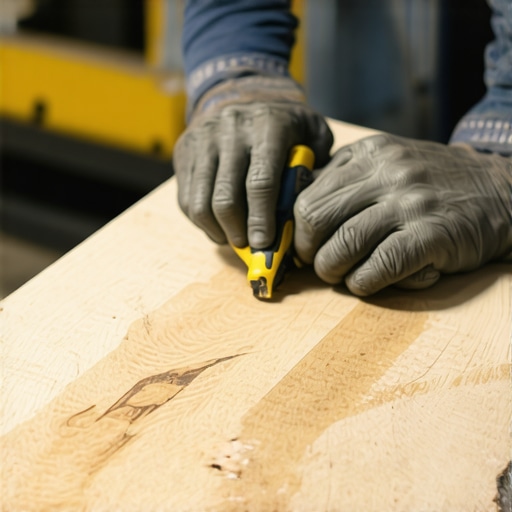
Why Your Cabinet Doors Are Warping in the Summer Heat
I’ll never forget the sound. It was a humid Tuesday in mid-July, and I walked into my kitchen to grab a glass of water, only to be met with a stubborn, wood-on-wood thud. My beautiful shaker-style pantry door—the one I’d spent weeks obsessing over—wasn’t just sticky; it was visibly bowing out at the top corner like it was trying to escape the hinges. I felt that immediate sink in my stomach that every homeowner knows. You spend all this time on a kitchen remodel journey, and suddenly, the summer heat decides to reshape your investment into something resembling a potato chip. It was a humbling moment that taught me everything I now know about wood movement and environmental control. Today, I’m going to show you exactly why this happens and what you can do to save your kitchen before the August humidity does even more damage.
Your Kitchen Is Basically a Living Organism
We like to think of our cabinets as static furniture, but wood is a porous material that never truly stops ‘breathing.’ When the summer heat hits, it usually brings a massive spike in humidity along for the ride. Wood fibers soak up that moisture like a sponge, causing the material to expand. If that expansion isn’t uniform—which it rarely is—you end up with a warp. Early in my career, I made the classic mistake of installing doors that hadn’t properly acclimated to the home’s environment for more than a few hours. I learned the hard way that choosing the right wood species is only half the battle; the other half is respecting the science of moisture. According to the USDA Forest Products Laboratory, wood will always seek an ‘Equilibrium Moisture Content’ with its surroundings, meaning your doors are literally fighting to match the swampy air in your kitchen. If you are already seeing issues, you might need to learn how to fix a cabinet door that is rubbing the frame before the hinges start to pull out of the wood entirely.
Is this just a sign of cheap cabinets?
I hear this all the time from frustrated neighbors. They think if they had spent more money, their doors would be ‘warp-proof.’ The truth is, even the most expensive solid wood can fail if it isn’t constructed with movement in mind. In fact, high-end solid wood often moves more than engineered alternatives. This is why I always emphasize that cabinet boxes should be stapled, glued, and screwed to provide a rock-solid foundation, but the doors themselves need room to breathe. Have you noticed your doors swinging open on their own or refusing to latch since the temperature topped ninety degrees? You aren’t alone, and it doesn’t necessarily mean you need a total replacement. It means we need to talk about stabilization.
Keep the air dry to keep the wood straight
If you want to save your sanity, the first thing you need to do is treat the air, not the wood. I’ve seen homeowners try to sand down a ‘high spot’ on a door in July, only to find a massive gap in January when the wood shrinks back. You cannot fight nature with a belt sander. The goal is to maintain a consistent humidity level between 30% and 50%. If you don’t have a whole-house dehumidifier, even a small portable unit in the kitchen can prevent the fibers from reaching that saturation point where they begin to twist. I remember a project in Geist during a record-breaking heatwave where the pantry doors looked like Pringles. I tried the old-school ‘wet and weigh’ method—soaking the concave side and putting bricks on it. It was a disaster; the door didn’t just stay warped, it eventually cracked. That failure taught me that transforming your kitchen with custom cabinets requires a commitment to climate control from day one.
Try the five-minute hinge adjustment first
Before you assume the wood is permanently ruined, look at your hardware. Often, what looks like a warped door is actually just a hinge that has slipped under the weight of the expanding wood. Most modern cabinets use European-style concealed hinges, which are a godsend because they allow for three-dimensional adjustment. You can move the door up and down, left and right, or in and out. If your door is rubbing the frame, it’s usually the ‘side’ screw that needs a quarter-turn. If the top corner is kicking out, you likely need to adjust the ‘depth’ screw to pull the door tighter to the cabinet box. Using a 5-minute hinge adjustment for fixing wonky cabinet reveals is the most effective way to mask minor seasonal movement. If the door still won’t sit flush, you might be dealing with a box that was never square to begin with. In those cases, you have to learn how to align cabinet doors when your walls are out of plumb to compensate for the structural lean of the house. 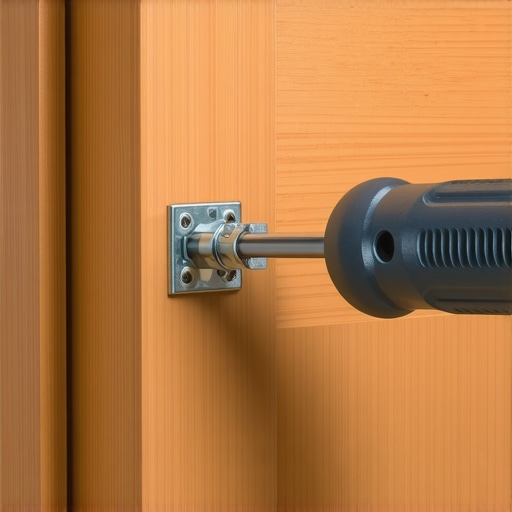
Plan for the heat during your next remodel
If you are currently in the design phase, you have the chance to ‘pre-solve’ these humidity headaches. The way a door is constructed determines how it handles a swampy Indiana August. For example, a floating center panel is designed to slide within the stiles and rails as it expands. If that panel is glued in place or painted shut, it has nowhere to go but out, leading to a warp or a crack. When planning innovative storage solutions for modern kitchen remodels, I always suggest looking at the internal layout. Better airflow around the cabinets prevents localized humidity pockets. If you already have damage, you can often learn how to fix a cracked cabinet panel without replacing the door using flexible wood fillers that move with the grain. Incorporating smart storage solutions for small kitchens in 2025 can also help by reducing the weight load on hinges, which keeps doors from sagging and appearing more warped than they actually are. Proper planning means choosing materials that respect the physics of your home’s micro-climate.One of the biggest misconceptions I see during a kitchen remodel journey is the obsession with ‘all-wood’ construction. We’ve been conditioned to think that solid wood is the gold standard, but in reality, many high-end shops use pre-finished plywood for a very specific reason: stability. Solid wood panels are beautiful, but they are incredibly reactive to changes in temperature. If you are comparing options, understanding the truth about pre-finished plywood vs. on-site staining can save you from a cabinet box that warps before the first year is up. While the doors should be your aesthetic focal point, the ‘guts’ of the kitchen need to be engineered to handle the physical load and the micro-climate of your home.
Stop falling for the ‘All-Wood’ marketing trap
Everyone tells you to buy solid wood everything, but I actually prefer high-quality plywood for the cabinet boxes. Why? Because plywood is made of cross-laminated layers that counteract the natural tendency of wood to expand in one direction. This creates a much more stable foundation for your heavy stone countertops. I’ve seen custom cabinets ideas that transform your home’s style completely fall apart because the homeowner insisted on solid wood boxes that eventually buckled under the weight of a massive marble slab. When you are looking for expert tips on selecting storage solutions for a perfect kitchen upgrade, look for construction methods that prioritize structural integrity over buzzwords. 
Why you shouldn’t trap your flooring under the base cabinets
Here is the ‘oops’ factor that ruins more high-end kitchens than almost anything else: the floating floor mistake. If you are using Luxury Vinyl Plank (LVP) or any floating system, do not—I repeat, do not—install your heavy base cabinets on top of it. I’ve visited countless homes where the flooring is buckling or the cabinets have shifted because luxury vinyl plank should not be trapped under your base cabinets. The National Kitchen & Bath Association (NKBA) specifically warns that these floors need to expand and contract; pinning them down with thousands of pounds of cabinetry and granite is a recipe for a structural nightmare. Always install your cabinets on the subfloor first, then bring the flooring up to them and cover the gap with a toe kick or base molding.
Why does your custom cabinet quote vary so much between shops?
This is a sophisticated question that most beginners never think to ask. If you receive two quotes for ‘custom cabinets’ and one is $15,000 higher, it’s rarely just about the wood species. You have to look at the joinery, the drawer slide weight ratings, and the finishing process. Often, why your custom cabinet quote varies so much between shops comes down to the labor-intensive details like hand-sanding between coats and using stapled, glued, and screwed boxes instead of simple cam-locks. Don’t be fooled by the 10×10 kitchen remodel math; your layout often costs more than the square footage suggests because of these hidden technical requirements. Have you ever fallen into the ‘all-wood’ trap or accidentally pinned your floors? Let me know in the comments below, and let’s talk about how to fix it before your next project.
Stop the squeak before it starts
Maintenance is the part of the kitchen remodel journey that nobody likes to talk about, but it is the difference between a kitchen that lasts ten years and one that lasts fifty. If you’ve invested in high-end hardware, you need to understand that even the best systems require a tune-up. I always tell my clients that the real reason your soft close drawers are sluggish in winter isn’t usually a broken part; it’s a change in the viscosity of the hydraulic fluid inside the dampener combined with a bit of dust buildup. According to Blum’s technical documentation, their CLIP top BLUMOTION hinges are tested for 200,000 opening and closing cycles, but that rating assumes the environment remains relatively clean. If you notice a change in performance, you need to know why your drawer slides are grinding and how to clear the ball bearings before the friction causes permanent scoring on the metal tracks.
My favorite precision tools for the job
I don’t go to any job site without my True Position Tools cabinet hardware jig. When you are working on the ultimate guide to custom cabinets for a stylish kitchen overhaul, you cannot afford to eye-ball a handle placement. One millimeter off on a long run of drawers will look like a mountain to the naked eye. This tool allows for repeatable, surgical precision. If you are doing a DIY refresh, learning the best way to drill holes for new cabinet hardware using a dedicated jig will save you from the heartbreak of a misaligned pull. And if the worst happens, don’t panic—you can usually learn how to fix a stripped screw hole in a solid wood cabinet door using the toothpick and wood glue trick, which provides a fresh bite for the hardware screw without needing to replace the entire door. 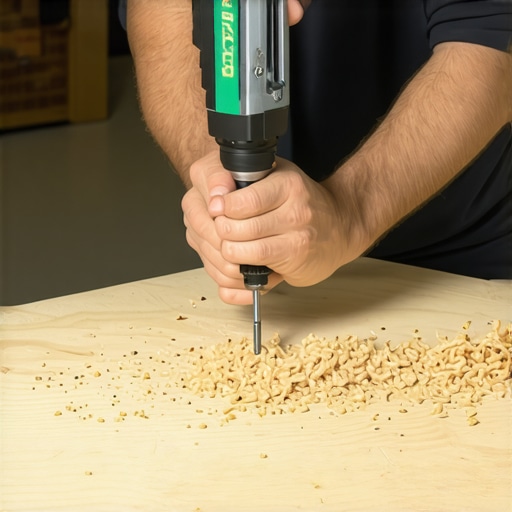
How do I keep my custom cabinets looking new for decades?
The secret isn’t a special chemical; it’s regular de-greasing. In a kitchen, atomized cooking oil floats through the air and settles on every surface. Over time, this oil hardens and becomes a magnet for dust, which eventually turns into a sandpaper-like grime that destroys your finish. This is exactly why your indianapolis kitchen cabinet paint quote includes a mandatory de-greasing step. For daily maintenance, avoid silicon-based polishes. They create a build-up that makes future touch-ups impossible. Instead, use a simple mixture of warm water and a drop of Dawn dish soap. This keeps the sheen consistent and is the best way to ensure why your white cabinets are turning yellow and how to prevent it by removing the pollutants that cause chemical ambering.
What the next decade holds for your kitchen
Looking ahead, I see a massive shift toward ‘hidden’ functionality. We are moving away from cluttered countertops and toward modern kitchen remodels featuring custom cabinets and built-ins that completely conceal appliances. The future is all about the ‘active’ backsplash and integrated smart zones. I predict we will see more AI-driven inventory systems built directly into the cabinet carcasses. For now, focus on the structural wins. If you want to feel like a professional organizer today, I strongly recommend you try the drawer-within-a-drawer move for organizing your junk drawer. It’s a simple modification that doubles your usable surface area instantly and keeps those small essentials from getting lost in the abyss.
The Hardest Lesson I Learned While Building Custom Cabinets
Over the years, the most humbling realization I’ve had is that a perfect kitchen isn’t one that never changes, but one that is designed to change gracefully. First, never underestimate the power of the ‘seasonal gap.’ Even with the best custom cabinets ideas that transform your home’s style, wood will move. I used to panic at every 1/16th of an inch of expansion, but now I know that building for movement is better than fighting it. Second, the finish is only as good as the prep. If you skip the de-greasing or the light sanding between coats, you’re setting yourself up for a surface that peels within years. Finally, high-quality hardware is your best insurance policy. I’ve seen cheap hinges ruin expensive doors in less than a year because they simply couldn’t handle the weight of solid wood. #IMAGE_PLACEHOLDER_E#
My Personal Toolkit for a Flawless Finish
I never step into a kitchen without a digital moisture meter. This tool tells you exactly when your wood has acclimated so you don’t end up with warped doors six months later. For homeowners looking to maintain their investment, I also recommend keeping a high-quality cabinet hardware jig on hand; it’s the difference between a handle that looks ‘okay’ and one that is perfectly centered. I always ensure the secret to choosing hardware that does not snag your pockets is a priority during the selection phase, as functionality is just as important as aesthetics. For long-term organization, I lean on innovative storage solutions for modern kitchen remodels because they maximize every square inch without adding to the visual clutter of the room.
Your Kitchen Is Ready for Its Next Chapter
Embarking on a kitchen remodel journey can feel like a mountain of decisions, but remember that you are creating the heart of your home. By choosing custom cabinets that respect the physical environment of your house and built-ins that solve your unique storage needs, you are investing in a space that will serve your family for decades. For more detailed planning, you can always consult a transform your kitchen with custom cabinets expert guide for 2025 to stay ahead of the latest trends. Take it one hinge adjustment at a time, and don’t be afraid to experiment with your layout until it feels exactly right for your cooking style. What’s the one ‘wonky’ cabinet door or drawer that has been driving you crazy lately? Let me know below and let’s get it fixed!