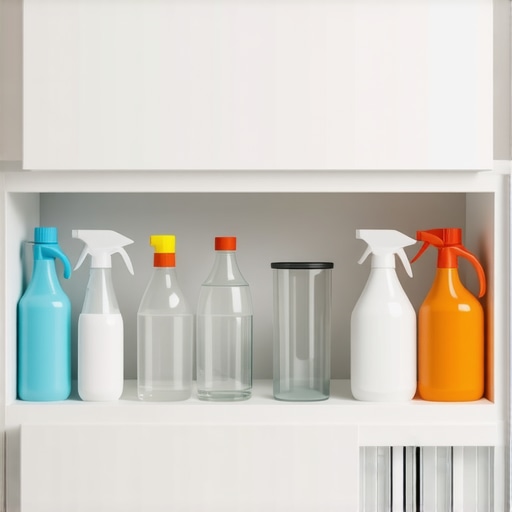
The Best Way to Organize Your Cleaning Supplies Under the Sink
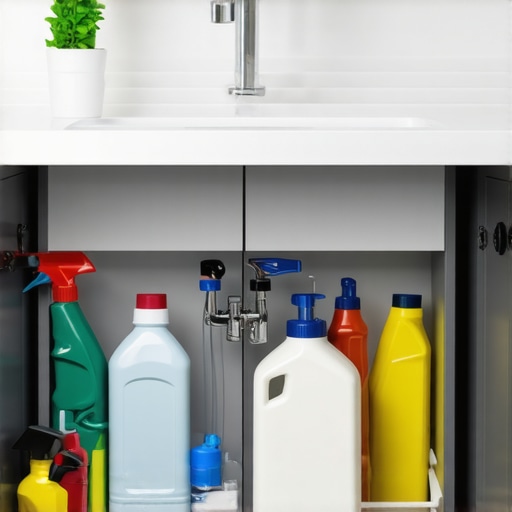
I was on my hands and knees, head inside the dark cabinet, smelling of spilled lemon-scented ammonia. I’d just tried to grab the glass cleaner and—*crash*—the “tower of spray bottles” I’d carefully balanced finally surrendered to gravity. It was a mess. It was frustrating. And honestly, it was a wake-up call that my kitchen journey shouldn’t have stopped at the pretty cabinet doors. We spend so much time thinking about modern kitchen remodels featuring custom cabinets and built-ins, yet we treat the space under the sink like a graveyard for half-empty bottles and damp sponges. I’m going to show you how to turn that chaos into a functional zone that stays clean long-term.
Stop Fighting Your Plumbing and Start Organizing Instead
I’ve learned the hard way that you can’t just shove random plastic bins into this space and hope for the best. My biggest mistake early on? Buying those generic “one size fits all” stacking drawers without measuring around the P-trap. They sat crooked, took up way too much room, and eventually, a slow leak I couldn’t see ruined the bottom of the cabinet. According to the American Housing Survey, water damage is one of the most common issues found in kitchen cabinets, often hidden by the very clutter we’re trying to manage. Today, we are going to fix that by looking at smart storage solutions for small kitchens in 2025 that actually account for pipes and valves.
Is it actually possible to keep this spot tidy?
I know the skepticism. You think your plumber will come in for a quick fix, toss everything out, and it’ll never go back the same way. I felt the same until I discovered the simple pivot that reclaims your under-sink plumbing space by using modular, pull-out systems. If you design the storage to be easily removable, you won’t dread the next time you need a drain pipe repair or a filter change. Have you ever opened your sink cabinet and felt an immediate wave of stress just looking at the pile? If so, let’s get to work on a solution that actually lasts.
Clear the Deck Before You Start Sorting
The first rule of any successful transform-your-kitchen-with-custom-cabinets-expert-guide-for-2025 is ruthless elimination. You cannot organize clutter; you can only move it around. Take every single item out. I’m talking about the 2018 bottle of wood polish and the crusty sponges you’re keeping “just in case.” When I did this last spring, I found three separate bottles of drain cleaner, all 10% full. It’s like trying to bake a cake with five different half-empty bags of flour; it’s inefficient and eats your mental energy. Wipe the floor down and look for signs of trouble, like peeling laminate or damp spots, before you even think about putting things back.
Map Out Your Plumbing Roadblocks
Think of your under-sink area like a Tetris board where the pipes are the permanent blocks that never move. Most people measure the width and depth of the cabinet and call it a day. That is a recipe for disaster. You need to measure the “unusable” space—the distance from the floor to the bottom of the P-trap, and the distance from the back wall to the front of the garbage disposal. I remember trying to force a high-end chrome pull-out drawer into my last rental. I spent forty minutes wrestling with it, only to realize the disposal sat exactly where the top rail needed to go. I ended up with a scratched cabinet floor and a bruised ego. Use painters’ tape to mark “no-go” zones on the cabinet floor so you know exactly where your storage units can sit.
Why Pull-Out Trays Beat Static Bins Every Time
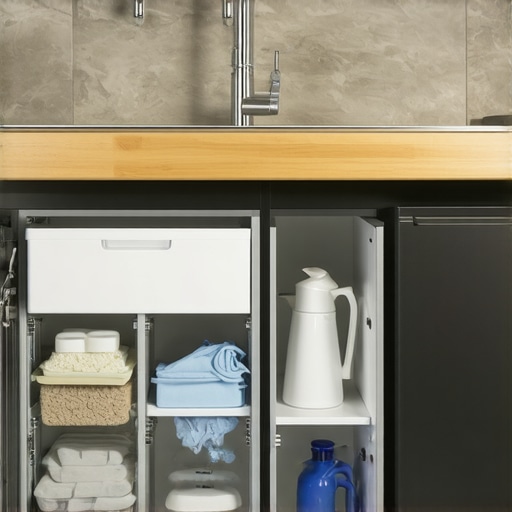
Static bins are where cleaning supplies go to die. If you have to move three things to reach the dishwasher pods, you’ve already lost the battle. This is where smart storage ideas to maximize your kitchen space this year really shine. Modular pull-out systems allow you to bring the back of the cabinet to you. If you have the space, look for tiered organizers that wrap around the pipes. In high-end 36-inch base cabinets, you often have enough height to install a secondary shelf that clears the plumbing, effectively doubling your square footage. It’s about creating a hierarchy: things you use daily, like dish soap, go in the front-row pull-out, while the heavy-duty degreaser lives in the back.
Armor Your Cabinet Floor Against Moisture
Even the best organization won’t save a cabinet from a slow drip. This is why I always recommend a silicone under-sink mat or a custom-cut piece of linoleum. Think of it as an insurance policy for your woodwork. While undermount sink clips and plywood cradles keep your sink from falling, a simple waterproof liner keeps your cabinet floor from rotting. When a small leak inevitably happens, the water pools on the mat instead of soaking into the wood. It’s a five-minute fix that prevents a thousand-dollar repair later. Once the floor is protected, you can start loading in your modular units, keeping the heaviest items on the bottom to maintain stability and prevent the bins from tipping when they are extended.
Most people think a successful custom cabinets as a game changer in your kitchen remodel journey is all about the finish or the hardware. But I’m going to let you in on a secret: the most expensive organizers in the world won’t save a poorly built cabinet. I used to believe that if I just bought the right acrylic bins, my under-sink chaos would vanish. I was wrong. The real expertise lies in the structural integrity behind the doors. If you’re planning a revolutionize your kitchen remodel using built-ins and creative storage, you have to look at the ‘bones’ of the unit first. For instance, why your cabinet boxes should be stapled glued and screwed isn’t just a technicality; it’s the difference between a drawer that glides and one that sags after six months of holding heavy gallon-sized cleaners.
Stop Buying Bins and Start Thinking About Load Ratings
Here’s my contrarian take: most ‘organization hacks’ actually waste more space than they save. We are taught to buy nested containers, but in a damp, high-use environment like the kitchen sink, these layers often trap moisture and make it impossible to see your inventory. In my experience, a single, high-quality expert-tips-on-selecting-storage-solutions-for-a-perfect-kitchen-upgrade approach focuses on weight distribution rather than just aesthetics. I’ve seen homeowners spend thousands on the ultimate guide to custom cabinets for a stylish kitchen overhaul only to have their pull-outs fail because they didn’t check the slide’s PSI. According to a study by the National Kitchen & Bath Association (NKBA), the primary cause of internal cabinet failure isn’t wear-and-tear on the wood, but the overloading of hardware not rated for the specific dampness and weight of kitchen utility areas.
Why does my expensive hardware still feel like a mistake?
If your drawers feel ‘gritty’ or don’t close flush, you might be falling for the ‘universal slide’ trap. This is a common mistake even in innovative storage solutions for modern kitchen remodels. Not all slides are created equal. For example, why your trash pull out needs a bottom mount slide for better weight handling is a lesson that applies to under-sink pull-outs too. Side-mount slides are prone to racking when they get wet or dusty. If you are noticing a change in performance, check the ball bearings. I’ve written specifically about why your drawer slides are grinding and how to clear the ball bearings because a little maintenance can save a five-hundred-dollar drawer box. 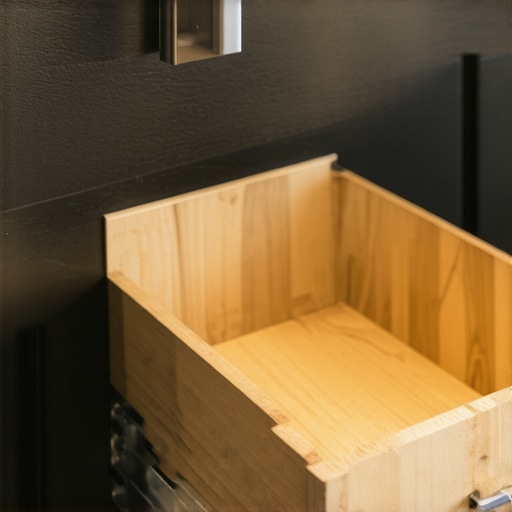
The Critical Material Mistake You Can’t Fix Later
The ‘oops’ factor I see most often? Choosing the wrong interior material. People get so caught up in custom cabinets ideas that transform your homes style that they forget the interior needs to be a workhorse. Many ‘custom’ shops use poplar or low-grade melamine for the boxes to save costs. However, why we use solid maple for drawer boxes instead of poplar is about stability in high-humidity zones. Maple doesn’t swell and warp at the first sign of a leak. If you are investing in built-ins and storage hacks for a sleek functional kitchen, insist on pre-finished maple. It’s a nuance that separates a ‘pretty’ kitchen from a professional-grade workspace. Have you ever fallen into the trap of buying a storage ‘solution’ that only made your cabinet feel more crowded? Let me know in the comments.
Even with the best materials, your under-sink area is a living part of your home. It breathes, it settles, and it definitely reacts to the weight of ten bottles of multi-surface cleaner. I’ve realized that the ‘set it and forget it’ mentality is what leads to those annoying squeaks and crooked doors three years down the line. To keep everything functioning, you need a small kit of essentials. First on my list is a dedicated cabinet hardware jig. While I used to eyeball everything, using the one tool you need for perfectly aligned cabinet knobs every time changed how I approach even the smallest repairs. It’s about precision that prevents long-term stress on the hinges.
How do I keep my custom pull-outs gliding like new?
Maintenance isn’t just about cleaning; it’s about mechanical health. If you notice a change in how your drawers move, don’t just pull harder. I always keep a bottle of dry silicone spray handy for why your soft close slides grind and the quick lubrication fix. According to the Blum Technical Manual for TANDEMBOX systems, failure to periodically clear debris from the runner tracks can reduce the life of the soft-close mechanism by up to 40% due to increased friction on the internal air-damper components. Every six months, I take the drawers out entirely—which is easy if you’ve planned for a removable cabinet back move that simplifies your next drain pipe repair—and vacuum the tracks to ensure no grit is eating away at the ball bearings.
The Adjuster Screw Fix You Should Know
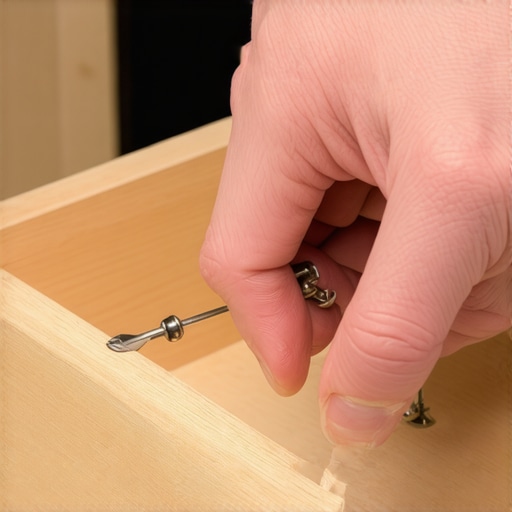
Houses settle, and wood responds to seasonal humidity. This is why why your drawer fronts are crooked and the adjuster screw fix is a skill every homeowner needs. You don’t need a professional to level a door; you just need five minutes and a Phillips head screwdriver. If you see a gap widening, it’s usually just a matter of turning the lateral adjustment screw a quarter turn. This is especially true in modern kitchen remodels featuring custom cabinets and built-ins, where the tight tolerances make even a 1/16th-inch shift look like a major flaw. Regularly checking these small points of contact ensures your custom cabinets as a game changer in your kitchen remodel journey remains a source of pride rather than a maintenance headache.
Predicting the Next Wave of Under-Sink Tech
I suspect we’ll soon see ‘smart’ under-sink mats with integrated Wi-Fi moisture sensors as a standard feature in high-end revolutionize your kitchen remodel using built-ins and creative storage projects. We are moving away from passive storage toward active, monitored zones. For now, the best ‘high-tech’ move you can make is ensuring your built-ins and storage hacks for a sleek functional kitchen include easy access to shut-off valves. If you’re ready to stop the rattle and start the organization, go grab a screwdriver and tackle the 5-minute hinge adjustment for fixing wonky cabinet reveals on that one door that’s been bugging you. If the task feels bigger than a quick fix, feel free to contact us to discuss a more permanent upgrade to your storage layout.
Lessons My Messy Kitchen Taught Me About True Efficiency
After years of wrestling with pipes and overflowing bins, I’ve realized that the most expensive organizers are useless if you don’t respect the physics of your plumbing. First, never buy an organizer before measuring the “swing” of your pipes; I once bought a gorgeous pull-out that hit the P-trap every time I tried to close it. Second, transparency is your best friend. If you can’t see the label on the bottle, you will buy a duplicate. Finally, remember that the goal isn’t just “tidy”—it’s “accessible.” If a system requires more than two movements to reach a sponge, it will eventually fail.
#IMAGE_PLACEHOLDER_E#
My Personal Toolkit for a Bulletproof Cabinet
If you’re serious about maintaining your innovative storage solutions for modern kitchen remodels, I highly recommend keeping these three items on hand. First, a high-quality silicone under-sink mat with a raised lip to catch leaks before they touch the wood. Second, a digital moisture sensor; these tiny devices are life-savers for detecting slow drips behind your revolutionize your kitchen remodel using built-ins and creative storage. Third, a dedicated cabinet hardware jig for when you decide to upgrade those pulls. I also swear by the NKBA Kitchen Planning Guidelines as a reference for anyone diving into a full custom cabinets as a game changer in your kitchen remodel journey.
Take the First Step Toward a Stress-Free Sink
It is easy to get overwhelmed by the sheer volume of “stuff” we hide behind closed doors. But you don’t have to overhaul your entire house in a weekend. Start with the space under the sink. By implementing these storage solutions and paying attention to the mechanical health of your hardware, you are building a foundation for a kitchen that works for you, not against you. Your home is an investment, and even the smallest adjustment can make a world of difference in your daily peace of mind.
Have you ever found a mysterious puddle or an ancient cleaning product you forgot existed? Let me know about your under-sink discoveries in the comments below!