Why Your Spice Drawer Is a Better Choice Than a Wall Rack
I remember standing in my kitchen three years ago, staring at a beautiful, wrought-iron spice rack I’d just bolted to the wall right above my range. I felt like a professional chef. Fast forward six months, and my expensive cumin tasted like sawdust while my paprika had turned a sad shade of beige. It was a disaster. Not just the greasy dust gathering on the glass bottles, but the sheer physical annoyance of reaching over a steaming pot of pasta just to find the garlic powder. That was my lightbulb moment: the Pinterest-perfect wall rack is actually a spice’s worst enemy, and moving everything to a drawer changed my life.
Stop Killing Your Seasonings with Light and Heat
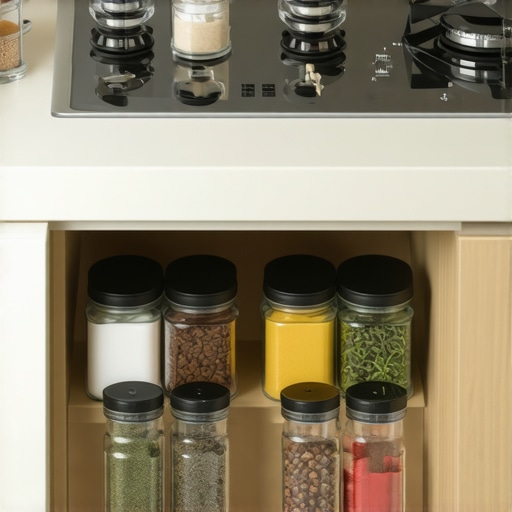
If you are currently embarking on a custom cabinets journey, you have to think about more than just the door style. Most homeowners don’t realize that light and heat are the two biggest killers of culinary flavor. When your spices sit out on a wall rack, they are constantly bombarded by ambient kitchen light and the rising heat from your cooktop. According to the McCormick Science Institute, the essential oils in spices—the stuff that actually makes your food taste good—evaporate and degrade much faster when stored in clear containers in warm, bright environments. By tucking them into a dedicated drawer, you’re essentially creating a climate-controlled vault for your herbs. It’s a foundational part of smart storage ideas to maximize your kitchen space because it protects your investment. High-quality spices aren’t cheap, so why let them rot in the sun?
Won’t I Lose Too Much Precious Cabinet Space?
It is the number one question I get from neighbors. You’re worried that giving up a whole drawer for small jars is a waste of prime real estate. I actually made a massive mistake early on by buying a cheap, generic tiered insert that didn’t quite fit my drawer width. I ended up with ‘dead zones’ on the sides that collected crumbs. However, when you integrate a spice drawer into your efficient kitchen tool organization plan, you actually regain counter and wall space that was previously cluttered. It makes the whole room feel larger and more intentional. Have you ever felt like your kitchen was closing in on you because of all the little things hanging on the walls?
Better Visibility Leads to Better Cooking
When you use a drawer, you see every single label at once. No more digging through three rows of jars in a dark cabinet or spinning a carousel like you’re playing a frustrating game of spice roulette. This visibility is a game-changer for your workflow. If you have high ceilings and are already thinking about a hidden toe-kick step stool for reaching top shelves, you know that keeping high-use items at waist level is the peak of ergonomic design. A drawer keeps your most-used flavors right at your fingertips without the visual noise of a cluttered wall.
Measure Twice So You Only Buy Once
Before you commit to a specific organizer, you have to treat your drawer like a tailor treats a bespoke suit. Most homeowners make the mistake of measuring just the width and length, but the clearance height is where the real disaster strikes. If your drawer isn’t deep enough, those spice jars will jam the frame every single time you try to close it, leading to scratched wood and frayed nerves. This is a critical part of why the 10×10 kitchen remodel math is so vital—it’s about volume, not just area. I remember a Saturday afternoon where I spent three hours trying to force a generic bamboo insert into a drawer that was exactly one-eighth of an inch too shallow. I ended up having to sand the bottom of the insert by hand on my driveway, covered in dust and regret. Don’t be like me; measure the interior height with the drawer open and closed.
Pick the Right Slant for Your Jars
When you are looking for expert tips on selecting storage solutions for a perfect kitchen upgrade, always prioritize visibility over quantity. Slanted tiered inserts are the gold standard because they tilt the labels directly toward your eyes. This prevents the domino effect where one jar falling knocks over the rest, which usually happens in the middle of a frantic recipe. If you have the budget, exploring custom cabinets ideas that transform your homes style can lead you to built-in wooden tiers that are actually routed into the drawer box itself. This eliminates the dead space that gathers crumbs and rogue peppercorns. It is very similar to the drawer within a drawer move for organizing your junk drawer, where you use every millimeter of vertical space to keep things from piling up.

Protect Your Hardware from Heavy Glass
People often underestimate how much weight forty glass jars can add to a single drawer. It is significantly more than a set of silverware. If your drawer starts to feel sluggish or makes a clicking sound, you need to know why your drawer slides are grinding and how to clear the ball bearings. Maintaining your hardware is just as important as the organization itself. To prevent the jars from clattering like a box of wind chimes every time you open the drawer, I always install a high-grip silicone liner beneath the insert. This small step absorbs vibration and keeps the jars exactly where you put them.
Situate the Drawer for Maximum Efficiency
The where is just as important as the how. Your spice drawer should live in the primary prep zone between your sink and your stove. This is a fundamental reason why your kitchen layout should follow the work triangle rule. I once worked in a kitchen where the spice drawer was on the opposite side of the island. Every time I needed salt, I had to walk around the entire island, dripping pasta water across the floor. By placing your flavors right at your fingertips, you reduce movement and keep your focus on the food. It’s about building a workflow that feels instinctive rather than a chore.
Symmetry Often Ruins Your Storage Potential
Most designers will tell you that a uniform row of three-drawer stacks is the gold standard for a modern look. I completely disagree. In my experience, chasing perfect symmetry is the fastest way to waste space and ruin your workflow. When you are embarking on a custom cabinets journey, you should embrace what I call ‘functional asymmetry.’ This means sizing your drawers specifically for what lives inside them, rather than forcing a spice jar into a deep pot drawer or vice versa. If you look at transforming your kitchen with custom cabinets, you will see that the most efficient layouts use varied drawer heights to eliminate ‘air gaps’ above your items. Why have six inches of empty air above your spices just because the drawer next to it needs to hold a stockpot?
Why do your soft-close drawers feel sluggish in the winter?
It is a question that stumps almost every homeowner who invests in high-end hardware. You might think the wood is swelling, but the reality is often the viscosity of the damping fluid inside the slides. This is the real reason your soft-close drawers are sluggish in winter. If your kitchen temperature drops just five degrees, the internal mechanism can feel like it is moving through molasses. This nuance is why high-end builders often recommend specific climate-stable hardware for exterior walls. It is a level of detail you won’t find in big-box store cabinets, but it makes a world of difference in a four-season climate.
Heavy Glass Jars Need Heavy Duty Slides
The biggest ‘oops’ factor I see in spice organization is the failure to calculate weight. A single glass jar of gourmet sea salt or a heavy ceramic peppercorn mill doesn’t weigh much, but forty of them together can easily exceed 50 pounds. Most standard cabinet builders use economy-grade slides rated for exactly that. According to the National Kitchen & Bath Association (NKBA), standard-duty drawer slides are typically rated for 75 lbs, but that includes the weight of the drawer box itself. When you add heavy spices and a solid wood insert, you are redlining your hardware every time you cook. This leads to the hardware failing prematurely. If you aren’t careful, you’ll soon find yourself wondering why your drawer slides are grinding and how to clear the ball bearings. Always insist on 100lb or even 150lb rated undermount slides for your spice and pantry drawers.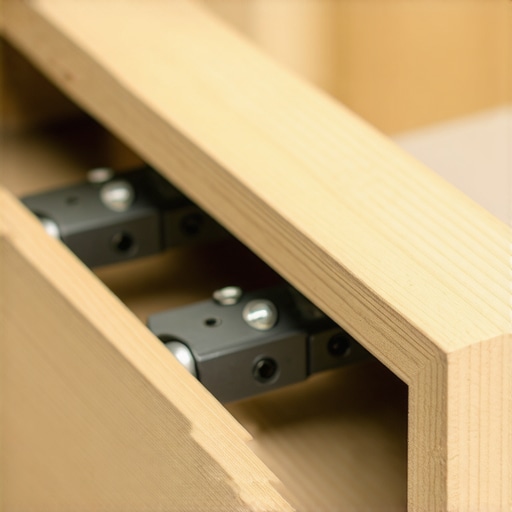
The Joint Failure Trap
Another hidden nuance involves the material of the drawer box itself. Many people choose their wood based on the exterior finish, but for drawers that hold heavy, shifting items like spice jars, the joint construction is what matters. Dovetail joints are classic, but the wood species determines if those joints will stay tight or start to rattle over time. I always suggest looking at the best wood species for painted cabinets to understand how different grains react to stress. A spice drawer is opened and closed more than almost any other drawer in the house; it needs to be a tank, not just a pretty box. Remember, the 10×10 kitchen remodel math often ignores the cost of these hardware upgrades, but they are what actually provide the luxury feel you’re paying for. Have you ever fallen into this trap where you sacrificed function for a ‘perfect’ look? Let me know in the comments.
Give your cabinets a 5,000-mile tune-up
Even the most expensive millwork is a living, breathing part of your home. You wouldn’t drive a car for three years without an oil change, yet we expect our kitchen drawers to perform flawlessly after 10,000 cycles without a single adjustment. If you start hearing a high-pitched protest when you grab the garlic powder, you need to know how to fix a cabinet hinge that squeaks every time before the friction causes permanent metal fatigue. I keep a small tube of food-grade silicone lubricant in my junk drawer specifically for this. A tiny drop on the pivot points of your hinges every six months prevents that ‘old house’ sound from creeping into your modern remodel. It is a simple habit that protects the custom cabinets as a game changer in your kitchen remodel journey by ensuring they still feel brand new years down the road.
The two tools I never cook without
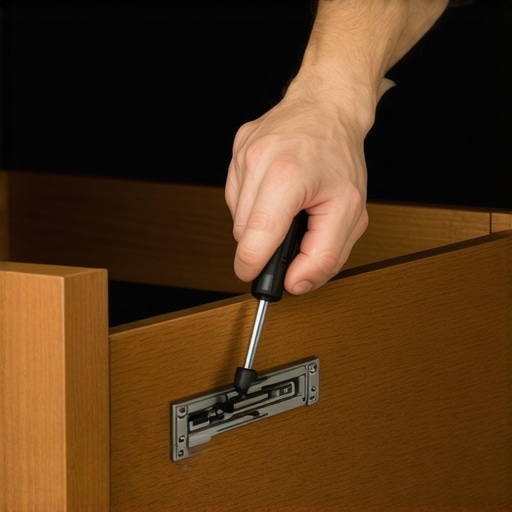
When it comes to the best way to organize your kitchen tools for efficiency, I’m not just talking about spatulas. I am talking about the maintenance kit. First, buy a high-quality microfiber cloth and a pH-neutral cleaner. Many people ruin their finishes by using ‘all-purpose’ sprays that contain ammonia or vinegar, which eat through the topcoat over time. This is especially vital if you have dark accents; learning how to clean matte black cabinet hardware without scratches will save you from that dreaded ‘milky’ look that develops from improper chemicals. Second, keep a Pozi-drive screwdriver handy. Most high-end European hinges use Pozi screws, not standard Phillips. Using the wrong head will strip the screw instantly, leaving you with a door that hangs forever crooked.
How do I maintain my custom storage over time?
Maintenance is mostly about managing the invisible forces of your home: humidity and weight. You must realize that why your cabinet doors are warping in the summer heat is often due to a lack of climate control. I recommend keeping your kitchen between 35% and 50% humidity. If you see the gaps between your drawer fronts changing size, your house is telling you it’s too dry or too damp. According to Blum’s technical documentation for TANDEM plus BLUMOTION runners, even a slight misalignment in the cabinet box due to house settling can increase the opening force required, which puts unnecessary strain on the soft-close mechanism. Checking your drawer’s ‘reveal’ (the gap around the edge) once a year and using the built-in adjustment tabs can prevent the hardware from grinding itself into an early grave.
Integrated tech is the next storage frontier
Looking ahead, I predict we are moving away from passive boxes and toward ‘active’ storage. We are already seeing innovative storage solutions for modern kitchen remodels that include internal LED lighting triggered by motion and even climate-controlled zones for spices and oils. The future of the smart storage solutions for small kitchens in 2025 will likely involve modular inserts that can be 3D-printed to fit your specific brand of grocery items, ensuring zero wasted space. We are seeing a shift where the cabinet isn’t just a shelf, but a piece of precision machinery. If you want to stay ahead of the curve, I challenge you to go into your kitchen right now and check the weight rating on your heaviest drawer—you might be surprised how close you are to the limit. If it feels heavy, it’s time to look at a hardware upgrade.
The Spice Secrets I Learned the Hard Way
After years of tinkering with layouts, I’ve realized that the best storage isn’t just about looks—it’s about behavior. First, perform a “sniff test” before moving into your new setup; if your dried basil smells like nothing, it belongs in the trash, not your new custom cabinets. Second, always label your jars based on your perspective—lids for deep drawers and sides for slanted inserts. Finally, remember that the goal of revolutionizing your kitchen remodel using built-ins is to remove friction from your life. If you have to fight a jar to get it out, the system is failing you.
My Go-To Toolkit for a Pro-Level Kitchen
I don’t just rely on wood and nails; I rely on specific resources to keep everything running smoothly. For flavor inspiration once your spices are visible, I highly recommend ‘The Flavor Bible’—it’s the ultimate guide to pairing. For physical maintenance, I only use pH-neutral cleaners to ensure I don’t see why white cabinets are turning yellow due to harsh chemicals. Lastly, investing in high-quality silicone grip liners is the simplest way to execute built-ins and storage hacks for a sleek kitchen because it stops the ‘clatter’ every time you reach for the cinnamon.
Ready to Reclaim Your Culinary Workflow?
Upgrading your storage isn’t just a weekend project; it’s an investment in how you feel in your home every single morning. Whether you are fixing a small annoyance like the gap between your cabinet and the refrigerator or planning a full-scale overhaul, remember that your kitchen should work for you, not the other way around. Don’t be afraid to break the rules of symmetry to get the function you deserve.
What is the one spice you always seem to lose in the back of your pantry? Let me know in the comments below!