The Hidden Toe-Kick Drawer Move for Storing Step Ladders
I was standing on a wobbly dining chair—again—trying to reach the holiday turkey platter that lives in the no-man’s-land above my refrigerator. I nearly took a header straight into the stuffing. That was the moment I realized my beautiful custom cabinets were actually mocking me. I had all this storage, but I couldn’t get to half of it without a major logistical operation involving a bulky ladder from the garage that is always buried under a pile of lawn chairs. We have all been there, right? You need one thing from the top shelf, and you end up doing a dangerous balancing act because the ladder is too far away to bother with. [image_placeholder]
Use the 4-Inch Void for Better Kitchen Access
Most homeowners view the toe-kick—that recessed space at the bottom of your cabinets—as nothing more than a place for dust bunnies to congregate. But when you are looking for innovative storage solutions for every room, that four-inch gap is prime real estate. By installing a shallow, heavy-duty drawer at floor level, you can slide a slim-profile folding ladder right under your base cabinets. It is the ultimate stealth move. If you are starting a kitchen remodel journey, failing to utilize this space is a missed opportunity for true ergonomics.
Is a floor-level drawer actually worth the extra effort?
I’ll be honest with you because that’s what neighbors do. I once tried to DIY a version of this using leftover scrap plywood and the wrong kind of cabinet screws. It sagged, it stuck, and it was a total embarrassment. I learned the hard way that the secret isn’t just the drawer; it’s the hardware. According to a report by the National Council on Aging, household falls are a leading cause of injury, and many occur when people use furniture as makeshift stools. Putting a real ladder exactly where you need it makes your home safer and more functional. Today, I am going to show you how to design a sleek, functional kitchen that accommodates your height without sacrificing style. Have you ever found yourself standing on a countertop just to grab a mixing bowl? It’s a terrifying moment of realization, isn’t it? Let’s fix that.To turn that four-inch void into a functional tool, you have to think like an engineer, not just a decorator. It’s about managing weight and friction in a space that is usually ignored.
Use Heavy-Duty Slides to Prevent Grinding
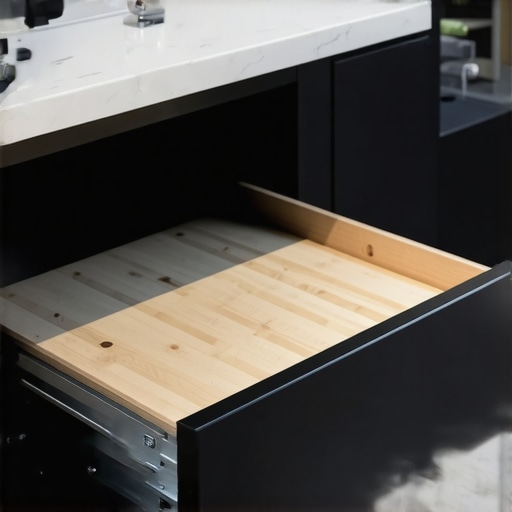
When you are building a drawer that sits just an inch off the floor, the standard side-mount hardware you would find on a junk drawer won’t cut it. Think of the drawer slides as the suspension on your car; if they are too weak, the whole system bottoms out. I have seen countless high-end kitchens where the hardware mistake that makes expensive cabinets look cheap was simply choosing under-rated slides. For a toe-kick drawer holding a metal ladder, you need full-extension, ball-bearing slides rated for at least 100 pounds. This prevents the dreaded drag where the bottom of the drawer scrapes your hardwood or tile every time you open it. If you have noticed the real reason your cabinet drawer slides are grinding is usually debris or overloading, you can imagine how much worse it is at floor level where dust is a constant guest. #IMAGE_PLACE_HOLDER_B#
Why Plywood Wins the Battle Against Kitchen Humidity
You might be tempted to use leftover MDF or particle board for these hidden boxes, but that is a recipe for a warped mess. Kitchen floors are splash zones. Whether it is a spilled gallon of milk or an over-enthusiastic mopping session, the bottom of your cabinets will see moisture. This is exactly why plywood box construction still beats particle board for kitchens. Plywood handles those environmental shifts without swelling into a sponge. When I first started experimenting with smart storage solutions for small kitchens in 2025, I tried a budget version using furniture board. Within six months, the humidity from the dishwasher caused the drawer to swell so much I had to kick it open. It was not exactly the sleek experience I was going for.
The Disaster That Taught Me to Respect Cabinet Screws
I remember my first attempt at a hidden toe-kick drawer in my old house. I used a scrap of thin board and some leftover nails from a picture-hanging kit. One Tuesday morning, I pulled the drawer out, stepped on the stool, and heard a crack like a dry branch snapping. The nails gave way, the drawer face popped off, and I ended up sitting on the kitchen floor with a handful of spilled spices. It was messy, painful, and completely avoidable. That is why we now know why we stopped using nails for cabinet backing and switched to screws for anything that moves. For a toe-kick drawer, you need to use 1-1/4 inch cabinetry screws to pull the box together for a joint that lasts.
Build a Box That Does Not Sag Under Pressure
The secret to a drawer that lasts a decade is the bottom mount. Standard drawers hang from the sides, but for heavy items like a folding ladder, why your trash pull-out needs a bottom-mount slide for better weight handling applies here too. By supporting the weight from underneath, you ensure the drawer remains square and true. This isn’t just about vanity; it is about making sure that when you are reaching for that high-shelf platter, the drawer slides out with the touch of a toe instead of requiring a wrestling match.Building a beautiful kitchen is a feat, but constructing one that doesn’t frustrate you three months into your residency is where the real skill lies. Most designers will tell you that a massive, walk-in pantry is the ultimate luxury for a custom cabinets project. I’m going to go against the grain here: I disagree. In my years of designing storage, I have seen these ‘dream’ walk-ins turn into dark, cluttered tunnels where expensive ingredients go to die. That’s why a pull-out pantry beats deep walk-in shelves for visibility every single time. When you have a pantry that slides out toward you, everything is on display at once, and nothing gets lost in the shadows of a 24-inch deep fixed shelf. It saves you money on groceries and keeps your kitchen from becoming a food graveyard. 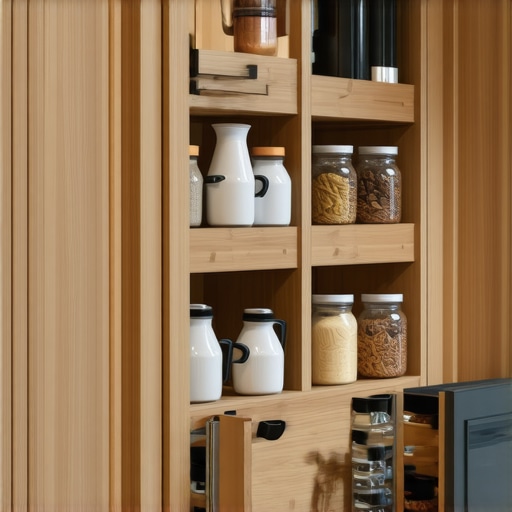
Stop Putting Your Wine and Spices Near Heat Sources
It is a common ‘Oops’ factor I see even in high-end innovative storage solutions for modern kitchen remodels: the decorative wine rack sitting proudly above the refrigerator or right next to the range. It looks stunning in a brochure, but it is a functional disaster for your palate. I’ve had many clients come back to me realizing why we stopped putting wine racks over the refrigerator after opening a bottle of ‘cooked’ Pinot Noir that was ruined by the fridge’s compressor heat. The same logic applies to your spice collection. While it is tempting to put a narrow pull-out next to the oven for perfect cabinet symmetry, why narrow spice pull-outs are often harder to use than you think usually boils down to the fact that your delicate oils and dried herbs are being baked every time you use the stove. Heat is the enemy of flavor and longevity.
The Symmetrical Layout Trap That Ruins Your Workflow
We all love a balanced, symmetrical look, but prioritizing it over common sense can lead to some truly smelly situations. For instance, why your garbage pull-out should never be next to the oven is a hard-earned lesson in thermodynamics. Heat accelerates decomposition. If your organic waste is sandwiched right next to a 400-degree oven, you are going to smell yesterday’s scraps much sooner than you’d like. Professional organizations like the National Kitchen & Bath Association (NKBA) provide specific guidelines on landing areas and appliance clearances because they know that even a beautiful kitchen is a failure if it’s unpleasant to use. They advocate for a design that prioritizes ‘work centers,’ which is why your layout needs to be more than just pretty cabinet faces.
Can a kitchen island be too large for its own good?
Absolutely, and it’s a mistake I see in many luxury ‘remasters.’ I have walked into kitchens where the islands are so wide that the homeowner literally cannot reach the center to wipe it down without using a mop or climbing on the counter. It’s a classic case of ‘more’ not being ‘better.’ This is precisely why your open-concept kitchen island needs a 4-foot clearance rule. If the island is too massive, it disrupts the natural path between your sink, stove, and fridge, making the room feel cramped despite an open floor plan. Have you ever fallen into this trap of choosing scale over ergonomics? Let me know in the comments. True expertise isn’t just about filling space; it’s about making sure every inch of your expert tips on selecting storage solutions for a perfect kitchen upgrade serves your daily life.I’ve spent years installing these beauties, and I’ll tell you a secret: the most expensive cabinet in the world will still annoy you if it squeaks. I carry a small tube of food-grade silicone grease in my kit at all times. Why? Because why your soft-close slides grind and the quick lubrication fix often comes down to just a tiny bit of friction in the ball bearings. If you’re like me and hate the sound of metal-on-metal, you need to be proactive. If you notice your doors are getting lazy, why your soft-close hinges are suddenly sluggish and how to clean them is usually the first place I tell people to look before they call a professional.
Keep the Silence with the Right Lube
Hardware is the engine of your kitchen, and like any engine, it needs oil. But please, for the love of your finish, stay away from WD-40. It’s a solvent, not a long-term lubricant. I use a PTFE-based dry spray. It doesn’t attract dust, which is the number one killer of the real reason your cabinet drawer slides are grinding. If you keep the tracks clean and the bearings slicked, your drawers will feel like they’re floating on air for twenty years.
How do I keep my high-end cabinets functioning like day one?
Maintenance isn’t about deep cleaning every weekend; it’s about the “tension check.” I always tell my clients to check their hinges every change of season. Humidity makes wood move, and that tiny shift can put a strain on your hardware. Learning why soft-close hinges fail and the simple tension adjustment will save you from having to replace a twenty-dollar hinge later. According to Blum’s Technical Maintenance Guidelines, high-quality hinges are tested for 200,000 opening cycles, but that’s only if they stay aligned. If your door is hanging at an angle, you’re cutting that lifespan in half. Take five minutes this weekend to tighten those mounting screws; it’s the easiest way to protect your investment.
Stop Freehanding Your Hardware
For the DIYer or the homeowner who wants to swap their own pulls, there is exactly one tool I swear by: a dedicated cabinet hardware jig. I stopped “eyeballing” it years ago after a disastrous incident where a client’s solid walnut drawer ended up with a hole one-eighth of an inch too high. It’s the one tool you need for perfectly aligned cabinet knobs every time. It removes the human error of a tape measure and ensures total symmetry across twenty different drawers. 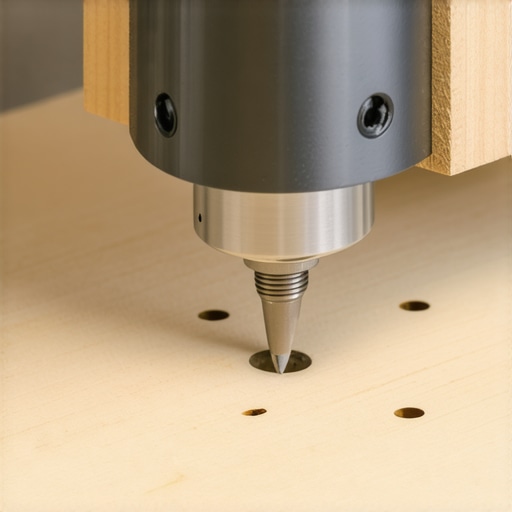
Detect Leaks Before They Rot Your Bases
I predict we are heading toward a “sensor-driven” kitchen. We’re already seeing moisture sensors under sink bases to catch leaks before they rot the floor—something 5 signs your cabinet bases are rotting quietly under the sink addresses. Soon, your modern kitchen remodels featuring custom cabinets and built-ins will likely notify your phone if a hinge is out of alignment or if a leak is detected. Until that tech becomes standard, do yourself a favor: grab a screwdriver today and check the tension on your most-used drawer. It’s the difference between a kitchen that ages gracefully and one that falls apart.
What Decades of Remodeling Taught Me About Kitchen Flow
After years in the trenches, I have realized that the perfect kitchen isn’t about the biggest budget; it is about the smartest details. Here are a few hard-won truths I wish someone had told me years ago:
- Symmetry is often a trap. People get obsessed with making every door the same size for the sake of aesthetics. But if that means your narrow spice pull-outs are crammed into a corner where you can’t see the labels, you have traded daily function for a look that only matters in a photo.
- Design for your current self. Do not build for a mythical future buyer. Design for how you drink your coffee today. If you need a sleek, functional kitchen, make sure it serves your height and your reach right now.
- Hardware is the soul of the room. You can have the most beautiful custom cabinets for a stylish kitchen overhaul, but if the hinges aren’t adjusted, they will feel cheap every time they click.
The Secret Weapons in My Toolbag
I do not trust my eyes alone, and you shouldn’t either. To get professional results, I always lean on these specific resources and tools that have never let me down:
First, the NKBA (National Kitchen & Bath Association) design guidelines are my primary source for landing areas and clearances. Second, a high-quality cabinet hardware jig is non-negotiable for any installation; it is the one tool you need for perfectly aligned cabinet knobs. Finally, for those looking for inspiration on creating seamless kitchen remasters with built-in storage solutions, I highly recommend looking into professional architectural standards rather than just social media trends to ensure longevity.
Build a Kitchen That Loves You Back
Transforming your home is not about a weekend sprint; it is a series of small, intentional choices that add up to a space that breathes with you. Whether you are adding a single toe-kick drawer or starting a full transform-your-kitchen-with-custom-cabinets-expert-guide-for-2025, remember that you deserve a kitchen that works as hard as you do. Do not be afraid to challenge standard layouts if they do not fit your life. Have you ever found a storage hack that completely changed how you use your kitchen? Let me know in the comments below!