The Best Way to Organize a Large Walk-In Pantry
I’ll never forget the ‘Pasta Avalanche of 2022.’ I was reaching for a box of linguine near the top shelf of my oversized pantry, and before I knew it, three bags of open flour and a rogue jar of marinara were hurtling toward my head. My husband found me sitting on the floor, covered in a fine white powder, surrounded by broken glass and genuine regret. That was the day I realized that having a massive walk-in pantry is a total nightmare if you do not actually know how to manage the square footage. We spend so much time obsessing over modern kitchen remodels featuring custom cabinets and built-ins, yet we often treat the pantry like a glorified junk drawer with a door. I had the space, but I had zero strategy, and it was costing me money every single time I went grocery shopping.
Stop Treating Your Walk-In Pantry Like a Storage Closet
The truth is, a large pantry isn’t just a place to shove boxes; it is a vital extension of your kitchen’s workflow. If you cannot see what you have, you will keep buying duplicates. I learned this the hard way when I discovered why your pantry shelves should be adjustable, not fixed. In my first pantry attempt, I installed these beautiful, deep, permanent shelves. They looked great in photos, but they were a disaster for actual functionality. Tiny spice jars got swallowed by the shadows in the back, and I ended up with five bottles of soy sauce because I couldn’t find the first four. It was a waste of resources and shelf space.
The ‘why’ behind organizing this space right now is simple: food waste is expensive. A report from the Natural Resources Defense Council (NRDC) suggests that the average American household tosses out roughly $1,500 in food every year. Most of that isn’t just leftovers; it is the dry goods and canned items that get pushed to the back and forgotten until they expire. Today, we are going to fix that. I am going to show you how to turn that chaotic walk-in into a high-functioning zone that actually saves you money and sanity. Have you ever found a jar of pickles in the back of your pantry that expired during the previous administration? If so, you are exactly where I was two years ago.
Is all this effort actually worth the hype?
You might be thinking, ‘It is just a pantry, why do I need a system?’ I used to think the same thing until I started realizing how much time I was wasting every single night just trying to find the ingredients for dinner. It is not just about pretty labels or matching bins—though those certainly help the aesthetic. It is about creating smart storage solutions to maximize your kitchen space so you can actually enjoy the process of cooking again. One major mistake I made early on was over-loading my shelves without properly reinforcing them. If you have got heavy cans of soup or bulk flour bags, you absolutely need to know how to stop your pantry shelves from bowing before you start stacking. I have seen beautiful walk-ins practically collapse because the owner did not account for the sheer weight of a wholesale club run. Trust me, a little preparation goes a long way in preventing a structural—and emotional—meltdown.
Map Your Pantry into Functional Zones
The biggest mistake most people make is organizing by food type alone. Instead, organize by how you actually move through your kitchen. Think of your pantry as a mini-grocery store; the items you use daily need to be at eye level, while the bulk items belong in the basement tiers of your shelving. When I finally sat down to map my space, I realized I was keeping my heavy baking mixers on a high shelf and my light cereal boxes on the bottom. It was backward. I reorganized everything into five specific zones: Daily Essentials, The Baking Station, Bulk/Overstock, Kid-Friendly Snacks, and the ‘Special Occasion’ corner. This simple shift turned a five-minute search for salt into a five-second grab. If you are starting from scratch with a larger project, consider how innovative storage solutions for modern kitchen remodels can help define these zones before you even move the first box of pasta.
Visibility is Your Best Defense Against Buying Doubles
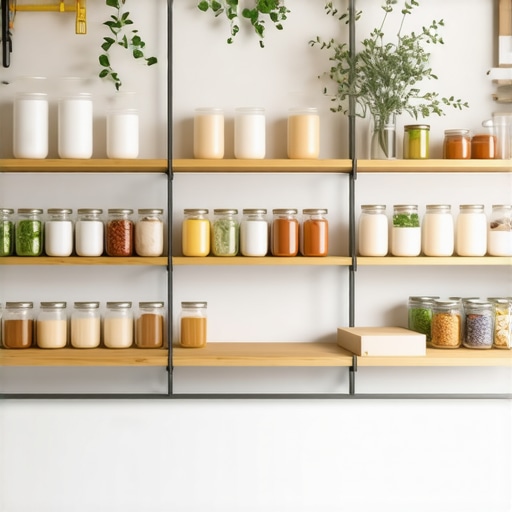
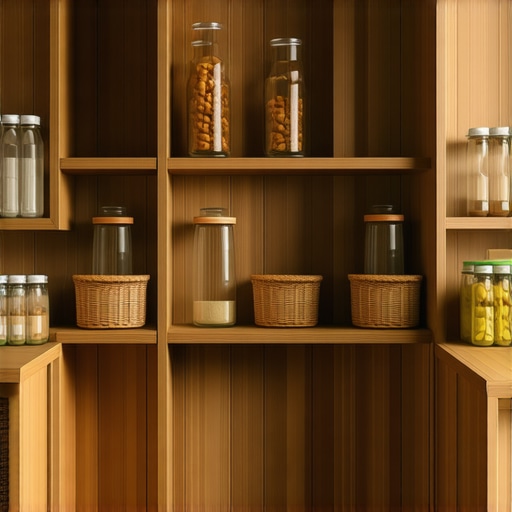
You cannot eat what you cannot see. I used to keep everything in its original cardboard packaging, which is the fastest way to lose track of inventory. Cardboard is bulky and opaque. I switched to clear, airtight containers for my dry goods—flour, sugar, rice, and snacks. Not only does this keep the food fresher, but it also provides an instant visual cue of when I am running low. No more mid-recipe realizations that I am out of all-purpose flour. I also learned to group smaller items like spice jars on tiered risers. This prevented the ‘black hole’ effect where small jars disappear behind larger cans. If your current setup feels cramped, looking into smart storage ideas to maximize your kitchen space can reveal ways to use vertical height you probably didn’t know you had.
Reinforce the Bones of Your Shelving System
A walk-in pantry is only as good as the hardware holding it up. I remember the terrifying ‘crack’ I heard three months after my first DIY organization attempt. I had stacked thirty cans of tomatoes on a single 3/4-inch particle board shelf. By morning, the shelf looked like a sagging smile. This is why I always tell people to check their weight limits. If you are dealing with heavy bulk items, you need to know how to stop your pantry shelves from bowing before the damage is done. Use solid wood or high-quality plywood and ensure your brackets are anchored into studs, not just drywall. For those looking for a more permanent, high-end feel, modern kitchen remodels featuring custom cabinets and built-ins provide the structural integrity that basic wire shelving just can’t match.
Use the Floor and the Ceiling for Bulk Storage
Don’t let the very top or bottom of your pantry go to waste. The floor is the perfect spot for heavy, non-food items like gallon jugs of vinegar or your industrial-sized bag of dog food. I use rolling bins on the floor so I can easily slide them out to clean the space behind them. Meanwhile, the very top shelf—the one you need a stool for—is for the items you only use twice a year, like the turkey roaster or the giant punch bowl. If your ceilings are particularly high, you might even find that your pantry needs a ladder to safely access those ‘once-a-year’ zones. Maximizing this vertical real estate is the key to keeping your primary work zones clear and functional. I once tried to keep my heavy cast iron Dutch oven on a middle shelf, and after nearly dropping it on my foot, I realized that maximizing space with innovative storage solutions means respecting the weight of your items just as much as their frequency of use.
Now that we have established the basics of mapping zones, let’s get into the stuff most contractors won’t tell you. Everyone assumes that adding more storage is the ultimate goal of any project, but in my years of trial and error, I have found that ‘over-cabinetry’ is a real and dangerous trap. We think if we just add one more row of uppers, our clutter will vanish. In reality, you are often just creating more places to hide things you don’t need. A study from Cornell University’s Department of Design and Environmental Analysis found that excessive cabinetry in tight spaces can actually decrease kitchen efficiency by 15% due to restricted movement and what they call ‘door-clash.’ Sometimes, less really is more, especially when you are looking for expert tips on selecting storage solutions for a perfect kitchen upgrade.
Stop Filling Every Empty Wall with Cabinets
The contrarian truth? You need ‘breathing room’ on your walls. When I was planning my modern kitchen remodels featuring custom cabinets and built-ins, I almost made the mistake of floor-to-ceiling everything. I realized just in time that I needed a landing zone—a place to set down grocery bags or a hot tray. If you fill every square inch with a door or a drawer, you lose the workflow that makes a kitchen actually usable. Have you ever fallen into this trap of over-designing? Let me know in the comments below, because I know the temptation is strong when you see those perfectly packed Pinterest boards.
Does the direction of your wood grain actually affect your pantry’s lifespan?
This is a nuance most homeowners miss until their doors start warping two years later. When you are dealing with tall, floor-to-ceiling pantry doors, the grain direction is everything. If the grain isn’t oriented correctly, the wood will expand and contract at different rates, leading to doors that never quite close flush. It is vital to understand how to pick the right wood grain direction for tall pantry doors to ensure stability. I once saw a gorgeous walk-in where the doors looked like they were bowing outward simply because the builder chose aesthetics over structural physics. Don’t let that be you.
Protect Your Investment from Joint Cracking
Another major ‘oops’ factor involves the materials you choose for your finish. People often want that crisp, white-painted look, but they don’t realize that wood moves. If you use the wrong species, your beautiful white cabinets will show tiny cracks at every joint within six months. This is why I always emphasize choosing the best wood species for painted cabinets that will not crack at the joints. Using custom cabinets as a game changer in your kitchen remodel journey only works if the technical foundation is solid. If you treat your pantry like a basic DIY project rather than a structural component of your home, the physical environment will eventually win, and your shelves will show it.
I used to think that once the contractors packed up their saws, my job was done. I was wrong. A high-performance pantry is like a well-oiled machine; if you do not maintain the parts, the system eventually breaks down. I learned this when my heavy pull-out spice rack started to feel ‘crunchy.’ If you ignore that sensation, you are looking at a full hardware replacement. Instead, you need to understand why your drawer slides are grinding and how to clear the ball bearings before the metal-on-metal friction ruins the glide entirely.
How do I maintain a high-traffic pantry without it falling apart?
Every six months, I perform what I call a ‘Hardware Audit.’ I go through and tighten every handle because fixing a loose cabinet knob that keeps spinning is a thirty-second task today but a stripped-out disaster if left for a year. I also check the alignment of my doors. Wood settles and houses shift over time. Learning the 5-minute hinge adjustment for fixing wonky cabinet reveals will save you more frustration than almost any other DIY skill. According to the National Kitchen & Bath Association (NKBA) Planning Guidelines, shelf heights should be re-evaluated whenever your household’s dietary habits change—like when the kids move from boxed cereal to bulk grains. This prevents the shelves from becoming static and useless as your life evolves.
The Digital Tool That Stopped My Double-Buying Habit
Beyond the physical maintenance, I have found that a dedicated inventory tool is the only way to keep a walk-in from becoming a graveyard for expired goods. I use an app called Grocy for a technical approach, but even a shared spreadsheet works if you are disciplined. I scan the barcode of every bulk item I put into my innovative storage solutions for modern kitchen remodels. It sounds obsessive until you realize you haven’t bought a duplicate bag of sugar in eighteen months. This level of control is what separates a pretty room from a functional powerhouse.
Looking ahead, I predict the next decade will bring ‘Active Inventory’ to our modern kitchen remodels featuring custom cabinets and built-ins. We are already seeing prototypes for weight-sensitive shelving that logs the depletion of your flour and rice in real-time, syncing directly to your grocery list. Until that becomes the industry standard, we rely on expert tips on selecting storage solutions for a perfect kitchen upgrade to keep our homes running. If you are feeling overwhelmed by the technical side of your project, don’t hesitate to contact us for a professional perspective. My challenge for you: grab a screwdriver today and fix that one sagging door using the hinge adjustment trick. It is the smallest win that makes the biggest difference in how your kitchen feels.
3 Painful Truths About Living With an Oversized Pantry
After years of managing a high-volume kitchen, I realized that some of the most common design ‘rules’ are actually recipes for disaster. Here is the insider perspective I wish I had before my first project:
- Depth is the enemy of efficiency: If your shelves are deeper than 14 inches, you are just building a graveyard for canned beans. Unless you are storing giant stockpots, shallow shelving ensures every single item stays within your line of sight.
- Lighting is more than just an aesthetic: Most people rely on a single overhead bulb. For a walk-in, you need vertical LED strips or motion-activated puck lights. If you can’t see the label on the bottom shelf, you will buy a duplicate.
- Flexibility is non-negotiable: Your diet will change. Your kids will grow. If your shelves are fixed in place, your pantry will be obsolete in three years. This is why I advocate for systems that prioritize adjustable pantry shelves above all else.
- Visual noise causes mental fatigue: Decanting your flour and sugar into clear bins isn’t just for ‘the gram.’ It removes the jarring visual clutter of fifty different cardboard boxes, making the space feel instantly more organized and less overwhelming.
The Toolkit That Keeps My Kitchen Running Smoothly
If you are ready to move past the ‘Pasta Avalanche’ phase of your life, these are the resources I personally vouch for when planning a high-functioning space. First, I highly recommend looking at smart storage solutions for small kitchens in 2025 to see how even tight spaces can utilize professional-grade hardware. I also lean heavily on the National Kitchen & Bath Association (NKBA) guidelines for weight distribution—knowing exactly how much your shelves can hold is the best way to prevent a collapse. Finally, if you are stuck between DIY and professional help, checking out built-ins and storage hacks for a sleek, functional kitchen will give you the blueprints you need to make an informed decision.
Ready to Reclaim Your Kitchen Confidence?
At the end of the day, a pantry isn’t just a place to store food; it’s the engine room of your home. When that engine is running smoothly, everything from Tuesday night dinners to holiday hosting becomes a joy rather than a stressful scavenger hunt. You don’t need a massive budget to start; you just need a better strategy for your square footage. Whether you are adding a few rolling bins or diving into a full transformative kitchen remodel using custom cabinets, the goal is the same: a space that works for you, not against you. Take it one shelf at a time, and don’t be afraid to pull everything out and start fresh if the current system is failing you. Have you ever found a ‘lost’ ingredient in your pantry that was actually older than your car? Let me know in the comments below!