The Vertical Plate Rack Trick for Drying Dishes Out of Sight
It was 7:00 PM on a Tuesday, and I was staring at my brand-new quartz countertops, which were currently buried under a mountain of dripping Tupperware and crusty pans. I had spent thousands on a sleek remodel, yet my kitchen looked like a chaotic cafeteria. The culprit? That clunky, plastic drying rack. It sat there like an uninvited guest, soaking up space and killing the vibe. I realized then that if I didn’t find a way to hide the ‘wet mess,’ my dream kitchen would never actually feel finished. That is when I discovered the vertical plate rack trick, a move that fundamentally changed how I view storage solutions. Today, I am going to show you how to move that drying process behind closed doors without ruining your cabinetry.
The Clutter Trap That Makes Your Kitchen Feel Smaller
For years, I believed that a countertop drying rack was just a necessary evil of adult life. I even tried to upgrade to a fancy stainless steel one, thinking it would look ‘professional.’ It didn’t. It just looked like more metal taking up space where I should be rolling out dough or prepping veggies. When I finally started looking into custom cabinets as a game-changer for my layout, I stumbled upon a European concept: the bottomless upper cabinet with an integrated rack. My biggest blunder early on was trying to DIY this by just shoving a wire rack into a standard, sealed cabinet. I didn’t account for airflow, and within two weeks, the underside of my shelf was fuzzy with mildew. It was a gross, expensive lesson in why ventilation matters.
Can You Really Dry Dishes Behind Closed Doors?
You might be thinking this sounds like a recipe for warped wood or funky smells, and I don’t blame you. Skepticism is healthy when you are talking about putting wet items inside expensive furniture. However, when done correctly with a drip tray and proper venting, it is a total revelation. According to the National Kitchen & Bath Association (NKBA), optimizing your ‘clean-up zone’ with smart storage ideas can reduce visual clutter by up to 40%, making even a small kitchen feel expansive. By using innovative storage solutions like the vertical rack, you are not just hiding dishes; you are reclaiming your workspace. Have you ever felt like your drying rack was winning the battle for your counter space? I certainly did, and it is a frustrating place to be when you just want a clean home. Next, we will dive into the specific mechanics of how to set this up so your plates dry quickly and your cabinets stay bone-dry.
Ditch the Cabinet Floor for Constant Airflow
To make this system work, you have to rethink the anatomy of your cabinetry. A standard cabinet is like a wooden box; if you put wet things inside and close the door, you are basically creating a mini sauna for bacteria. To avoid the mildew disaster I experienced, the ‘bottomless’ modification is essential. You essentially remove the floor of the upper cabinet directly above your sink. This allows steam and moisture to escape downward while fresh air pulls up through the rack. When I first tried this in a client’s 1920s bungalow, we were worried about the structural integrity. We found that by reinforcing the frame and using screws rather than standard nails for the support rails, the cabinet remained rock solid even without a base. This setup is one of those built-ins and storage hacks for a sleek, functional kitchen that guests never notice until you show them, and then they want it immediately.
Select Stainless Steel to Fight Off Rust
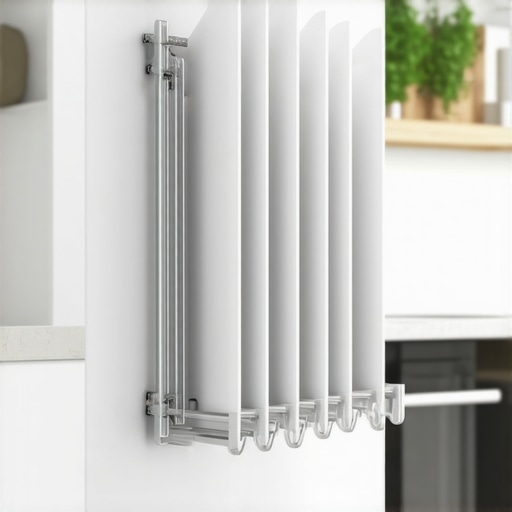
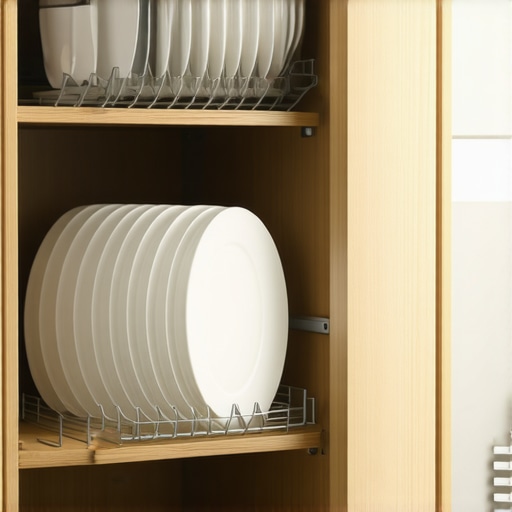
Not all racks are created equal. If you use a cheap chrome-plated wire rack, it will begin to flake and rust within six months of daily use. You need high-grade 304 stainless steel. Think of this rack as the engine of your storage system. It needs to be vertical to allow water to run off the edges of your plates rather than pooling in the center. I like to think of it like the vertical cookie sheet divider that ends the cabinet clatter; it organizes by thin slots, which maximizes how much you can fit. I once tried to repurpose an old wooden rack for a ‘rustic’ look in a cottage project, and it was a total fail—the wood stayed damp and eventually warped the door hinges. Stick to metal for anything that touches water. 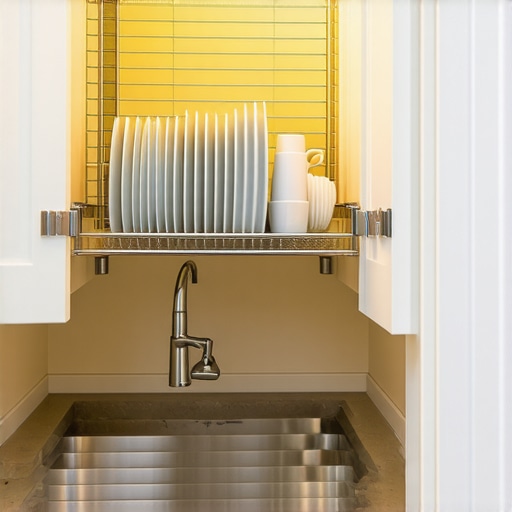
The Drip Tray Trick That Saves Your Countertops
Even with the floor removed, you need a way to manage the ‘runoff.’ If the cabinet is directly over the sink, the water just falls back into the basin—perfectly efficient. But if your rack is slightly offset, a removable drip tray is your best friend. I remember the first time I got this right; I was so paranoid about water damage that I checked the cabinet with a flashlight every night. I had originally used a shallow plastic tray that overflowed after a heavy dinner party. The secret is a deep-lipped stainless tray that slides out like a drawer for easy cleaning. This level of detail is what separates basic DIY from expert tips on selecting storage solutions. When you integrate these elements into modern kitchen remodels featuring custom cabinets and built-ins, you aren’t just hiding dishes; you are creating a specialized workstation. Make sure the tray sits on a slight incline if possible, or simply commit to a quick wipe-down once a week to prevent hard water spots from building up. If you are worried about the aesthetics of a gap under your cabinet, a decorative valance can hide the rack and the tray from eye level while still allowing the necessary air to circulate freely.Most people assume that more cabinets always equals better organization. I’ve seen homeowners cram every square inch of their kitchen with ‘standard’ storage, only to find they’ve created a claustrophobic maze where nothing is actually reachable. In my experience, a successful kitchen remodel isn’t about the quantity of boxes; it’s about the strategic engineering of the voids between them. We often get blinded by the ‘more is more’ philosophy, but that’s where the clunky drying rack trap starts. When you’re planning custom cabinets as a game-changer in your kitchen remodel journey, you have to think like a chef, not a warehouse manager.
The Massive Storage Myth That Clutters Your Workflow
The biggest mistake I see is the ‘filler’ syndrome. When a contractor can’t figure out a corner, they just stick a dead panel there. Instead, you should be looking for ways to maximize space with innovative storage solutions for every room. One contrarian view I hold? Stop putting so many upper cabinets in. People think they need them for storage, but they often just become ‘graveyards’ for mismatched mugs and holiday platters you use once a year. By reducing the number of uppers and focusing on deep, high-capacity base drawers, you open up the room. But here is the catch: if you do this, those drawers need to be built like tanks. This is why why plywood box construction still beats particle board for kitchens. If you use cheap materials for high-load drawers, you’re setting yourself up for a saggy, grinding mess within three years.
Will Constant Moisture From a Drying Rack Actually Rot My Cabinet Doors?
This is the sophisticated worry every high-end client has. If you’re putting wet plates inside a $30,000 kitchen, you’re right to be nervous. The secret isn’t just the airflow we discussed earlier; it’s the finish. According to the Architectural Woodwork Institute (AWI), wood components in high-moisture areas require specific ‘chemical resistance’ ratings to prevent finish failure. If your cabinet maker is using standard store-bought paint, you’re in trouble. I’ve seen beautiful installs ruined because the owner didn’t know why using standard interior paint on your kitchen cabinets is a five-year mistake. You need a conversion varnish or a post-catalyzed lacquer that creates a waterproof seal. Without it, the steam from your ‘hidden’ drying rack will eventually cause the paint to flake at the joints. Another nuance that beginners miss is the ‘expansion gap.’ You have to remember that why solid wood door panels still need room to breathe in summer. If you seal a panel too tightly into a frame, the humidity from your dishes will cause the wood to expand and crack the stiles. It’s a delicate dance between sealing the surface and allowing the structure to move. Have you ever noticed your cabinet doors sticking or ‘growing’ during a humid July? I’d love to hear about your cabinet horror stories in the comments—did you find a fix, or are you still fighting the humidity? Finally, don’t overlook the technical specs of your finish. Understanding the difference between pre-catalyzed and post-catalyzed cabinet lacquer can save you from a complete strip-and-refinish job down the road. These aren’t just ‘fancy words’; they are the line between a kitchen that looks good for a photoshoot and one that survives ten years of real-life cooking and cleaning. When you dive into expert tips on selecting storage solutions, always ask about the testing standards for making sure your cabinets can actually handle the heat and the moisture.Precision is the difference between a high-end built-in and a weekend DIY project that looks homemade. When I am installing these systems, I never guess or eye-ball the placement. I rely heavily on the True Position Cabinet Hardware Jig. It is the only way to ensure that when you are executing creating-seamless-kitchen-remasters-with-built-in-storage-solutions, your holes are drilled with sub-millimeter accuracy. This is the-one-tool-you-need-for-perfectly-aligned-cabinet-knobs-every-time, especially when you are working with the tight tolerances of a vertical rack system where every plate needs to sit perfectly level. If your alignment is off by even an eighth of an inch, the symmetry of your the-ultimate-guide-to-custom-cabinets-for-a-stylish-kitchen-overhaul begins to crumble, and the doors won’t close flush against the frame. 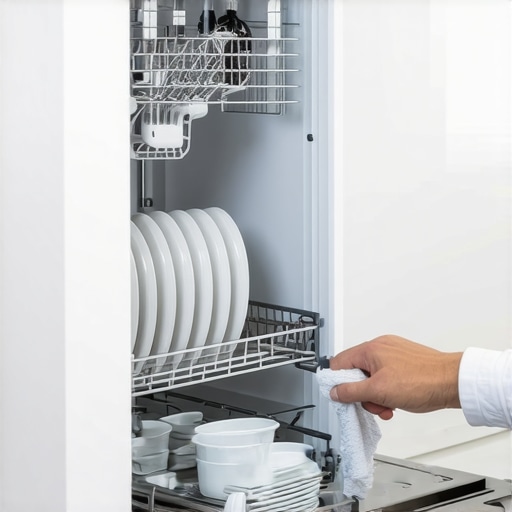
Protect Your Hardware From the Humidity Zone
Hardware in a high-moisture clean-up zone requires more love than a standard pantry door. According to technical documentation from Blum, a leader in cabinetry hardware, the presence of airborne moisture near sinks can accelerate the wear on internal spring mechanisms if they are not properly maintained. If you start to notice that why-your-slow-close-hinges-are-suddenly-sluggish-and-how-to-clean-them, it is usually not a mechanical failure but a buildup of micro-debris and humidity-induced friction. I personally use a dry PTFE spray once a year—never use oil-based lubricants like WD-40, which eventually turn into a sticky paste that traps kitchen grease. This simple maintenance step is a core part of expert-tips-on-selecting-storage-solutions-for-a-perfect-kitchen-upgrade that keeps your kitchen functioning like new for decades.
How can I keep my hidden plate rack from getting grimey over time?
Maintenance is much simpler than most people fear. Every two weeks, I recommend sliding out the stainless steel drip tray and running it through the dishwasher to prevent any mineral buildup. For the rack itself, a quick wipe with a microfiber cloth dampened with a bit of distilled white vinegar keeps hard water spots at bay without the need for harsh chemicals that could off-gas in your cabinets. This routine keeps your setup looking like it belongs in a showroom rather than a neglected utility closet. If you ever notice any discoloration or ‘swelling’ on the wood edges, it might be time to check if you followed the-proper-way-to-prep-indianapolis-kitchen-cabinets-before-the-first-coat-of-paint to ensure your moisture barrier is still fully intact.
Look Out for Smart Cabinets and UV Sanitization
Looking ahead to the next few years, I suspect we will see the hidden drying concept move into the high-tech realm. I have already seen early prototypes for cabinet interiors lined with hydrophobic nanotechnology coatings that repel water instantly, making the ‘drip’ almost non-existent. We are also seeing a rise in innovative-storage-solutions-for-modern-kitchen-remodels that include low-voltage silent fans and even UV-C sanitization cycles that kick in the moment the cabinet door is closed. This means your dishes aren’t just drying; they are being actively sterilized. I challenge you to audit your sink area today—grab a tape measure and see if you have the vertical space needed to reclaim your counters. If you are tired of the wet mess winning the battle for your kitchen’s aesthetic, this is the one upgrade that will make your space feel truly custom and intentional.
Moving your dishes from a cluttered countertop into a specialized vertical rack is a design choice that requires more than just a saw and a dream. After years of refining these systems, I have found that the success of a kitchen remodel hinges on the things you cannot see from across the room. It is about the chemistry of the paint and the physics of the airflow.
Three Harsh Truths About Hidden Drying Racks I Learned the Hard Way
My first attempt at this was a disaster because I prioritized aesthetics over engineering. First, the bottomless cabinet modification is not optional; if you leave even a sliver of wood at the base, water will pool there and eventually rot your face frames. Second, you must embrace the gap. For a while, I tried to make the rack fit so tight it looked seamless, but I realized that a tight fit is a death sentence for airflow. Now, I always leave at least a half-inch clearance around the rack to let the wood breathe. Finally, I learned that a paper towel is your best diagnostic tool. For the first two weeks after a transform-your-kitchen-with-custom-cabinets-expert-guide-for-2025, place a dry paper towel in your drip tray every night. If it is soaking wet by morning, you need to adjust your venting or wipe your dishes more thoroughly before racking them. #IMAGE_PLACEHOLDER_E#
My Personal Shortlist for a Bulletproof Kitchen Setup
To pull this off effectively, you need a specific set of tools and materials that standard big-box stores often overlook. I always recommend 304-grade stainless steel for the racks themselves; anything less will eventually pit and rust in a high-moisture environment. For the installation, I never leave home without the True Position Cabinet Hardware Jig because when you are working with the precision required for revolutionize-your-kitchen-remodel-using-built-ins-and-creative-storage, being off by a hair means your plates won’t sit straight. I also suggest keeping a small bottle of PTFE dry lubricant in your utility drawer. It is the secret to keeping your hardware moving smoothly without attracting the sticky grease that usually plagues storage solutions in the kitchen.
Stop Settling for a Cluttered Countertop
Your kitchen should be a place of creativity, not a place where you constantly battle for space against a plastic drying rack. By taking these smart-storage-solutions-for-small-kitchens-in-2025 and applying a bit of engineering rigor, you can transform your workflow. Don’t forget that if your doors look slightly off after the install, you can always learn how-to-adjust-european-hinges-for-a-perfectly-level-door-reveal to get that showroom-quality finish back. It is time to reclaim your counters and enjoy the sleek, functional home you deserve. Are you ready to cut the bottom out of your cabinets for the sake of your counters, or does the idea of ‘hidden moisture’ still keep you up at night? Let me know your thoughts in the comments below!