Why You Need a Vertical Spice Drawer Next to Your Range
There I was, pan-searing scallops with my heart racing. The butter was browning fast, and I needed the white pepper. I reached into my upper cabinet, blindly clawing past the cinnamon and the dried oregano, only to have a glass jar of turmeric tumble out and shatter across the counter. Yellow dust was everywhere, the scallops were rubber, and my patience was gone. That was the exact moment I realized my kitchen wasn’t working for me. It was working against me. If you’ve ever felt like a frantic detective searching for clues every time you boil water, you aren’t alone.
Stop Doing the Cabinet Scramble Every Time You Cook
The “work triangle” is a classic design concept, but I’ve learned the hard way that the “micro-triangle” around your range is where the real magic happens. When I finally committed to a revolutionize your kitchen remodel using built-ins and creative storage, I insisted on a vertical spice drawer tucked right next to the oven. It changed everything. Suddenly, those smart storage ideas to maximize your kitchen space weren’t just Pinterest dreams—they were functional reality. You don’t realize how much time you waste walking back and forth or digging through deep shelves until you don’t have to do it anymore. I spent years thinking custom cabinet ideas were just about aesthetics, but boy, was I wrong. In my first home, I actually placed my spices in a pull-out pantry on the other side of the island. I thought I was being clever by keeping them away from the heat, but I ended up never using them because they weren’t within arm’s reach. It was my biggest early design mistake. Professional organizers often cite that proximity is the key to maintaining a clean kitchen; if it’s hard to reach, it’s hard to put back.
Does a skinny drawer actually provide enough room for my collection?
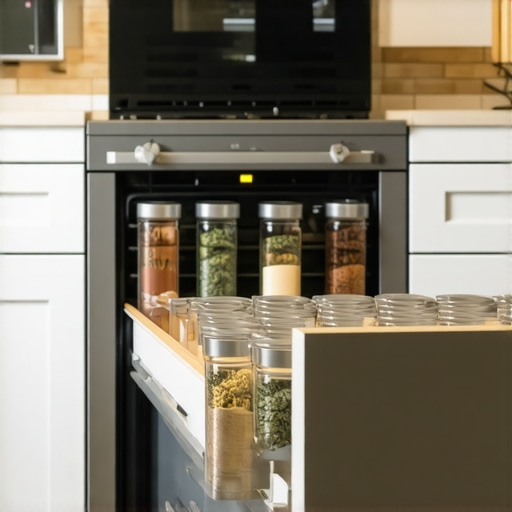
This is the number one concern I hear from neighbors. They worry that a three or six-inch gap is too small to be useful. But here’s the thing: a vertical spice drawer utilizes depth instead of width. You can see every label at a glance without moving a single jar. It’s about visibility, not just volume. While some people worry about why narrow spice pull-outs are often harder to use than you think, the trick is in the tiered shelving and the quality of the slides. According to data from the National Kitchen & Bath Association (NKBA), point-of-use storage is now the most requested feature in high-end kitchen upgrades because it directly impacts cooking speed and enjoyment. Keeping spices in a dark, vertical drawer also protects them from light degradation, making it a storage hack for a sleek functional kitchen. Have you ever had a “spice avalanche” in the middle of preparing a big family meal? Tell me about your most frustrating kitchen storage fail! Now, let’s look at how to actually integrate these into your existing layout. [image_placeholder]
Map Your Cooking Zones Before You Cut Any Wood
Think of your kitchen like a professional workshop. You wouldn’t put your hammer in a different room than your nails, so why keep your chili powder across the room from your stovetop? The first step in any successful kitchen remodel is identifying your high-heat zone. I once tried to save money by using a generic plastic tiered shelf I found at a big-box store. Within two weeks, the steam from the pasta pot had warped the plastic, and the whole thing collapsed into a pile of sticky glass jars. It was a mess. That’s when I realized that expert tips on selecting storage solutions for a perfect kitchen upgrade aren’t just suggestions—they are the blueprints for sanity. You must account for the the 30-inch clearance rule for ovens and your upper cabinets to ensure your spices aren’t just accessible, but safe from heat degradation. When you plan your built-ins, look for those awkward 6-inch gaps next to the range. That is your prime real estate for a vertical pull-out.
Build for Weight and Longevity
A vertical spice drawer is essentially a skyscraper on wheels. If you build it with cheap materials, it will lean, wobble, and eventually grind to a halt. This is why I always tell my clients that plywood box construction still beats particle board for kitchens, especially for narrow pull-outs. Particle board absorbs moisture like a sponge, and in a kitchen, moisture is everywhere. I remember a project where the homeowner insisted on cheap melamine for their spice tower. A year later, the weight of fifty glass jars had caused the bottom to sag, making the drawer nearly impossible to open. If you want a creating seamless kitchen remasters with built-in storage solutions, you need the structural integrity of solid wood or high-grade plywood.
Don’t Let Bad Hardware Ruin Good Cabinets
The secret to a drawer that feels like butter is the slide. You can have the most beautiful custom cabinets ideas that transform your homes style, but if the hardware is subpar, the experience is ruined. Check the load rating. A spice drawer might look light, but forty jars of cumin and paprika add up fast. If you start hearing a scratching noise, you’re likely dealing with the real reason your cabinet drawer slides are grinding: poor weight distribution or dust in the ball bearings. Always opt for under-mount, soft-close slides with a weight capacity of at least 75 pounds for these narrow units. This is the difference between a high-end feel and a hardware mistake that makes expensive cabinets look cheap. Finally, once the unit is installed, take the time to learn how to adjust european hinges for a perfectly level door reveal. Even the best-built drawer needs a fine-tuned finish to look perfectly integrated into the surrounding cabinetry.I see it in almost every high-end showroom: massive, cavernous base cabinets that look impressive but function like a black hole for your cookware. The common belief is that more cubic inches equals a better kitchen, but in my experience, depth is actually the enemy of efficiency. If you can’t see it, you won’t use it. This is exactly why a pull-out pantry beats deep walk-in shelves for visibility every single time. When you are planning modern kitchen remodels featuring custom cabinets and built-ins, don’t be seduced by sheer volume. You want accessibility.
Deep Cabinets Are Where Tupperware Goes to Die
Most homeowners make the mistake of installing standard 24-inch deep base cabinets with fixed shelves, thinking they are maximizing space. But ten inches back, that’s where the forgotten lids and rusted muffin tins live. I’ve had to tell clients point-blank that they are paying for storage they can’t actually reach. The hidden nuance of high-end design is converting those deep voids into full-extension drawers. Research from Blum’s DYNAMIC SPACE studies confirms that kitchen users bend and stretch significantly less when using drawers compared to standard door cabinets, reducing the physical toll of meal prep by over 30%. By focusing on expert tips on selecting storage solutions for a perfect kitchen upgrade, you realize that the goal isn’t just to hide your clutter, but to bring your tools to you.
The Heat Trap Most Designers Forget
Here is a specific ‘oops’ factor that ruins even the most expensive custom cabinets ideas that transform your homes style: the proximity of your garbage. I cannot stress this enough—why your garbage pull-out should never be next to the oven is the first lesson I teach. When you place a trash bin right next to a high-heat source like your range or dishwasher, the ambient heat accelerates the decomposition of food waste. Suddenly, your dream kitchen smells like a compost heap. It’s a classic rookie mistake that occurs when people prioritize the ‘cleaning zone’ without considering thermodynamics.
Will your wide drawers actually hold the weight of cast iron?
Many people love the look of massive, 36-inch wide pot drawers, but they fail to account for the physics of a loaded drawer. If you fill a wide drawer with cast iron skillets and Dutch ovens, you are likely exceeding the standard hardware’s capacity. This is often the cabinet screw mistake that causes heavy drawers to fail. You must insist on heavy-duty slides and know how to fix a sagging pot and pan drawer with a center support before the bottom falls out. High-end cabinetry isn’t just about the finish; it’s about the engineering behind the face frame. Have you ever fallen into the ‘deep cabinet’ trap or dealt with a smelly trash bin next to a hot oven? Let me know in the comments!Once the sawdust settles and the last handle is screwed in, most people think the job is done. But a kitchen is a high-traffic workshop, and creating seamless kitchen remasters with built-in storage solutions requires a commitment to the ‘long game’ of maintenance. If you want your kitchen to function as well in ten years as it does today, you have to stop thinking of it as static furniture and start treating it as precision machinery.
Keep Your Cabinet Doors from Sagging with These Three Tools
I always carry the one tool you need for perfectly aligned cabinet knobs every time—a high-quality adjustable drilling jig. Even a tiny misalignment in the handle placement will make your custom cabinets ideas that transform your homes style look amateur. But the real secret isn’t just the installation; it’s the adjustment. Wood is organic. It reacts to your HVAC system and the changing seasons. This is why I tell everyone to learn how to adjust european hinges for a perfectly level door reveal. A quick turn of a screwdriver twice a year prevents doors from rubbing, which is the leading cause of chipped paint and worn-down finishes.
How can I make my heavy drawers last a lifetime?
The most common point of failure I see in older remodels is the ‘grind.’ When you feel resistance, don’t just pull harder. You need to identify why your soft-close slides grind and the quick lubrication fix. Use a dry PTFE spray; never use heavy grease that attracts dust. According to the Architectural Woodwork Institute (AWI) Quality Certification Program (QCP), premium-grade cabinetry must maintain its structural integrity under specific load-bearing cycles, but that’s only possible if the box stays secure. Ensure your base cabinets are secured with 3-inch rugged screws to prevent the entire box from shifting under the weight of your countertop.
Protect Your Investment from Humidity and Heat Bubbles
Heat is a silent killer for wood finishes. I’ve walked into kitchens where the finish near the dishwasher is peeling away in sheets. This is where the difference between pre-catalyzed and post-catalyzed cabinet lacquer becomes painfully obvious. Post-cat lacquer is significantly more resistant to moisture, but even the best finish needs help. Remember that solid wood door panels still need room to breathe in summer. If you live in a high-humidity area, your inset cabinet gap may need re-aligning doors after seasonal humidity changes. Looking ahead, I predict we will see more kitchens utilizing integrated moisture sensors within the sink base, alerting homeowners to leaks before they can rot the plywood box construction. It’s a storage hack for a sleek functional kitchen that pays for itself in avoided repairs. If you do nothing else this weekend, grab a screwdriver and check the tightness of your hinge plates—it’s the easiest way to prevent a costly door replacement down the road!
Hard Truths I Learned After Ripping Out Three Kitchens
Every time I finish a project, I walk away with a new “never again.” My biggest lightbulb moment? Realizing that an organized kitchen isn’t about having a place for everything, it’s about having a place for the right things.
- The “One-at-a-Time” Rule: If you have to move more than one item to get to the tool you need, your storage has failed. This is why I swear by the vertical cookie sheet divider that ends the cabinet clatter. No more unstacking heavy pans just to find the muffin tin.
- Countertops Are Not Storage: A cluttered counter creates a cluttered mind. I’ve started installing the stealth knife block directly into the drawer to reclaim that valuable prep space.
- Dead Space Is a Choice: That four-inch gap under your cabinets isn’t just a toe-kick; it’s a prime spot for a hidden toe kick drawer to hide step ladders or placemats.
The Gear That Keeps My Cabinets Level and My Sanity Intact
I don’t just rely on instinct when it comes to built-ins and storage hacks for a sleek functional kitchen. I trust a few specific resources that have never steered me wrong. First, the Architectural Woodwork Institute (AWI) standards manual is my “Bible” for structural integrity. I also never start a job without a 360-degree laser level; standard bubble levels can’t handle the precision needed for a long-run custom cabinets as a game changer in your kitchen remodel journey. Finally, look into Blum’s Dynamic Space research—they’ve spent decades studying how humans actually move in kitchens, and it’s the most valuable data you can find for layout planning. [image_placeholder]
Give Yourself Permission to Build Your Forever Kitchen
At the end of the day, your kitchen should be a sanctuary, not a source of stress. Whether you are adding a few smart storage solutions or embarking on a full overhaul, remember that small adjustments in accessibility make the biggest difference in your daily joy. Don’t be afraid to break traditional rules to make the space work for your unique cooking style. Which of these storage hacks would solve your biggest kitchen headache right now? Let me know in the comments below!